
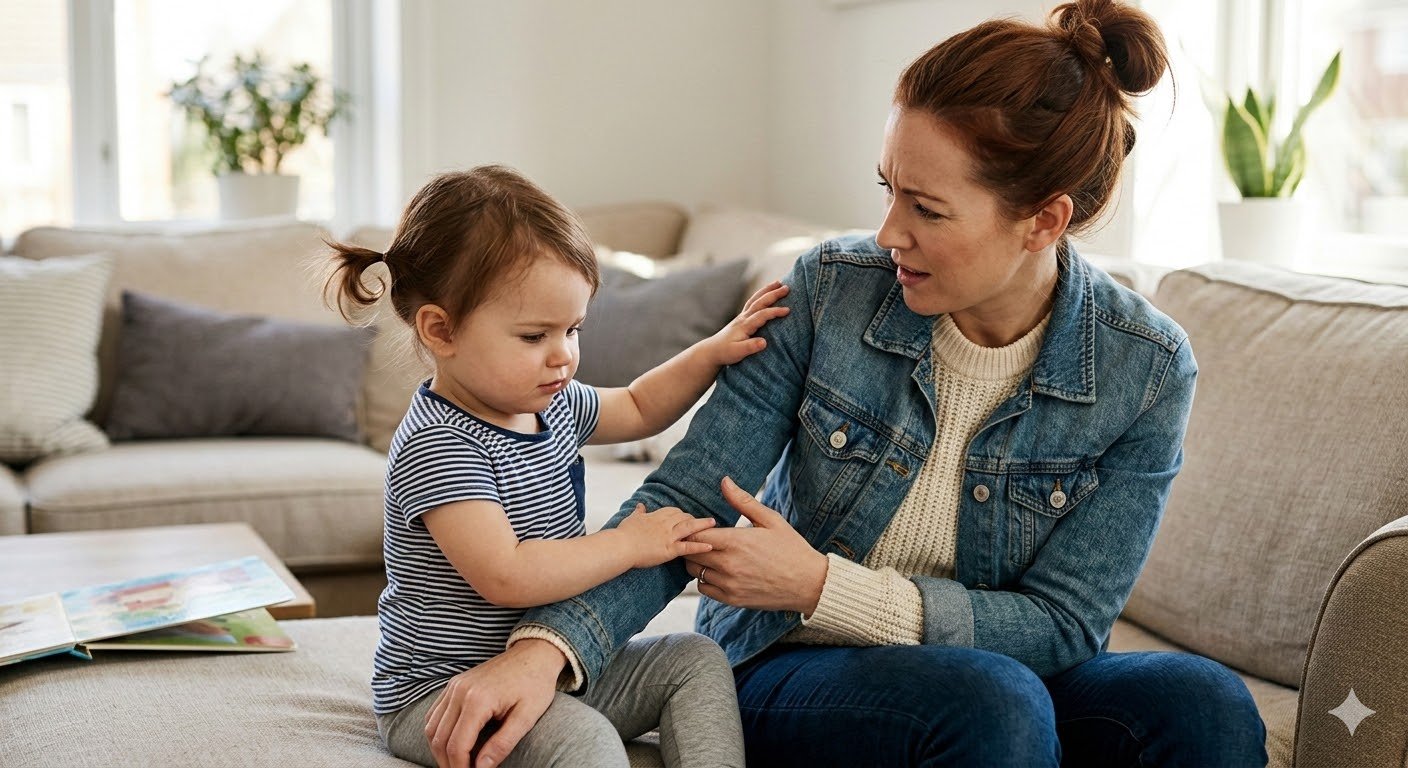
I remember a Tuesday afternoon about twenty years ago. My son was three, and my two daughters were just starting to find their footing in grade school. I was standing in the kitchen, probably nursing a lukewarm cup of coffee, when I heard that specific, hollow thwack followed by a jagged, high-pitched wail.
I ran into the playroom to find my son standing over his older sister, his little hand still curled into a fist, and a look on his face that was equal parts defiance and sheer terror. My first instinct? It wasn’t “gentle.” It was a flare of heat in my chest, a dash of embarrassment that I hadn’t “trained” him better, and a desperate urge to shout, “What is wrong with you? We don’t hit!”
If I could go back and sit on the floor with my younger self, I’d put a hand on my shoulder and say, “Take a breath, mama. He’s not a bully in the making. He’s a little boy with a big feeling and a very small toolbox.”
We’ve all been there. Whether you’re in the middle of a grocery store aisle or the privacy of your living room, having a child who hits feels like a personal failure. But after raising three kids through the chaotic toddler years, the moody teens, and all the way through their college graduations, I can tell you this: hitting isn’t a character flaw. It’s a communication breakdown.
The “Why” Behind the Hand
Before we get to the phrases, we have to understand what’s actually happening in that tiny, developing brain. When a child hits, they aren’t sitting there plotting a physical assault. They are experiencing what I call an “emotional short circuit.”
In the world of Montessori or high-level emotional intelligence, we talk about the prefrontal cortex—the part of the brain responsible for impulse control. In a toddler or even a young school-aged child, that part of the brain is essentially a construction site with “Under Renovation” signs everywhere.
When they get frustrated because a block tower fell, or angry because a sibling touched their favorite truck, their “upstairs brain” goes offline. They dropped into the “downstairs brain,” where the only options are fight, flight, or freeze. Hitting is just “fight” in its simplest, most raw form. They aren’t trying to be mean; they are trying to feel powerful in a moment where they feel completely overwhelmed.
5 Actionable Strategies for the Heat of the Moment
Before you speak, you have to act. Here is how I handled those “thwacks” over the years with my trio:
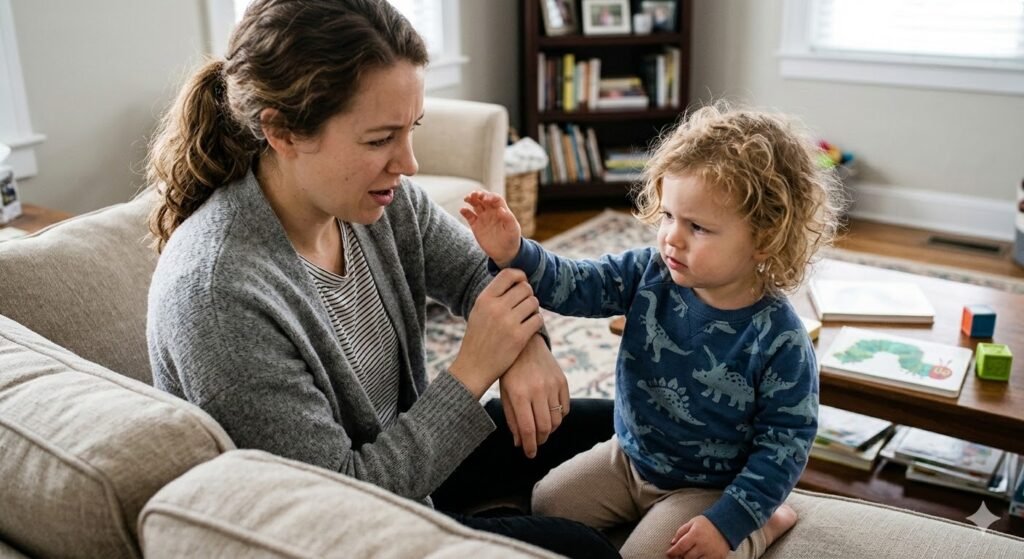
- The Physical Bridge: Always get down on their level. Standing over a child makes you a threat, not a teacher. Move your body so you are eye-to-eye.
- Block, Don’t Punish: Your first job is safety. Catch the hand. Hold it gently but firmly. You are the container for their chaos.
- The “Pause” Button: If you’re seeing red, don’t discipline yet. Say, “I’m feeling very frustrated right now, so I’m going to take three breaths before we talk.” You are modeling the exact self-regulation you want them to learn.
- Describe, Don’t Judge: Instead of saying “You’re being bad,” say “Your hands moved fast because you were mad.” It separates the behavior from the child’s identity.
- The Do-Over: Once everyone is calm, practice what to do next time. “Let’s try that again. How can we ask for the truck with our words?”
25 Gentle Phrases for Hitting
Here are 25 phrases I’ve used, whispered, and repeated (sometimes a hundred times a day) to help my kids move from hitting to healing.
Setting the Boundary (The “Firm” Part)
- “I won’t let you hit me. I’m going to hold your hands to keep us both safe.”
- “It’s okay to be mad; it’s not okay to be mean.”
- “Hands are for helping, not for hurting. Let’s find a way to help.”
- “I’m moving your body away because I need to keep your brother safe.”
- “That hurt my body. I’m going to take a step back to protect myself.”
Validating the Feeling (The “Soft” Part)
- “You wanted that toy so badly, and it felt unfair when she took it.”
- “Your face looks very tight. Are you feeling frustrated inside?”
- “It’s hard to wait your turn. Your hands wanted to move because waiting feels big.”
- “You’re having a really tough time right now. I’m right here with you.”
- “You’re not a ‘bad’ kid. You’re a kid having a ‘bad’ moment.”
Offering Alternatives (The “Toolbox” Part)
- “If you’re feeling pushy, you can push against this sofa cushion as hard as you can.”
- “Your hands have a lot of energy. Let’s stomp our feet together to get it out.”
- “Can you tell me ‘I’m mad!’ with your big, loud voice instead of your hands?”
- “Do you need a squeeze? Sometimes a big hug helps our bodies calm down.”
- “When you’re ready, we can find a way to make it better.”
During the “Cool Down”
- “I see you’re struggling. Let’s go to our quiet corner and breathe until your hands feel calm.”
- “I’m going to sit right here. I’m not leaving you, even when you’re upset.”
- “Let’s try that again. How can we say ‘excuse me’ without using our hands?”
- “I know you didn’t mean to hurt him, but his body is hurting now. What does he need?”
- “You’re safe. I’ve got you. We’ll figure this out together.”
For the Parent (The “Self-Talk” Part)
- “My child is not giving me a hard time; they are having a hard time.”
- “This is a season, not a lifetime.”
- “I am the calm in their storm.”
- “I don’t have to fix this in the next thirty seconds.”
- “Deep breath. We are both learning.”
The Long View: From Playrooms to Graduation Caps
I know it feels like you’ll be catching flying fists forever. I remember wondering if my son would ever learn to handle his temper, or if my daughters would ever stop pinching each other over borrowed clothes.
But here’s the secret: my son is now a college graduate. He’s one of the most level-headed, kind men I know. When he’s stressed at work, he doesn’t hit; he goes for a run or talks it out. My daughters? They are each other’s best friends. The “gentle” work you do today—the exhausting, repetitive, soul-stretching work of staying calm when they aren’t—is what builds their character tomorrow.
You aren’t failing because your child hit today. You’re succeeding because you’re showing them that even in their messiest moments, they are loved, they are safe, and they can learn a better way.
Grab a fresh cup of coffee. You’re doing a great job.