

You’re not behind. You’re not doing it wrong. Here’s how to meet your kids exactly where they are — and give them what they’ll actually need.
Toddler
2–4
Self-care basics
Early Child
5–7
Responsibility seeds
Middle Child
8–11
Independence builders
Tween
12–14
Real-world readiness
Teen
15–18
Launch-ready skills
My daughter Maya was 19 years old the first time she called me from college — not to say hi, not to complain about a roommate, but to ask me how to boil water. Not for pasta. Just water. She wasn’t entirely sure the stove worked the same way as at home and didn’t want to “break anything.” I stood in my kitchen holding the phone, genuinely unsure whether to laugh or cry. That was my wake-up call. Not hers.
I had spent years teaching her to be kind, curious, and emotionally intelligent. What I forgot — what a lot of us forget — is that confidence doesn’t just come from being loved. It comes from competence. From knowing you can handle things. And competence is built through practice, not protection.
If you’ve ever looked at your kid and thought, “Should they already know how to do that?” — this guide is for you. It’s practical. It’s honest. And it uses real age ranges, not fairy-tale timelines that assume every child develops at the same pace.
Why Life Skills Are a Parenting Non-Negotiable
Here’s what I’ve come to believe after raising three kids to adulthood: the kindest thing you can do for your child is not to do things for them. I know that sounds harsh. But there is a massive difference between a parent who helps and a parent who rescues. One raises a capable adult. The other raises someone who calls from college asking about boiling water.
Research consistently backs this up. Kids who are given age-appropriate responsibilities from an early age develop stronger self-esteem, better problem-solving skills, and more resilience when things go sideways. They also tend to be more empathetic, because doing real tasks teaches you that things take effort — and that other people’s effort deserves respect.
This isn’t about being a harsh parent or running a boot camp. I believe in warmth, in patience, and in meeting kids exactly where they are. But I also believe that wrapping your children in bubble wrap is not love. It’s anxiety wearing a hug.
A note before we begin: These are guidelines, not a grading rubric. Every child is different. If your 9-year-old isn’t ready for something on the 8–11 list, that’s fine. If your 6-year-old is already doing things I have on the tween list, celebrate that. Use this as a reference, not a scorecard.
Ages 2–4: The Tiny Helpers Stage
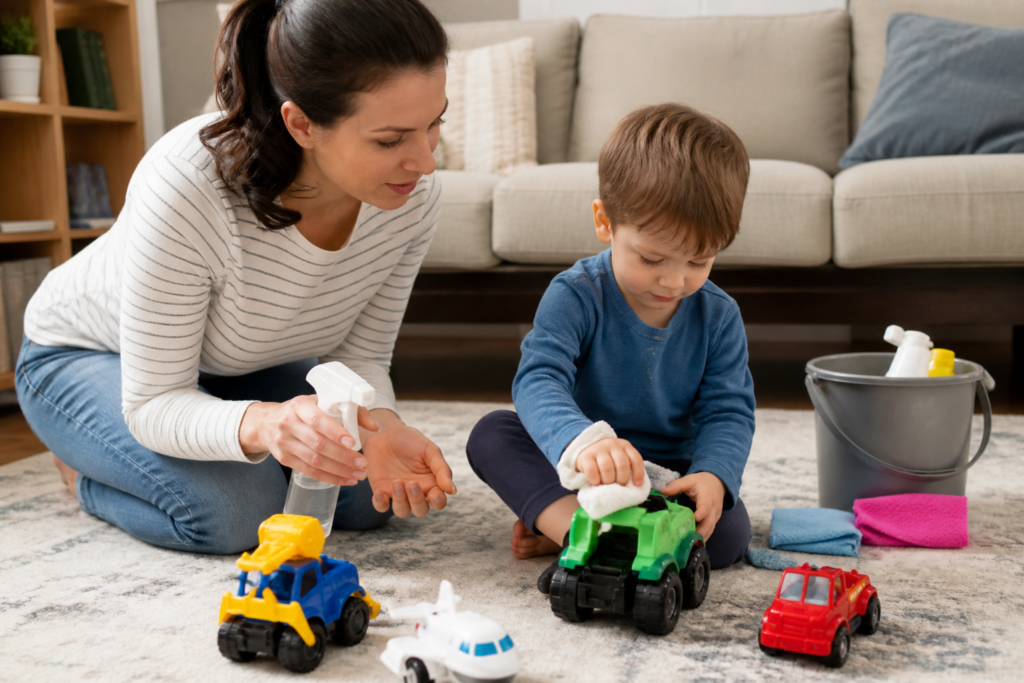
Toddlers want to do everything themselves. This is not stubbornness — it is biology. The drive for autonomy kicks in around age two, and it is one of the most powerful developmental engines you’ll ever witness. Most parents, exhausted and pressed for time, accidentally shut it down. The mess, the slowness, the sheer chaos of a three-year-old “helping” with laundry can make it feel easier to just do it yourself. That’s a total waste of this golden window, even if it looks like the easier option.
What you want to do instead is harness the chaos. Let them try. Let them fail. Keep your expectations low and your patience high. The skills they’re building now aren’t just practical — they are the foundation of a belief system: I am capable. My help matters.
My son Leo was the pickiest helper at this age. He would only “help” if he got to carry something. So I gave him the lightest grocery bags every time. Did he contribute much? Barely. Did he walk into the house with his chest puffed out like he’d just completed a Navy SEAL mission? Every single time.
Ages 2–4
Core life skills to introduce
- Put toys away in their designated spots after play
- Wash and dry hands independently (with reminders)
- Put dirty clothes in the laundry hamper
- Help set the table by placing napkins or spoons
- Dress themselves with some adult assistance for buttons/zips
- Feed a pet with supervision
- Help wipe up their own spills with a cloth or paper towel
Notice how none of those require perfection. At this age, the habit is the goal, not the result. The table doesn’t need to be set beautifully. The toys don’t need to be sorted by category. What matters is that your child learns that participation is expected, normal, and — if you frame it right — genuinely fun.
Ages 5–7: Planting the Seeds of Responsibility
This is the stage where kids start school and suddenly have structure imposed on them from outside the home. That’s actually a gift. It means they already understand rules, sequences, and expectations. Your job now is to extend that understanding into home life in a way that feels natural, not punitive.
My oldest, Sarah, was six when I introduced her first real “job”: watering the plant on the kitchen windowsill every morning. It sounds trivial. But within a month, she had named the plant (Gerald), started talking to it while she watered it, and would genuinely worry if she forgot a day. That plant taught her follow-through in a way no lecture ever could have.
The key at this age is consistency with grace. You’re building systems, not punishing forgetfulness. When they forget a task, redirect — don’t shame. “Hey, what did we forget this morning?” is a thousand times more effective than “You always forget! How many times do I have to tell you?” The first builds a habit. The second builds anxiety.
Ages 5–7
Building blocks of independence
- Make their own bed each morning (imperfectly is fine)
- Pack their own school bag with a checklist
- Prepare a simple snack (banana with peanut butter, crackers and cheese)
- Clear and wipe their own place at the table after meals
- Water a house plant or help with a small garden task
- Fold and put away their own laundry (socks, underwear, shirts)
- Brush teeth without being prompted every single time
Checklists are genuinely one of the most powerful tools I’ve ever used with kids this age. A simple laminated morning checklist on the bathroom mirror removes you from the equation. They’re not doing it because you told them to — they’re doing it because the checklist says so. You go from enforcer to supportive observer. That is a beautiful shift.
Ages 8–11: The Real Independence Builders
This is where the magic gets serious. Kids in this age range have the cognitive ability to understand cause and effect, manage multi-step tasks, and start taking genuine ownership over parts of their lives. They also have big feelings and a growing social world — which means they need to feel competent at home in order to feel secure outside of it.
I’ve found that children who have real responsibilities in the 8–11 range are significantly less likely to crumble when things go wrong in middle school. When your kid knows they can cook a meal, manage their own room, and handle basic household tasks, they carry a quiet confidence with them everywhere. That confidence is armor.
Leo hit a rough patch socially around age 9. Kids were being unkind, and he was withdrawing. One of the things that helped most was giving him a new responsibility: Sunday dinner. He had full control of the menu (within reason), helped shop, and cooked with me. That kitchen time gave him a place where he was undeniably capable and valued. Don’t underestimate what a task well-done can do for a struggling kid’s self-image.
Ages 8–11
Ownership and real-world skills
- Cook a simple meal or breakfast independently (eggs, pasta, sandwiches)
- Do their own laundry from start to finish
- Manage a basic weekly routine with minimal reminders
- Handle a small allowance — saving, spending, basic budgeting
- Write and send simple emails or messages independently
- Use public transit with a trusted adult nearby
- Handle basic first aid (bandages, cleaning cuts, ice packs)
- Manage homework schedule and communicate about it honestly
The allowance piece deserves special attention. Many parents avoid it because it feels complicated or because their child “doesn’t need it.” But money is one of the most consequential skills a person ever learns, and kids this age are ready to start understanding it in real, tactile ways. Give them real money. Let them spend it. Let them run out and feel the sting. That feeling is the lesson — not the lecture you’d give them about it afterward.

Ages 12–14: Real-World Readiness for Tweens
Tweens are in the middle of one of the most turbulent developmental storms a human goes through. Their brains are being physically rewired. Their social hierarchies feel like life and death. Their emotions are enormous and often baffling — to them as much as to you. This is precisely why this is the wrong time to reduce their responsibilities. It is exactly the right time to increase them.
I know that’s counterintuitive. It feels like you should be cushioning the blow of adolescence, not adding to their plate. But here’s what I discovered the hard way, twice: tweens who have meaningful responsibilities and are trusted with real decisions feel more respected, more seen, and more stable than those who are managed and protected. Giving a 13-year-old real responsibility is not a burden. It is a vote of confidence.
“Tweens who are trusted with real decisions feel more respected, more seen, and more stable.”
Ages 12–14
Preparing for real independence
- Plan and cook one family meal per week independently
- Manage their own calendar — school, social commitments, deadlines
- Navigate public transit alone in familiar areas
- Handle a small personal budget and savings goal
- Advocate for themselves with teachers or coaches (you coach, they speak)
- Do basic home maintenance tasks — replace a light bulb, unclog a drain
- Understand basic nutrition and make thoughtful food choices
- Complete a babysitting or pet-sitting job for a neighbor
The self-advocacy piece is one I wish I had prioritized earlier. Sarah got to college completely unprepared to speak to a professor about an extension or a misunderstanding on a grade. She had always had me to run interference. Teaching your tween to have a respectful, direct conversation with an adult authority figure — while you stand nearby as backup — is one of the most transferable skills you can give them.
Ages 15–18: Launch-Ready Life Skills for Teenagers
Your teenager is three years away — at most — from being completely on their own. Completely. No more reminders about laundry, no buffer between them and a landlord, no one to call the doctor for them or file their taxes or figure out what the weird noise from their car means. If that list makes you nervous, good. Channel that energy into teaching, not doing.
This is the stage where the work you’ve done for the last 15 years either shows up or it doesn’t. The good news: it’s never too late to start. Maya didn’t truly understand money management until she was 16 and we set up a real bank account with a debit card and let her manage her entire clothes budget for a semester. She overspent in October and wore the same three outfits in November. She has never mismanaged a budget since. That is a lesson a spreadsheet will never teach.
Ages 15–18
Pre-launch essentials
- Manage a real bank account, debit card, and monthly expenses
- File simple taxes (with guidance the first time)
- Make their own medical and dental appointments
- Cook a week’s worth of meals from a grocery list they made
- Understand and manage basic renter’s or insurance concepts
- Navigate a job application and interview process
- Handle a conflict directly and constructively without a parent mediating
- Do basic car maintenance — tire pressure, oil check, jump a battery
- Create and follow a simple personal budget for 3+ months
Car maintenance specifically is one I feel strongly about. Every teenager who will one day drive should know how to change a flat tire, check their oil, and recognize when something is wrong before something is catastrophically wrong. This is not a “boy skill.” Sarah learned it before Leo did, and she was the one who helped a stranger on the highway two months after she got her license. Teach all your kids, no exceptions.
Bonus skill — all ages
Emotional regulation and self-expression. This isn’t a chore or a household task — it’s the life skill that makes all other life skills possible. Teaching your child to name their feelings, ask for what they need, and calm themselves down before reacting is a gift that compounds over their entire lifetime. Start at 3. Keep going at 33.

The Real Talk: What Doesn’t Work and What to Stop Doing
I’ve been honest with you about what works. Now I need to be honest about what doesn’t — and what I personally wasted years doing before I figured it out.
Reward charts are mostly a trap
I used them with all three kids. They worked for about two weeks, every single time. Then the novelty wore off and the chart became wallpaper. Worse, when I stopped using them, my kids stopped doing the tasks — because they’d learned that tasks were transactional, not expected. The research on this is clear: external rewards undermine intrinsic motivation. I’m not saying never use them, but if you’re relying on a sticker chart to get your 8-year-old to brush their teeth, there’s a more durable approach waiting for you. Expectations and routines beat rewards every time.
Doing it for them to avoid the argument
This is the one that gets every exhausted parent eventually. Your kid is taking twenty minutes to tie their shoes, you’re late, and your hand is already reaching down. I understand. I’ve been there. But what you’re communicating — unintentionally — is “you can’t do this.” Over time, that message sticks. I have discovered the hard way that ten extra minutes of patient waiting twice a week is worth more than years of re-teaching a child that they are capable. Protect their competence even when it costs you time.
Assigning tasks without teaching them first
This one seems obvious but I watched myself do it with Leo constantly. I told him to clean the bathroom. He cleaned it badly. I was frustrated. What I had never done was actually show him, step-by-step, what “clean” meant in my world. Expectations without instruction is just a setup for failure — and for a child, repeated failure in tasks they want to do right is genuinely demoralizing. Show first. Do together second. Supervise third. Release fourth. That sequence matters.
The biggest mistake I see parents make: Waiting until kids are teenagers to start. By then, the natural learning window for many skills has narrowed considerably, the habits aren’t built in, and your teenager — who now has an ego invested in appearing capable — is much more likely to feel ashamed of not knowing something than a five-year-old ever would be. Start early. Start messy. Start now.
Parting Wisdom: You’re Raising an Adult
Every single thing you teach your child to do for themselves is one less thing they’ll need someone else to do for them. That’s not just practical — it is profound. It is the difference between a young adult who calls home in a panic over boiling water and one who calls home to share what they made for dinner.
You’re not failing if your seven-year-old still needs help making their bed. You’re not behind if your twelve-year-old doesn’t know how to do laundry yet. You are simply, like every parent who has ever existed, doing your best with the information and energy you have today.
Take this guide and pick one thing. Just one. Introduce it this week with patience and a sense of humor, and then add another next month. Life skills are not a curriculum to complete — they’re a garden to tend. Some things will take root immediately. Others will need to be planted three times before they grow. Keep going anyway.
What matters most is that your child grows up knowing: I can handle this. I’ve been practicing my whole life.
What’s your experience? Is there a life skill you wish you’d introduced earlier — or later? Did one of these techniques work brilliantly for your family, or land with a spectacular thud? I genuinely want to hear your stories. Drop them in the comments below, ask your questions, and share your wins and your disasters. We’re all figuring this out together — and your insight might be exactly what another parent needs to read today.