
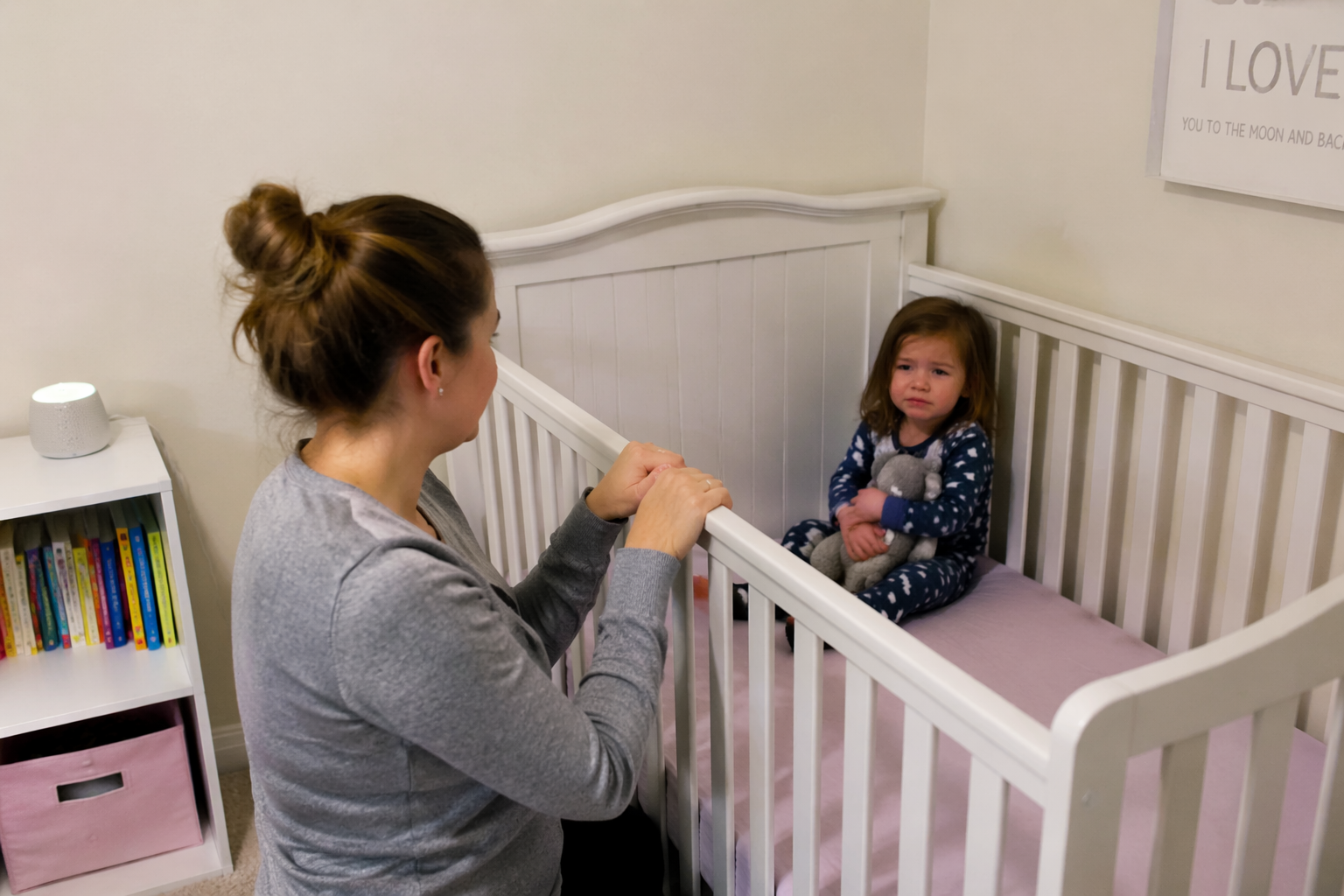
I remember sitting on the floor of my hallway in the dark, head resting against my son’s bedroom door, listening to the silence and wondering if I was doing everything wrong. My two daughters had been relatively easy sleepers, but Leo? Leo treated sleep like it was an optional extracurricular activity he had no interest in joining. I was exhausted, my brain felt like it was made of wet wool, and the only advice I kept hearing was to “just let him cry.”
But every time I tried to walk away while he wailed, my gut felt like it was being twisted in a vice. I realized quickly that the “cry it out” method wasn’t just hard on him; it was eroding the very connection I was trying to build. I decided then that there had to be a way to prioritize sleep without sacrificing soul-to-soul bonding. Over the years, through trial, error, and a lot of spilled coffee, I found that gentle alternatives aren’t just “nicer”—they actually build a foundation of security that lasts long after the toddler years.
Gentle Parenting Sleep Strategies That Actually Work
When people talk about gentle sleep training, they often mistake it for “doing nothing” or letting the baby run the show. I’ve found that being a “doormat” parent is a total waste of time, even if it looks like the easier option to avoid a tantrum in the moment. Instead, I discovered the hard way that high-touch responsiveness truly works if you’re patient enough to play the long game. The goal isn’t just a quiet house at 8:00 PM; it’s a child who feels safe enough to let go of the day.
One of the most effective tools in my kit was the “Fading Method.” This isn’t about disappearing; it’s about gradually reducing your physical involvement as your baby gains confidence. When Leo was an infant, I started by rocking him completely to sleep. Then, I moved to just holding his hand while he lay in the crib. Eventually, I was just sitting in a chair nearby. It takes weeks, not nights, but the lack of trauma for both of us was worth every extra minute spent in that rocking chair.
I also learned that your baby’s environment is 90% of the battle. If the room is too bright or there’s a TV blaring in the next room, you’re fighting biology. I became a bit of a fanatic about blackout curtains and white noise. These aren’t “crutches”—they are cues. They tell the infant brain that the world is closing down for the night. I’ve seen parents try to skip these basics and then wonder why their “gentle” approach isn’t working. You cannot negotiate with a nervous system that is overstimulated.
Lastly, consistency is your only superpower. If you respond to a cry with a cuddle one night and then try to ignore it the next because you’re tired, you create “intermittent reinforcement.” This actually makes the crying worse because the baby doesn’t know what to expect. I learned to pick a path and stay on it. If my boundary was “I will sit by your bed but I won’t pick you up,” I had to hold that boundary with a soft heart and a firm spine.
Responsive Settling Techniques for Tear-Free Nights
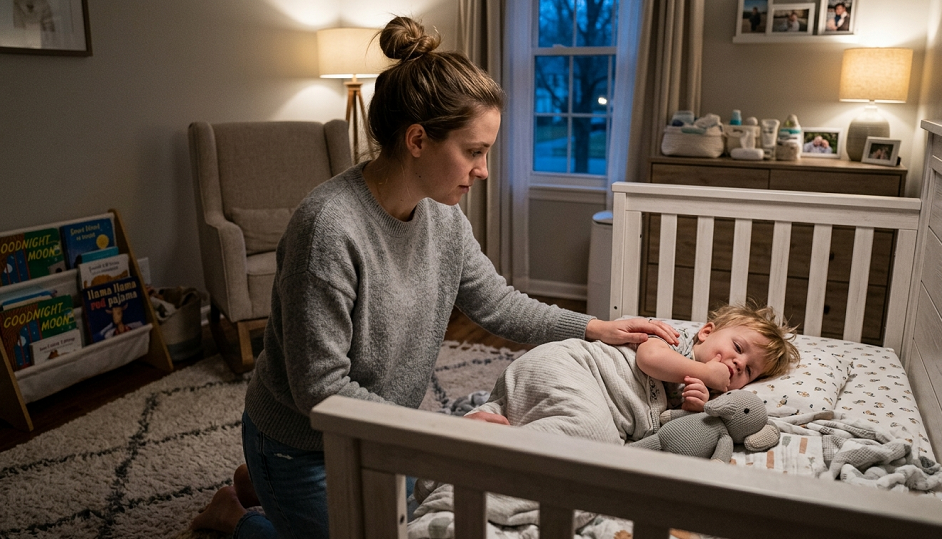
The “Pick Up, Put Down” method is often touted as the gold standard for gentle parents, but I have a bit of a bone to pick with how it’s usually described. Most guides tell you to pick the baby up the second they cry and put them down the second they stop. In my experience, doing this fifty times in twenty minutes just overstimulates the poor kid. I preferred a modified version where I focused more on “pausing” than reacting.
I found that if I waited just thirty seconds before rushing in, Sarah or Maya would often find their thumb or shift their weight and settle themselves. By rushing in at the first whimper, I was actually interrupting their own learning process. This isn’t “crying it out”; it’s giving them the space to breathe. When I did go in, I kept the lights off and my voice at a whisper. The “Real Talk” here is that if you make the middle-of-the-night interaction too fun or stimulating, your baby will keep waking up just to see your lovely face.
Another technique I swear by is “Layering Sleep Associations.” If your baby only sleeps while nursing, you have one tool. If they sleep while nursing and hearing a specific song and having their back patted, you have three. Over time, you can remove the nursing but keep the song and the patting. Eventually, you remove the patting. By the time Leo was two, just hearing the first three notes of his favorite lullaby was enough to make his eyelids heavy. We built a bridge to sleep rather than pushing him off a cliff into the dark.
Don’t underestimate the power of the “Floor Bed” if you’re struggling with the crib transition. For some kids, the bars of a crib feel like a cage, and the “drop” into the mattress feels like falling. Transitioning to a floor bed in a 100% baby-proofed room allowed me to lie down next to my kids, comfort them, and then ninja-roll away once they were out. It removed the “transfer” anxiety that ruins so many bedtime routines.
Building an Age-Appropriate Sleep Schedule Without Stress
I used to spend hours obsessing over “wake windows” and charts I found online. I’ve realized that most of those rigid schedules are nonsense. Every child has a different sleep pressure tank. Sarah needed a nap every two hours like clockwork, or she’d turn into a gremlin. Leo could go four hours and be perfectly fine. If I had forced Leo into Sarah’s schedule, we both would have spent the afternoon crying in a dark room.
Instead of watching the clock, I started watching the child. Rubbing eyes, pulling ears, or a sudden loss of interest in toys were my “green lights.” If I missed those and waited for the “prescribed” nap time, I hit the “overtired” zone. Once a baby is overtired, their body produces cortisol, and you’re basically trying to put a caffeinated squirrel to sleep. It’s not going to happen gently.
Feeding also plays a massive role in the schedule that people often overlook. I made sure my kids had “full tanks” before the sun went down. For the older ones, a high-protein snack before the final tooth-brushing made a world of difference. A hungry belly is a wakeful belly. I noticed that when I prioritized a calm, calorie-dense evening, the nighttime stretches naturally got longer without me having to “train” anything at all.
Finally, remember that “daytime” sleep and “nighttime” sleep are handled by different parts of the brain. You can work on gentle nighttime transitions while still rocking them for naps during the day. You don’t have to fix everything at once. I usually suggest parents master the bedtime routine first, as sleep pressure is highest then, and leave the naps for later. Trying to overhaul the entire 24-hour cycle in one weekend is a recipe for a parental breakdown.
The Science of Attachment and Bedtime Boundaries
The reason I’m so passionate about gentle alternatives is because of the “Internal Working Model.” This is a fancy psychology term for the blueprint a child builds about how relationships work. If a child learns that their distress is met with silence, they don’t “learn to sleep”—they learn that no one is coming. I wanted my kids to go to college (which they did!) knowing that if they were in trouble, I was a safe harbor. That starts in the nursery.
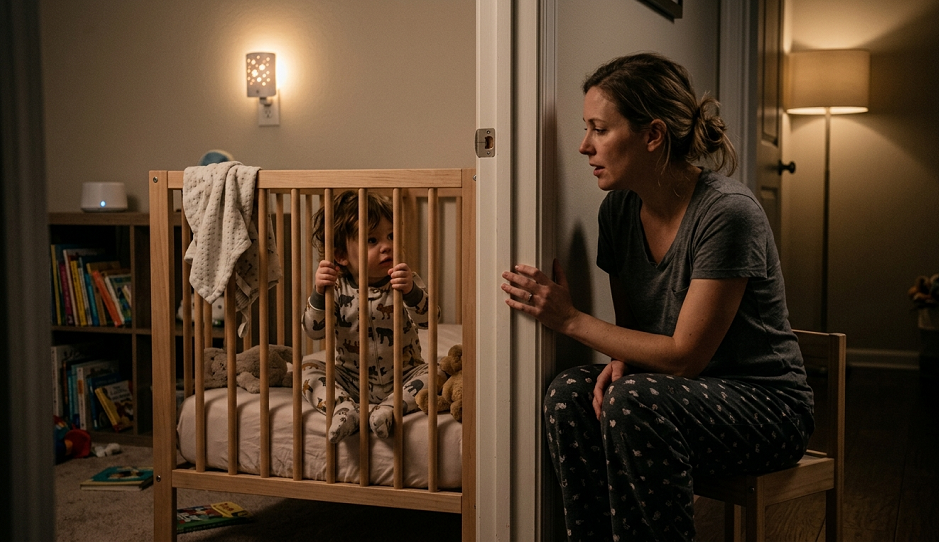
However, being a safe harbor doesn’t mean you don’t have a shore. Boundaries are an essential part of attachment. I found that saying “I am right outside the door, and I will check on you in five minutes” is a powerful way to build trust. I would actually come back in five minutes, even if they were quiet, to show that my word was gold. This lowered their anxiety because they didn’t have to “summon” me; I was just there.
I also discovered that “special time” right before the bedtime routine starts can prevent a lot of the stalling. If a child feels they haven’t had enough of you during the day, they will “borrow” that time from the night. We did ten minutes of “Floor Time” where I had no phone and no distractions—just me and the kid playing whatever they wanted. It filled their emotional cup so they could handle the separation of sleep.
One “quick side note”: Don’t be afraid to change what isn’t working. If you’ve been trying a gentle method for a month and everyone is still miserable, the method might not fit your child’s temperament. Maya needed a lot of physical touch; Leo needed me to stay in the room but stay quiet. There is no “perfect” way, only the way that respects the human being in front of you.
Real Talk: When “Gentle” Feels Like Failing
Let’s be honest: there will be nights where you end up crying in the kitchen while your baby cries in the bedroom. This doesn’t mean you’ve failed. It means you’re human. The biggest mistake I see parents make is trying to be “perfectly gentle” while they are “perfectly exhausted.” If you are at your breaking point, it is okay to put the baby in a safe crib and walk out for ten minutes to breathe. That isn’t “cry it out”; that’s “sanity maintenance.”
I also think the “dream feed” is a total waste of time for many families. I tried it with Maya, and it just disrupted her deep sleep cycle, making her more prone to waking up an hour later. Unless your pediatrician specifically recommends it for weight gain, I found that letting a sleeping baby lie is almost always the better move. We often project our own fears of hunger or thirst onto them when they really just need restorative rest.
Another thing that isn’t worth the effort? Comparing your journey to the mom on Instagram whose six-month-old “self-settles” for twelve hours. Some babies are just “super sleepers” by temperament. My daughters were like that. Leo was not. I didn’t do anything different with Leo; he just had a more sensitive nervous system. If I had judged my parenting by his sleep habits, I would have felt like a failure every single day.
Lastly, avoid the “trap of the rocking chair.” If you find yourself rocking a toddler for two hours every night and feeling resentful, that resentment is leaking into your parenting. It’s okay to say, “I love you, but my body needs a break, so I am going to sit here instead of holding you.” It’s better to be a slightly-removed, calm parent than a high-touch, simmering-with-rage parent.
Final Thoughts
Raising Sarah, Maya, and Leo taught me that sleep is a developmental milestone, much like walking or talking. You wouldn’t yell at a baby for falling while learning to walk, and you shouldn’t feel guilty for a baby who needs help learning to sleep. The “training” part is really just you providing the environment and the emotional safety for them to get there in their own time.
My parting wisdom is this: the nights are long, but the years are incredibly short. One day you’ll be helping them pack their bags for a college dorm, and you won’t remember the 3:00 AM wake-ups. You will, however, remember the feeling of their small hand in yours. Keep the connection, hold the boundary, and forgive yourself when it gets messy.
What is the one sleep “rule” you’ve decided to break for the sake of your own sanity? Let’s talk about it in the comments below—I’d love to hear your “real talk” moments!