
When Sarah, Maya, and Leo were little, my living room looked less like a home and more like a plastic graveyard. I remember one rainy Tuesday afternoon, tripping over a neon-purple block while balancing a colander of spaghetti. In that moment of sheer frustration, I realized that while their toy chests were overflowing, they were actually bored. They weren’t playing; they were just consuming.
That was the year I ditched the flashy, battery-operated gadgets that promised to teach my kids Mandarin by age three. Instead, I went back to the basics. I started hunting down the toys I grew up with—the ones that actually required a child to provide the “spark.”
Raising three kids through college has taught me that the best developmental tools don’t need a Wi-Fi connection. They need imagination, a bit of grit, and the freedom to get a little messy. If you feel like you’re drowning in “educational” toys that do all the work for your child, take a breath. We’re going back to the 90s to find the real gems that build brains without the screen time.
1. The Magic of Magnetic Building Tiles and Classic Blocks
I’ll be the first to say it: those flimsy, snap-together sets from the bargain bin are a waste of your sanity. I spent way too many hours trying to help Leo build a tower that wouldn’t collapse the second he sneezed. If a toy frustrates a child to the point of a meltdown, it isn’t “teaching persistence”—it’s just poorly designed.
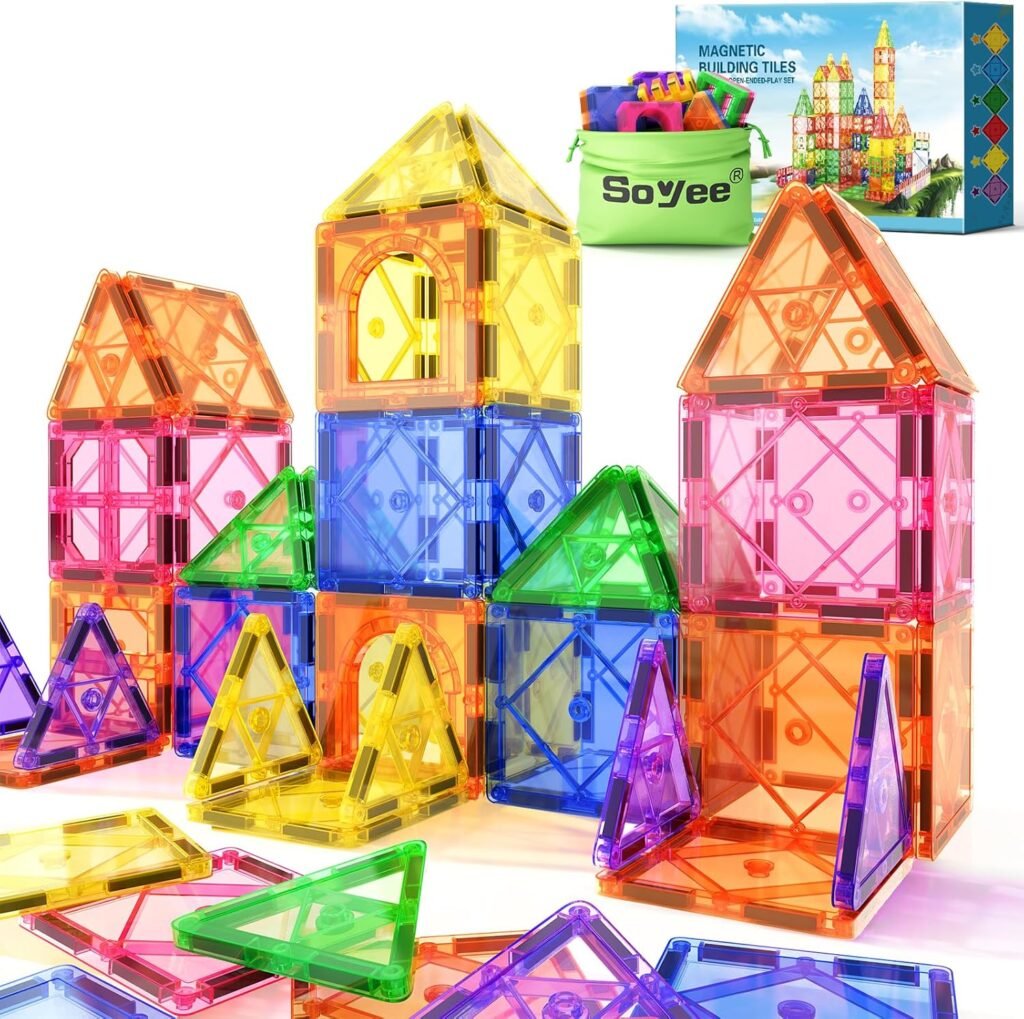
Classic wooden blocks or high-quality magnetic tiles are the gold standard for spatial awareness. When Maya was four, she spent entire afternoons creating elaborate “kingdoms” for her stuffed animals. This wasn’t just play; she was learning about gravity, symmetry, and structural integrity. She was an engineer before she could even tie her own shoes.
I’ve found that the fewer “features” a building toy has, the more a child learns. If the block doesn’t make a sound, the child has to make the “vroom” or the “crash.” That internal dialogue is where the real cognitive development happens. It forces them to visualize the outcome before they even pick up the next piece.
If you’re starting out, don’t buy the 500-piece mega-set. It’s overwhelming. Start with a solid set of 30 or 40. I discovered the hard way that too many choices lead to a messy floor and a distracted mind. Let them master the small set first, then add on as their structures get more complex.
2. Low-Tech Creative Expression with Spirograph Sets
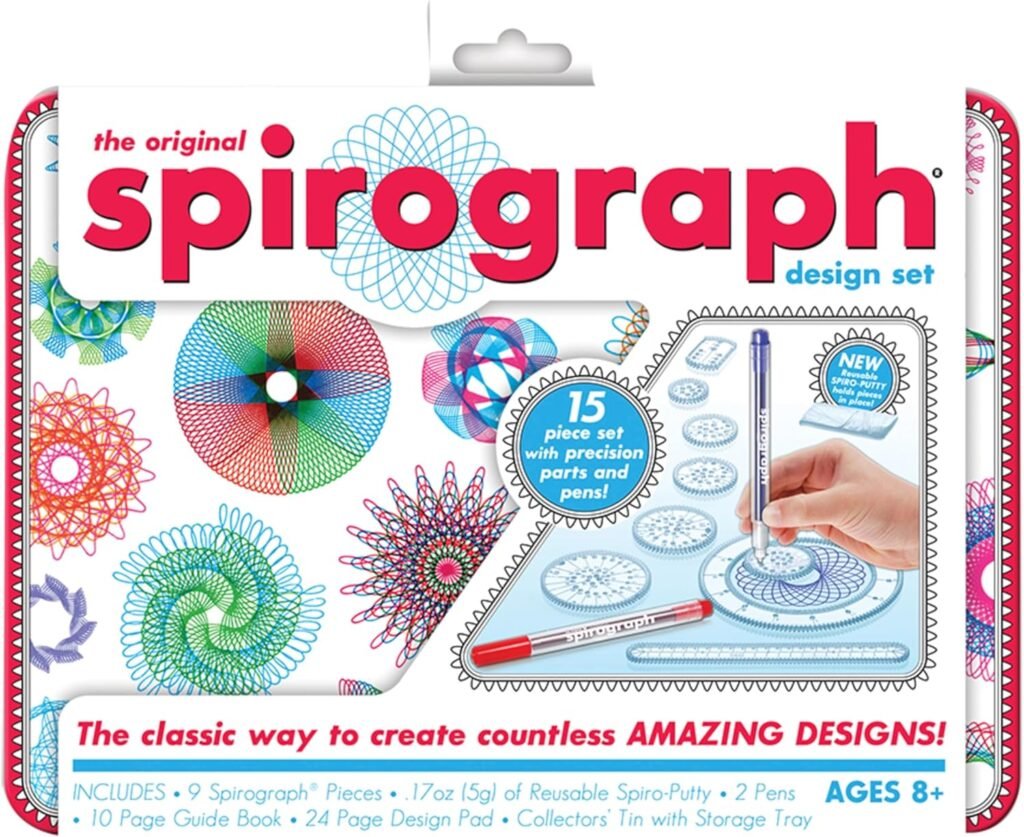
I know what you’re thinking—Spirograph is a headache. I used to think the same until I watched Sarah sit in dead silence for forty-five minutes, completely focused on a single spiral. In a world where we worry about “attention spans,” this 90s staple is a secret weapon for fine motor skills and patience.
The beauty of these geometric drawing tools is the immediate feedback. If your hand slips, the pattern breaks. It’s a natural consequence that doesn’t require a lecture from Mom. It teaches a child to steady their grip and move with intention. For kids who struggle with handwriting, this is a much more enjoyable way to strengthen those tiny hand muscles.
I have found that skipping the “travel” versions is the way to go. They are too small and end up being a total waste of time. You want the full-sized gears that allow for sweeping, rhythmic motions. It’s almost meditative. In my house, we used these as a “calm down” activity after high-energy outdoor play.
Don’t worry if their first twenty attempts look like a scribbly mess. Parenting is about the process, not the refrigerator-worthy result. When Sarah finally “got it,” the look of pride on her face was worth every stray pen mark on my dining room table.
3. Sensory Development Through Classic Kinetic Sand and Dough
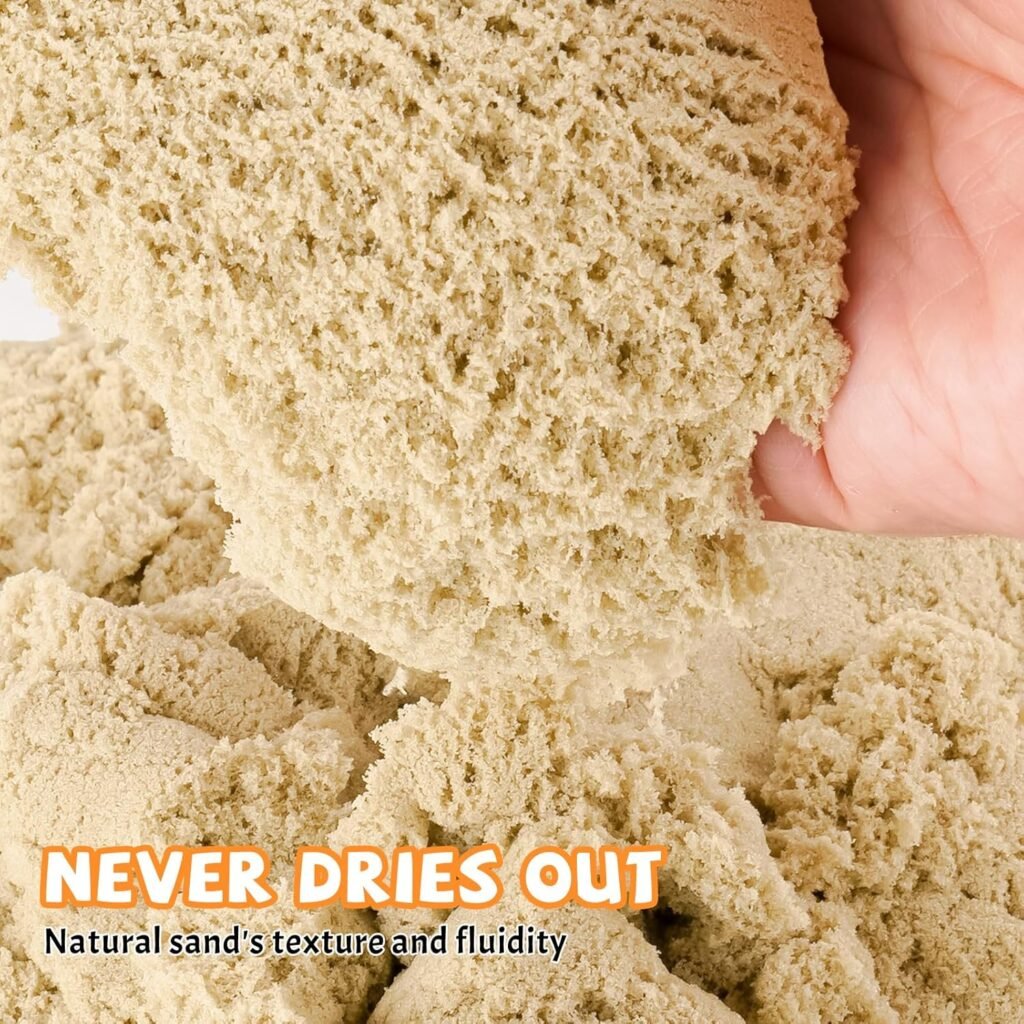
Forget the expensive, pre-packaged “sensory kits” you see on social media these days. They are overpriced and usually contain tiny pieces that you’ll be vacuuming up for a decade. I’ve always been a proponent of a simple, deep bin filled with basic modeling dough or that strangely satisfying 90s-style “moon sand.”
Squishing, pulling, and rolling dough isn’t just fun; it’s a massive boost for sensory integration. Leo, who was always my “high-energy” child, found his center when he was elbow-deep in a bucket of sand. It provided the tactile input his brain was craving, which meant fewer tantrums later in the evening.
I’ve discovered that adding “real world” tools to the mix—like a garlic press or a small rolling pin—is far better than the plastic molds that come in the box. Using actual tools helps children understand how to apply different levels of pressure. It’s a lesson in cause and effect that stays with them.
One quick side note: If you’re worried about the mess, I hear you. My rule was always “sand stays in the bin, or the bin goes in the closet.” Firm boundaries are what allow for creative freedom. You aren’t being a “mean mom” by enforcing clean-up; you’re teaching them to respect their environment.
4. Logical Thinking with 90s Strategy Board Games
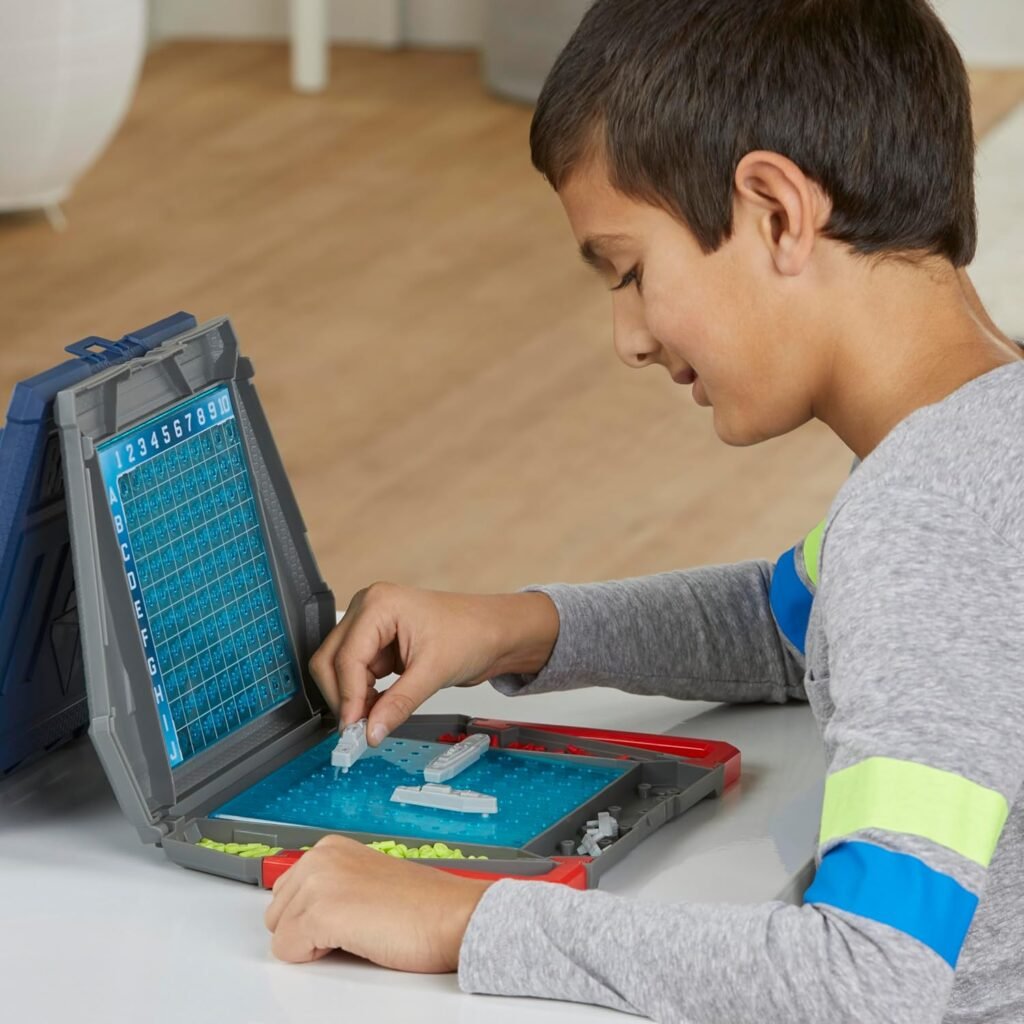
I’m going to be blunt: most “toddler” board games are boring and teach absolutely nothing. If the game is entirely based on luck (looking at you, Candy Land), your child isn’t learning to think; they’re just waiting their turn. I shifted my kids toward basic strategy games as soon as they stopped trying to eat the pieces.
Games like Connect Four or even Guess Who? are fantastic for developing deductive reasoning. Maya and Leo used to have “tournaments” on rainy Saturday mornings. They had to learn how to read their opponent’s face, plan two steps ahead, and—most importantly—how to lose without throwing the board across the room.
I have found that playing “open hand” for the first few rounds is the best way to teach. I’d show them my pieces and explain my thought process: “I’m putting my red checker here because I want to block you.” It’s not “cheating” to help them see the logic. It’s scaffolding their learning so they don’t get discouraged.
Avoid the digital versions of these games on a tablet. There is something tactile about physically dropping a checker into a slot or flipping down a plastic door that anchors the memory in a child’s brain. Plus, you can’t have a family bonding moment while staring at individual screens.
5. Gross Motor Skills and the Classic Sit ‘n Spin
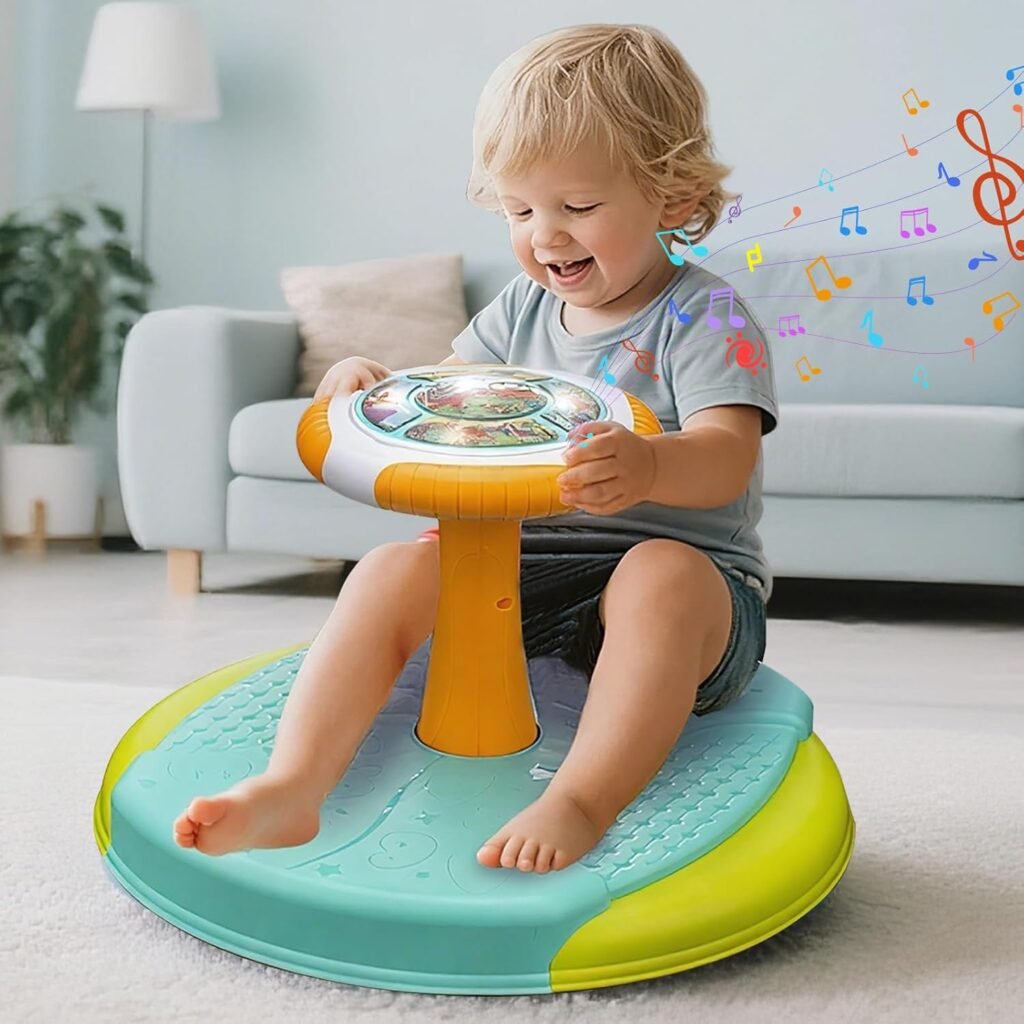
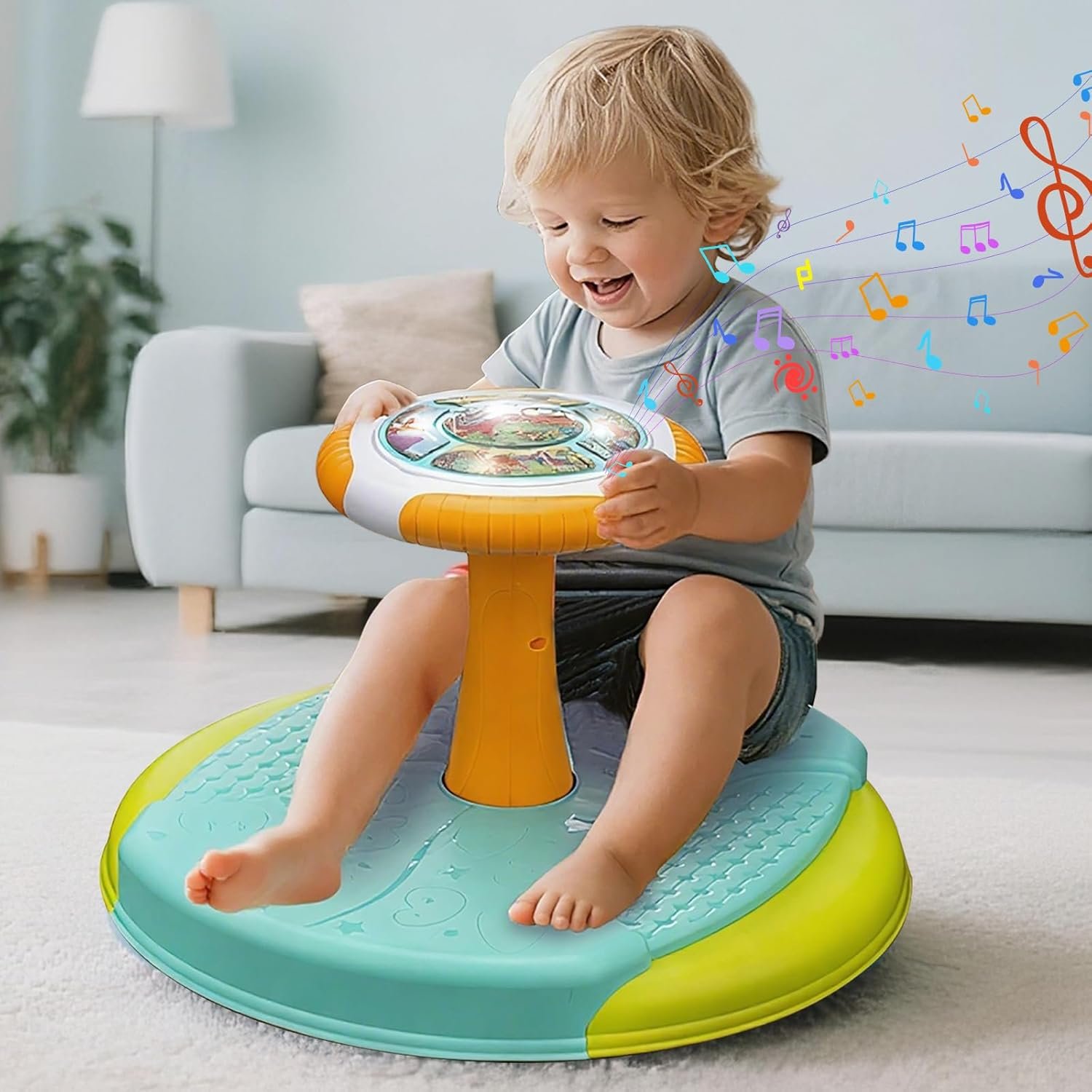
If you want to see a child develop a sense of balance and core strength, look no further than the Sit ‘n Spin. It looks like a simple toy, but it’s a powerhouse for vestibular development—that’s the fancy way of saying “learning where your body is in space.”
In my experience, kids today spend way too much time strapped into seats or propped up on couches. They need to dizzy themselves. They need to feel the world spin a little. Sarah used to spend ages figuring out how to pull the center wheel harder to go faster. She was learning about physics and her own physical limits.
I’ve found that the older, heavier models are actually better than the modern, lightweight plastic ones. The weight provides more stability, which allows the child to really lean into the motion. If you can find a vintage one at a garage sale, grab it. Just make sure to check the plastic for cracks first.
One thing I discovered the hard way: don’t let them do this right after lunch. We had a “spaghetti incident” with Leo circa 1998 that I’d rather not repeat. But generally, it’s a fantastic way to burn off that “witching hour” energy before bath time.
6. Imaginative Role Play with 90s Dollhouses and Castles
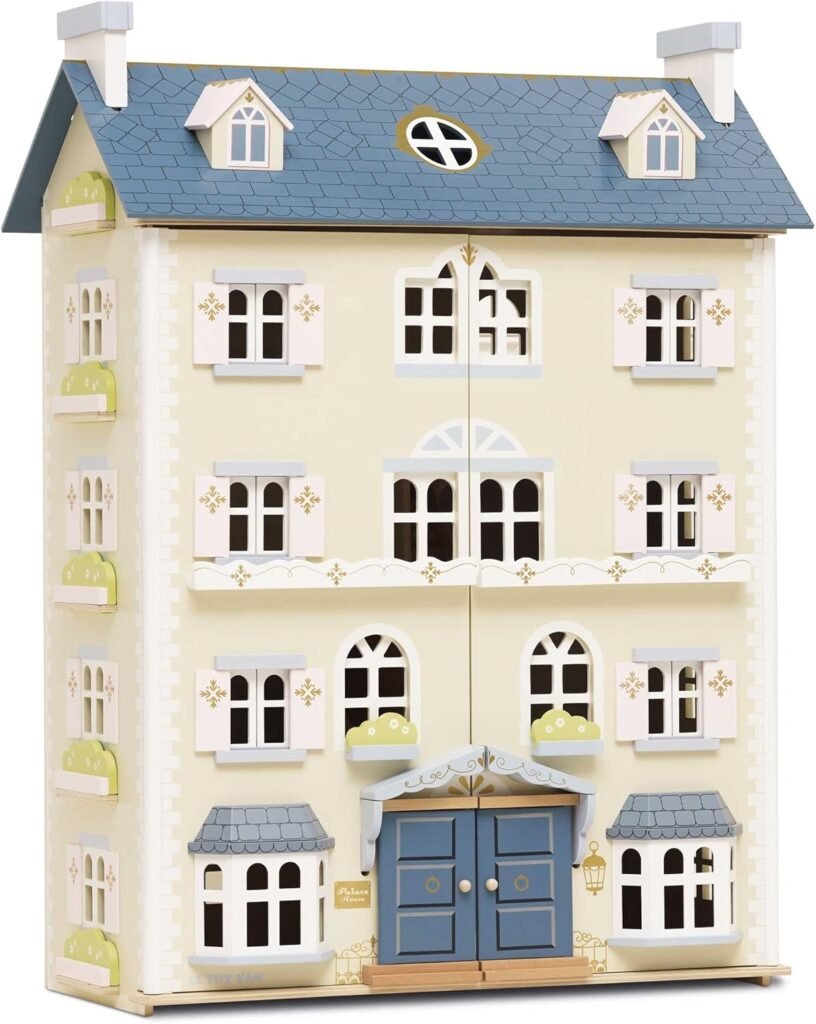
I’m not talking about the pink, flimsy houses that fall apart if you look at them wrong. I’m talking about the sturdy, open-ended structures where a kid can be the director of their own little world. We had a big wooden house that served as a hospital, a fire station, and a secret mountain base over the years.
Role play is how children process the world. When I’d overhear Maya and Sarah playing, they were often acting out things that happened at school—a disagreement with a friend or a rule they thought was unfair. It’s their way of practicing social interactions in a safe, controlled environment.
I’ve found that “themed” sets can actually limit imagination. If the house only comes with “kitchen stuff,” the child only thinks about cooking. I liked to throw in random items—a smooth rock, a piece of fabric, or some dried pasta—and see what they turned into. Often, the rock became a “pet” and the fabric became a “magic carpet.”
Don’t feel the need to jump in and “fix” their stories. If the dragon is having tea with the ballerina, let it happen. Your job is to provide the stage; let them write the script. This kind of unstructured play is where empathy is born, as they step into the shoes of different “characters.”
7. Hand-Eye Coordination with the Original Bop It
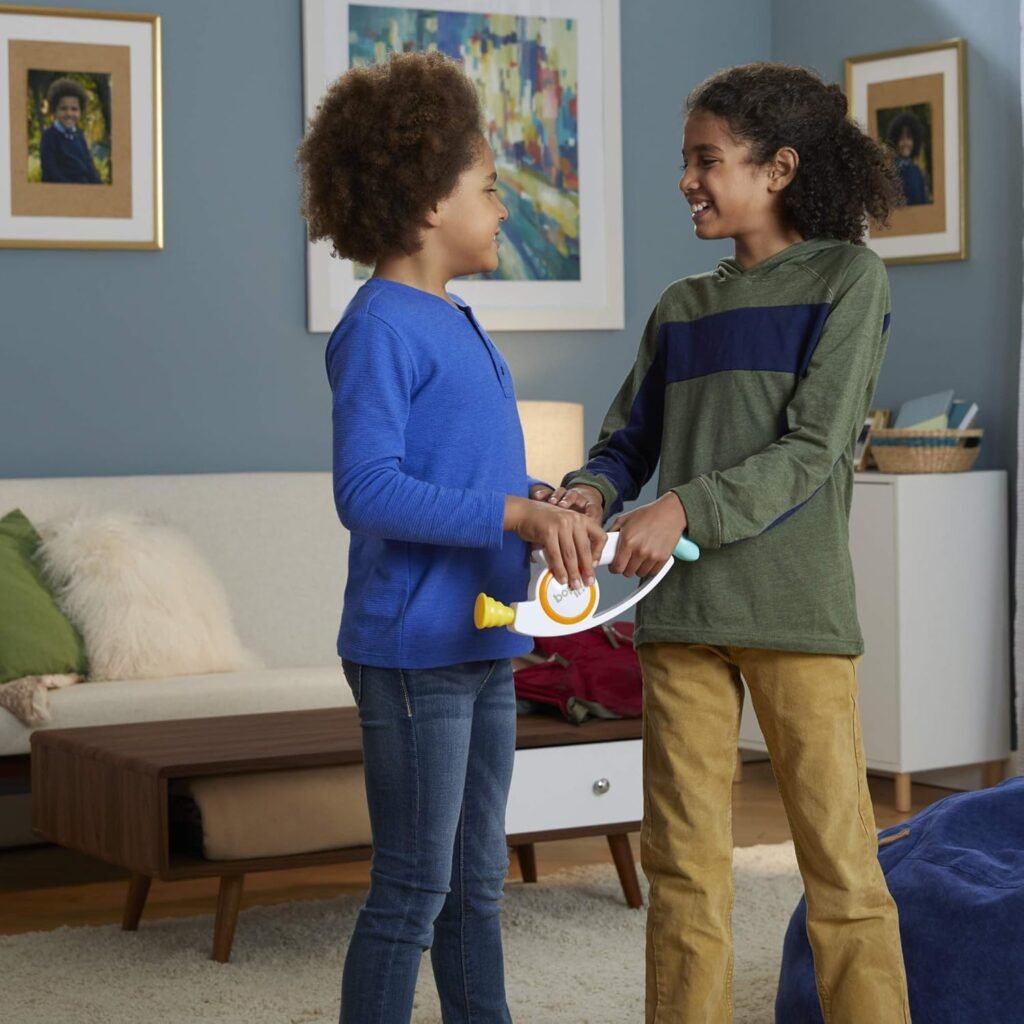
Before everything was an app, we had Bop It. It’s noisy, yes. It’s slightly repetitive, yes. But for a school-aged child, it is an incredible tool for auditory processing and reaction time. You have to hear a command, process it, and physically react in a split second.
I’ve seen kids who struggle with following multi-step directions at school really improve after playing games like this. It turns “listening” into a high-stakes, fun challenge. Leo used to try and beat his own high score every evening, and I noticed his focus in other areas started to sharpen too.
I have discovered that this is one of the few “electronic” toys actually worth the shelf space. It’s social. You pass it around. You laugh when someone “bops” when they should have “twisted.” It builds that “growth mindset” we’re all trying to foster—the idea that you can get better at something through practice.
Bonus tip: It’s also a great way for you to keep your own brain sharp. I may or may not have spent a few late nights trying to beat Leo’s score after the kids were in bed. It’s harder than it looks!
8. Fine Motor Mastery with Lite Brite
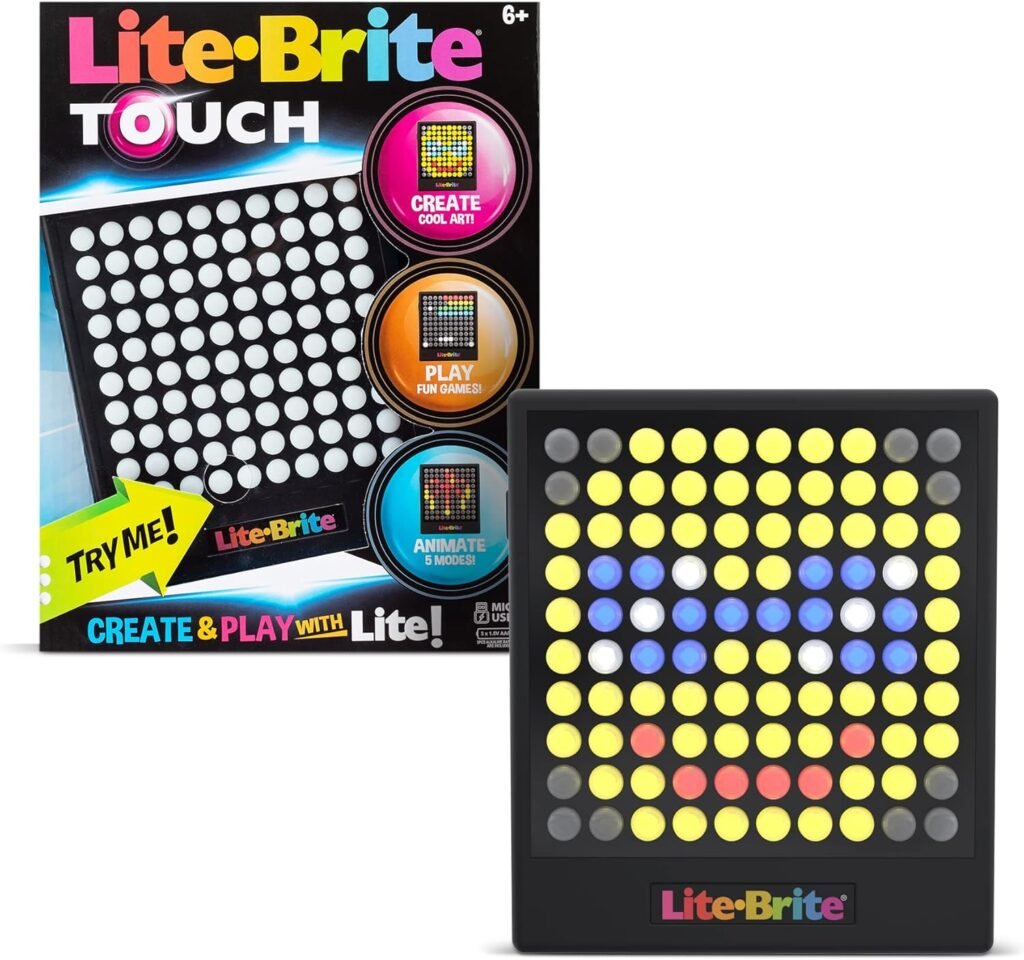
There is something magical about a Lite Brite. Those tiny, glowing pegs were a staple in our house for a reason. Poking those pegs into the black paper requires a level of precision that most modern toys just don’t ask for. It’s the ultimate “quiet time” activity that actually builds the muscles needed for writing.
I’ve found that the “free-style” mode is much better for development than the pre-printed templates. Templates are like “color by numbers”—fine for a bit, but they don’t spark creativity. When I let Sarah just create her own glowing monsters or gardens, she stayed engaged twice as long.
One thing to watch out for: the pegs are a nightmare for bare feet. I learned to keep the Lite Brite on a specific tray so the “runaway” pegs didn’t end up in the carpet. It’s a small price to pay for the sheer concentration it encourages.
If you have a child who gets easily frustrated, sit with them for the first ten minutes. Help them see how the light shines through. Once they see the “reward” of their work glowing in the dark, they’ll be hooked. It teaches them that the effort of the “work” leads to a beautiful “result.”
9. Cooperative Play with the Classic Parachute
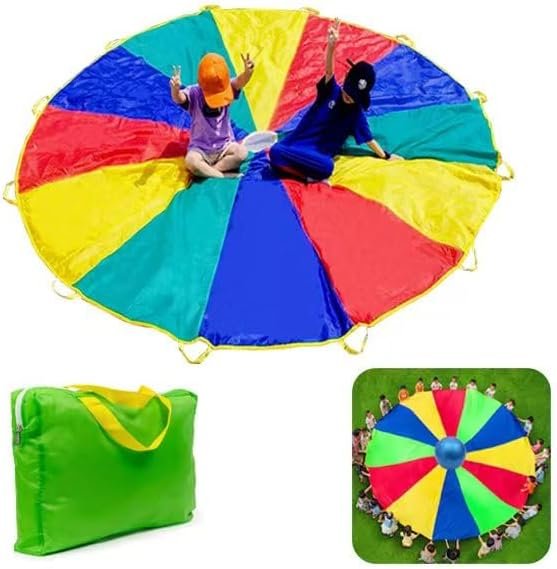
You remember these from gym class, right? You don’t need twenty kids to make a parachute fun. A small, colorful play parachute at home is a fantastic way to teach cooperation. You can’t make the “popcorn” (shaking balls on top of the parachute) work if you don’t work together.
When my three were little, we’d take the parachute to the backyard. They had to coordinate their movements to make the “waves” go high or low. It’s one of the few activities where a toddler and a pre-teen can actually play on equal footing. It levels the playing field and encourages sibling bonding.
I have found that adding music makes it even better. We’d put on something upbeat and try to match the “waves” to the tempo. This builds rhythmic awareness and listening skills. It’s also a great way to get some physical activity in when they’ve been cooped up inside.
A quick side note: If you don’t want to buy a dedicated parachute, an old bedsheet works almost as well. It’s not about the “stuff”; it’s about the movement and the shared goal. Don’t let a lack of “official” gear stop you from playing.
10. Problem Solving with the Rubik’s Cube and 3D Puzzles
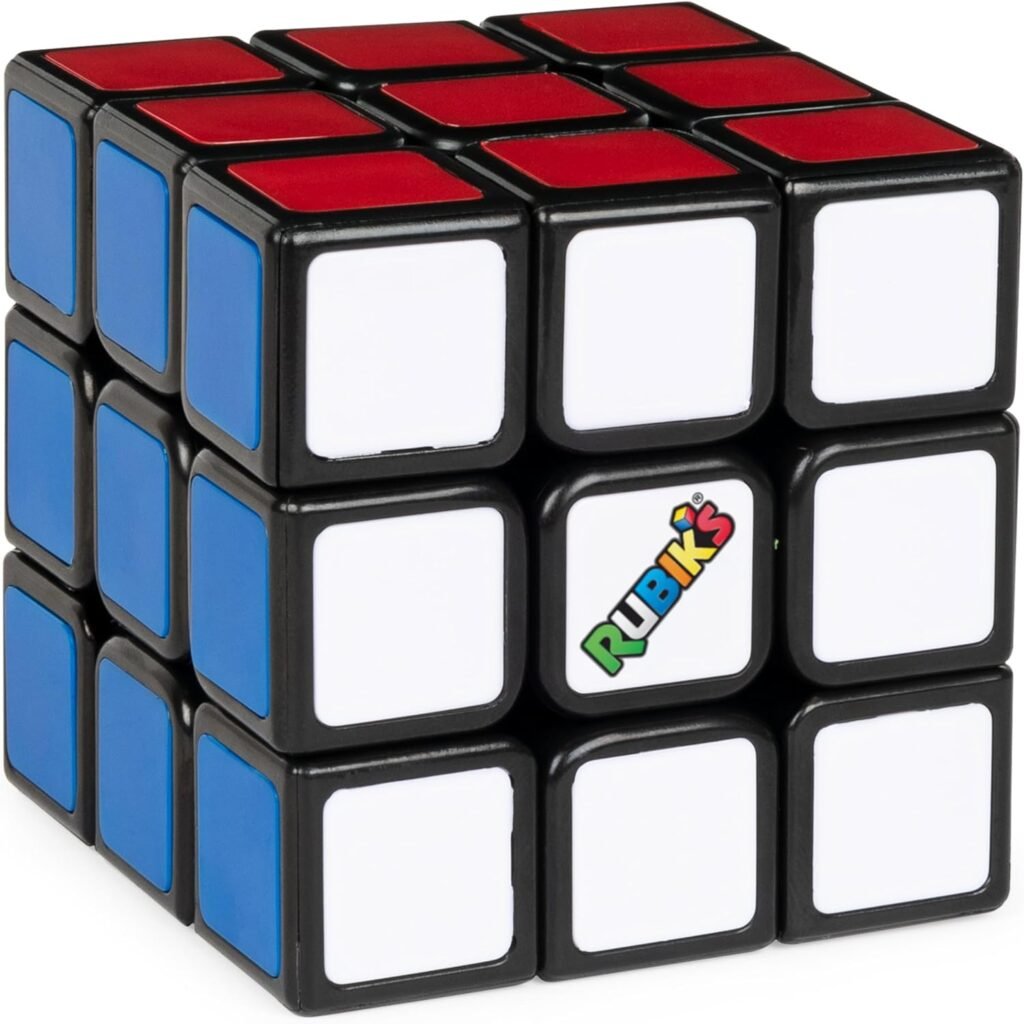
We can’t talk about the 90s without the Rubik’s Cube. While a toddler won’t solve it, having one around for older kids (and yourself!) is a masterclass in persistence. It’s a 3D puzzle that requires spatial visualization and memory.
I’ve found that many parents give up on these because they’re “too hard.” But that’s the point! I watched Maya struggle with one for weeks. When she finally figured out one side, the boost to her self-esteem was massive. She learned that she could tackle something difficult without it being “instant.”
Don’t buy the “speed cubes” that spin too easily. The classic, slightly-clunky feel of the original requires more deliberate hand movements. It’s about the journey, not the three-second solve you see on YouTube.
If your child is really stuck, find a basic tutorial together. Learning to follow complex, multi-step instructions is a vital skill for middle school and beyond. It’s a way to show them that “help” is a tool, not a sign of failure.
Real Talk: Why Most “Developmental” Toys Fail
I’m going to be real with you: you can buy every toy on this list and your kid could still end up staring at a wall. The toy is only 20% of the equation. The other 80% is the environment you create.
The biggest mistake I see parents making today—and I made it too, believe me—is “over-parenting” the play. We want to show them the “right” way to build the tower or the “correct” color for the Lite Brite sun. When we do that, we kill the learning. We turn play into another chore.
I have discovered the hard way that if a toy has more than three batteries, it’s probably doing too much of the work. If the toy “talks” more than your child does during play, it’s a dud. The goal is to find tools that are “90% child, 10% toy.”
Also, don’t fall for the “educational” label on the box. “Educational” is often just marketing code for “expensive plastic.” A cardboard box and a roll of masking tape can be more developmentally appropriate than a $100 “smart” tablet. Trust your gut, not the packaging.
Parting Wisdom
Raising Sarah, Maya, and Leo wasn’t a series of perfect “educational moments.” It was a series of messy, loud, and often confusing days where we just tried to figure things out together. These toys stayed in our house because they grew with us. They didn’t just teach “facts”; they taught how to learn.
Your job isn’t to be a perfect teacher. Your job is to be a steady guide. Give them the tools, set the boundaries, and then step back. Watch what they do when they think you aren’t looking. That’s where the magic happens.
You’re doing a great job, even on the days when you trip over a block and want to hide in the pantry. You aren’t failing—you’re just learning alongside them.
What was your favorite toy growing up that you wish your kids played with more? Do you have a “vintage” find that keeps them occupied for hours? Let’s swap stories in the comments below!