
My living room floor disappeared under a sea of blinking, beeping, battery-draining plastic for about three years straight. Between Sarah, Maya, and Leo, we owned toys that sang at three in the morning, toys that needed a manual to operate, and at least two toys so “educational” they made my kids cry from boredom. I spent good money on all of it. And almost none of it got played with for longer than a week.
Here’s what I eventually learned the hard way: the more a toy does for the child, the less the child actually thinks. The toys my kids played with the longest — the ones that survived all three of them and still come out when the grandkids visit — were the ones that did almost nothing on their own. No batteries. No instructions. No “correct” way to play.
That’s the magic of open-ended toys. And the 2000s, for all its plastic chaos, actually gave us some genuinely brilliant ones.
Why the 2000s nostalgia? Pinterest reported a 140% surge in searches for 2000s-era kids’ toys going into 2026. Parents are rediscovering what worked — and finding these classics are still being manufactured, still showing up in Amazon’s best-seller lists, and still available for a fraction of what the flashy stuff costs.
Below are my ten picks. They’re grounded in what Amazon’s best-seller and “Toys We Love” data confirms people are actually buying, what child development research backs up, and — most importantly — what survived my three kids and came out the other side still worth playing with.
1. LEGO Classic Creative Brick Sets
The undisputed open-ended play champion
Ages 4+Building & Construction$20–$50 on Amazon
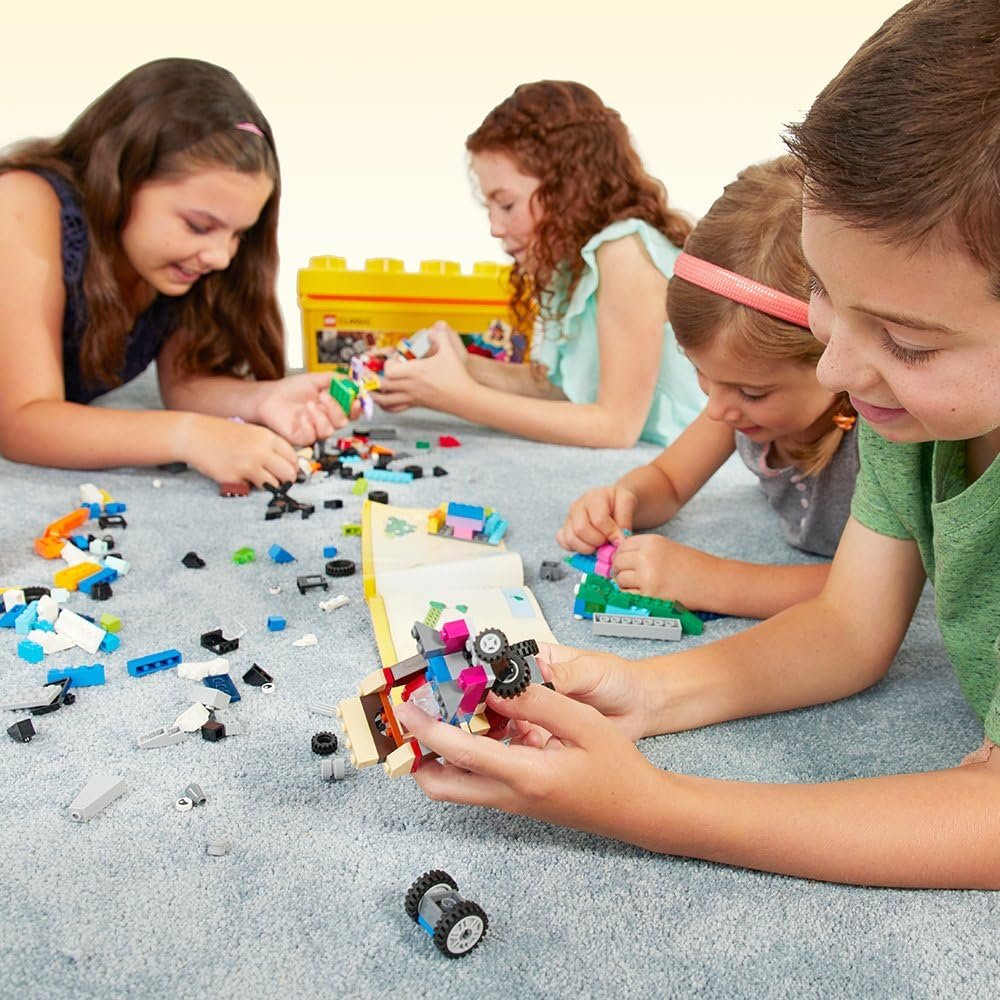
LEGO has been around since before most of us were born, but it hit its stride in the early 2000s with the classic brick sets — the ones that came with a pile of colorful bricks and absolutely zero storyline attached. No licensed character telling your kid what to build. Just bricks, imagination, and a whole lot of possibility.
The thing about LEGO that most parents don’t realize until it’s too late: the themed sets are fine for a first build, but they become one-and-done experiences. Your kid follows the instructions, builds the spaceship, puts it on a shelf, and never touches it again. The Classic sets — LEGO’s line of unthemed brick collections — are the opposite. My daughter Sarah rebuilt the same pile of bricks into a house, a car, a zoo, and something she called “a robot cat hospital” across roughly 200 play sessions. That’s the ROI you want.
The LEGO Classic Medium Creative Brick Box consistently ranks in Amazon’s top sellers in the building toys category. It runs between $20 and $35 depending on the time of year, and buying two or three different Classic sets and combining them is significantly cheaper than buying themed sets and infinitely more versatile. Sarah still has her collection, and her daughter plays with the same bricks. That’s nearly two decades of use from one toy.
If you’re looking to start a LEGO habit without breaking the bank, check the Amazon “used — very good” listings. LEGO bricks are virtually indestructible, and buying used saves you 30–50% off retail. The bricks are identical to new ones.
2. Magna-Tiles Magnetic Building Tiles
The toy that quietly teaches geometry
Ages 3+Magnetic Building$25–$100 on Amazon
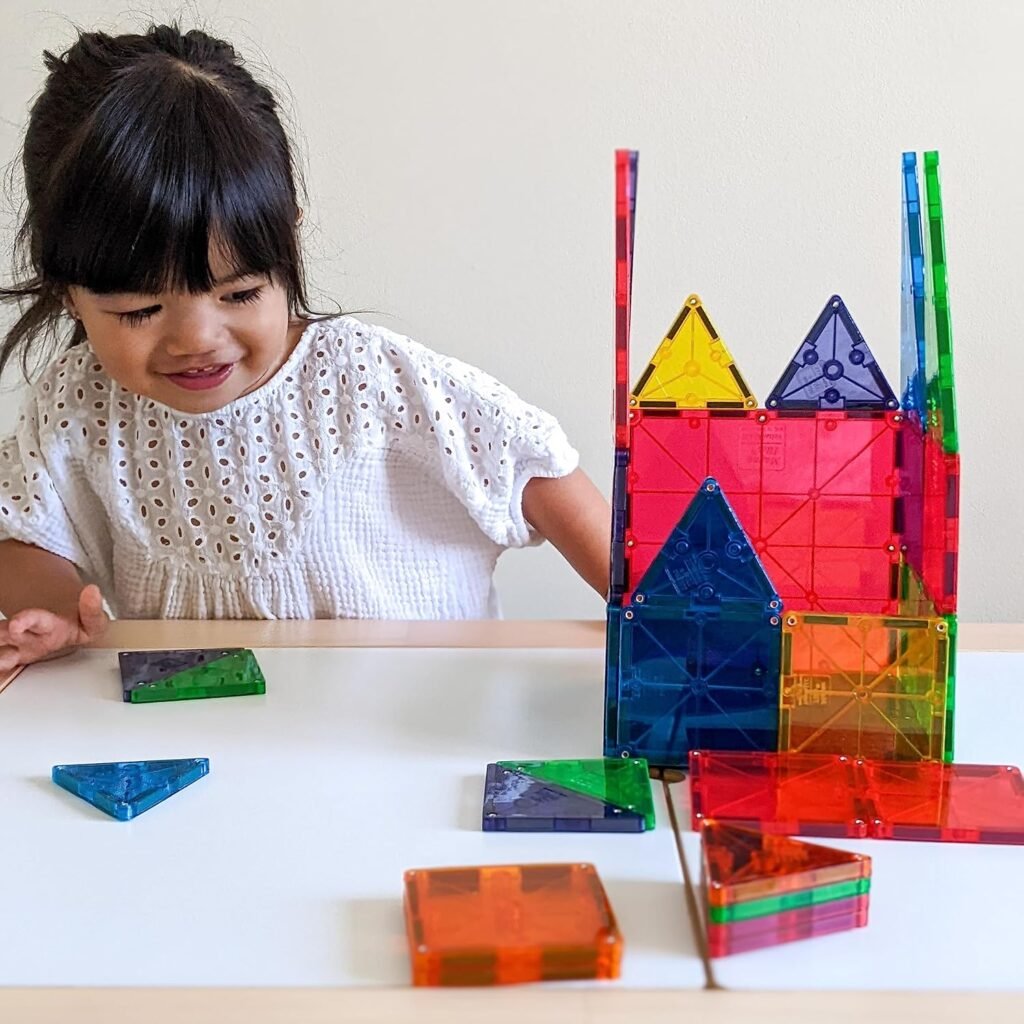
Magna-Tiles arrived in the early 2000s and immediately changed the building toy landscape. These are flat, transparent geometric tiles with magnets embedded in the edges, and they click together to form 3D structures in a way that feels genuinely satisfying. My son Leo was obsessed with them from age three well into his early teens — at three he was making wobbly towers, by twelve he was constructing elaborate geometric sculptures that I genuinely couldn’t figure out.
What makes Magna-Tiles worth every dollar is that they grow with the child. A three-year-old explores shape and color. A six-year-old tests structural stability. A nine-year-old starts experimenting with architecture and symmetry. There’s no ceiling on what you can build, and because the tiles snap apart so easily, there’s very little frustration involved. Leo always came back to them, even during his “I only care about video games” phase. The tiles just sat there looking colorful and inviting, and eventually he’d sit down and start building again.
Amazon’s “Toys We Love” list for 2025 specifically cited Magna-Tiles as a standout pick, and the brand’s Classic 37-piece set regularly sells for around $25–$30 during sales. The full 100-piece set runs about $60–$70. The slightly cheaper alternative brand, PicassoTiles, is compatible with Magna-Tiles and works just as well — a great option if you want more pieces without the full brand price tag.
One thing I’d caution: start with a bigger set than you think you need. The 37-piece starter is fine for introducing the toy, but kids quickly want more tiles to build bigger things. Buying the 100-piece set upfront, or mixing Magna-Tiles and PicassoTiles together, is a smarter long-term investment.
3. Play-Doh Classic Compound Sets
Messy, sensory, irreplaceable
Ages 2+Sensory & Creative$7–$25 on Amazon
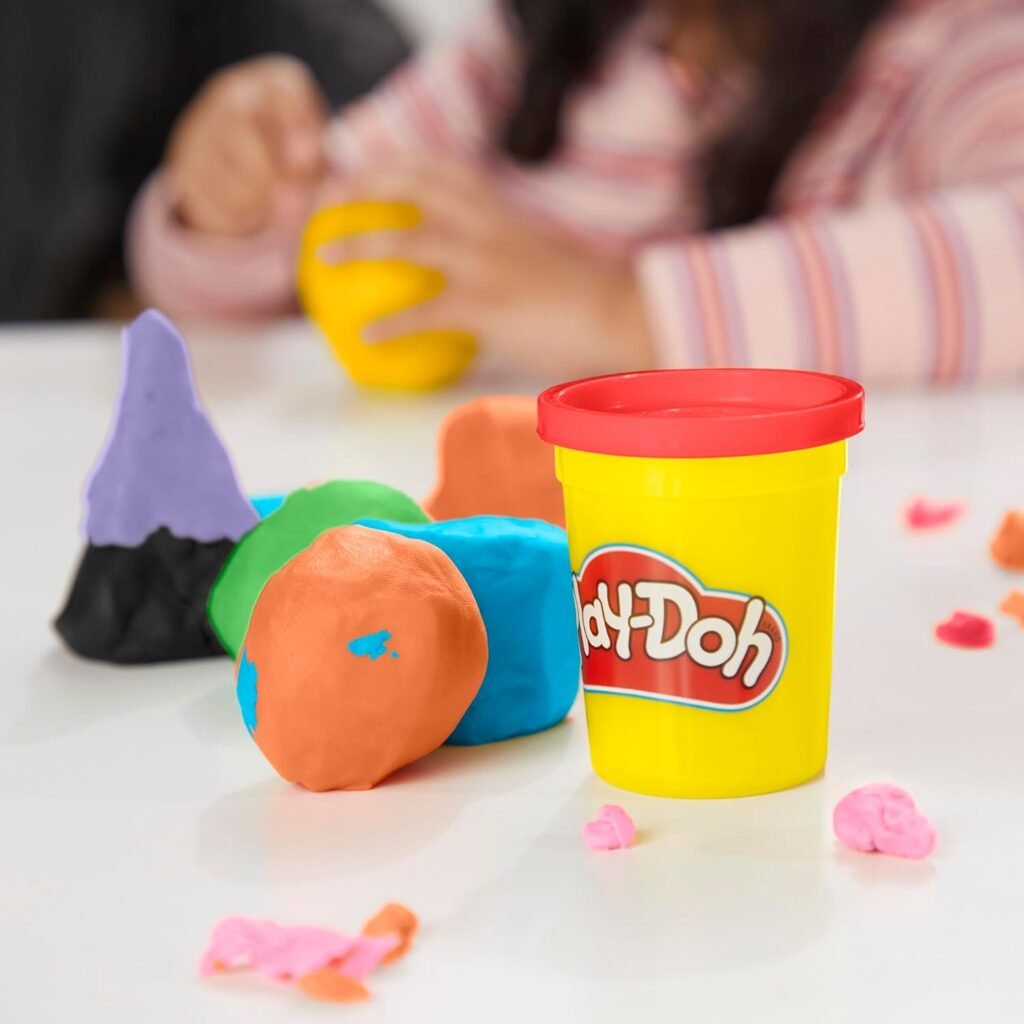
I know what you’re thinking: Play-Doh gets ground into the carpet. Play-Doh dries up in a week if you leave the lid off. Play-Doh ends up in someone’s hair. All of that is true. And it is still, without a doubt, one of the most genuinely creative toys ever made for young children.
The reason Play-Doh works so well developmentally is that it offers complete creative control with zero failure. There is no “wrong” thing you can make with Play-Doh. My youngest, Maya, went through a phase between ages two and five where she made Play-Doh food for an elaborate pretend restaurant every single day after preschool. It was her decompression ritual. She’d roll out her “spaghetti,” shape her “meatballs,” and serve me a Play-Doh dinner with the seriousness of a Michelin-starred chef. The sensory engagement alone — squishing, rolling, pressing — is genuinely calming for young kids.
Play-Doh’s classic multi-can sets consistently appear in Amazon’s best-seller list under arts and crafts for kids, and they’re among the most affordable open-ended toys you can buy. A 10-pack of classic colors regularly runs between $7 and $12. Amazon’s 2025 “Toys We Love” list highlighted the Play-Doh Barbie Garden Playset at under $20 as a notable pick, but honestly, you don’t need a themed set. A plain multi-color pack and a set of small plastic tools (available for under $5) is all kids really want.
Pro tip from a parent who has scrubbed Play-Doh out of many things: keep it to hard floors only, buy the can refills in bulk when they go on sale, and accept that a little Play-Doh chaos is a very small price for an hour of genuine creative play.
4. LEGO DUPLO Classic Brick Box
For the under-5 crowd who needs the real thing
Ages 18 months – 5Building & Construction$30–$65 on Amazon
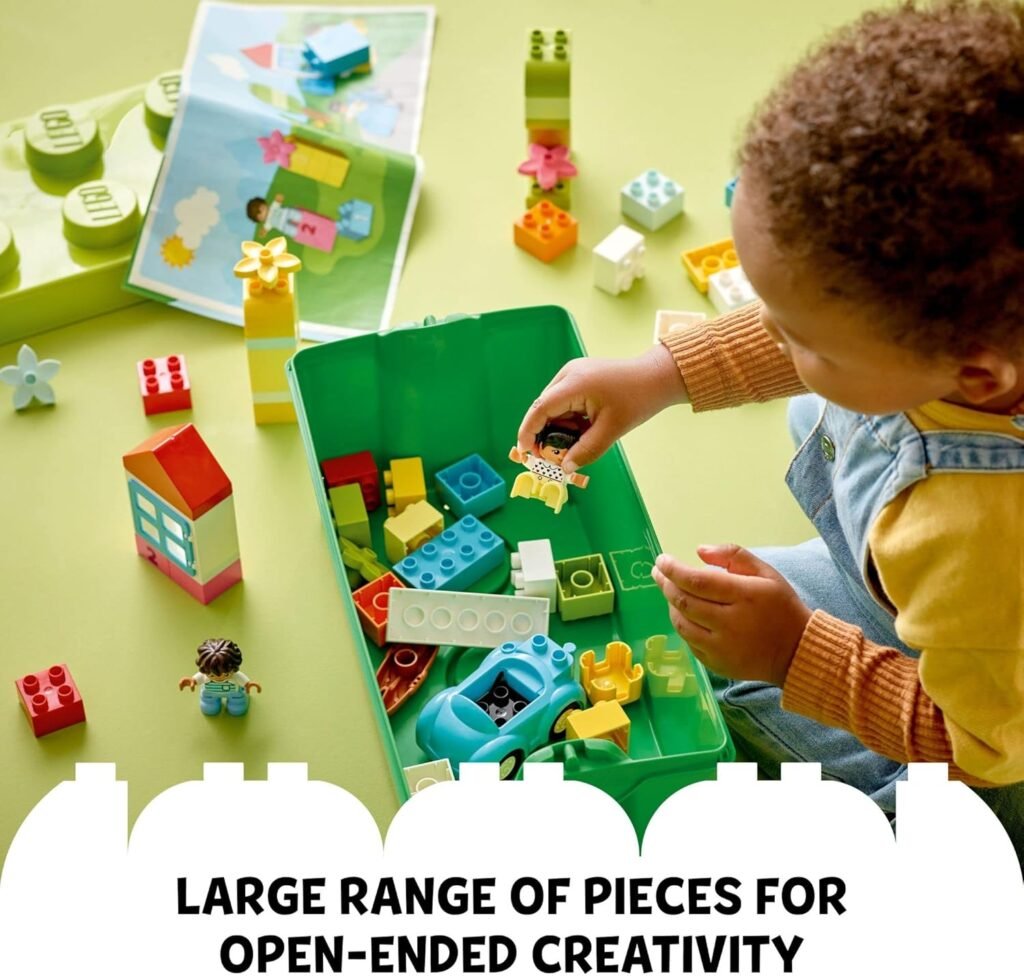
DUPLO is what you give toddlers before they’re ready for regular LEGO bricks — the pieces are twice the size, which means they’re easy for little hands to grip and won’t become a choking hazard. But here’s what I’ve found that most people don’t say out loud: DUPLO is actually more open-ended than standard LEGO for very young kids, because the bigger pieces mean faster building, less frustration, and more time actually playing rather than fiddling with tiny connectors.
All three of my kids started on DUPLO around 18 months, and every single one of them came up with play scenarios I never anticipated. Leo used his DUPLO set almost exclusively to build “hospitals” for his toy dinosaurs. Sarah built towers and then spent equal time knocking them down. Maya lined hers up into long trains and narrated elaborate stories about where they were going. The toy provided zero narrative — they invented all of it themselves.
The Classic Brick Box and the Number Train set are the two DUPLO items I consistently recommend, and both appear regularly in Amazon’s top-selling building toys. The best part: DUPLO bricks are compatible with standard LEGO bricks, so when your child ages out of DUPLO, the collection doesn’t go to waste — it gets absorbed into their bigger LEGO builds.
Watch for Amazon Lightning Deals on DUPLO sets, especially in October and November. I’ve seen the Classic Brick Box drop to $30 from its regular $50 price point during those sales, and that’s the moment to stock up for holiday gifts or birthday presents.
5. Hot Wheels Basic Car Collections
Simple, durable, endlessly replayable
Ages 3+Imaginative Play$1–$2 per car on Amazon
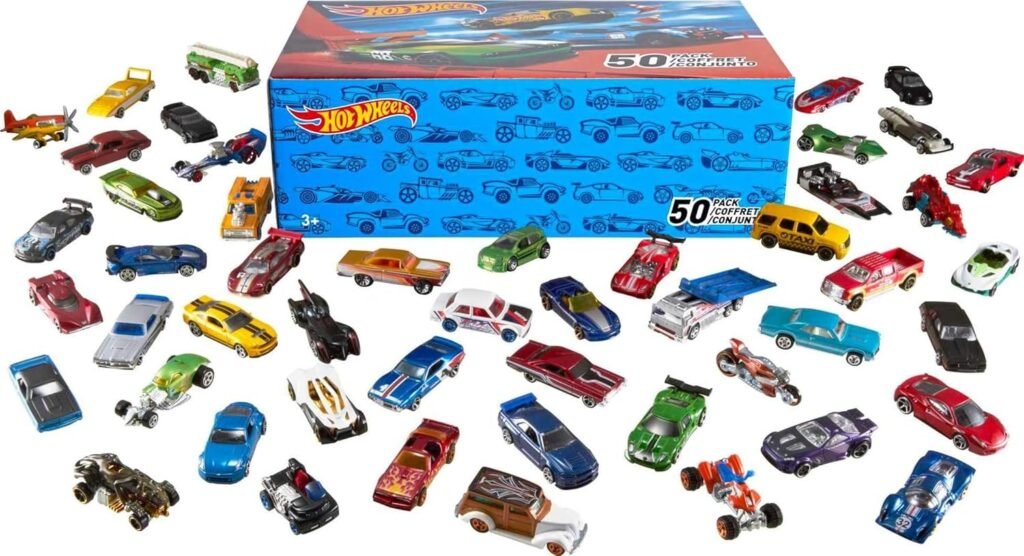
Hot Wheels are one of the oldest open-ended toys still in production, and for good reason. A basic Hot Wheels car — a $1.25 piece of die-cast metal — has sparked more creative play in children than toys worth ten or twenty times the price. My son Leo’s Hot Wheels collection started at age three and he was still adding to it at fourteen. The stories he created around those tiny cars, the road systems he built out of masking tape on the kitchen floor, the elaborate race tournaments he organized — all of it came purely from his own imagination.
What I love about Hot Wheels specifically (versus the track sets, which I have mixed feelings about) is that the basic cars require children to create their own play environment. They build the story. They invent the rules. They decide where the road goes. That kind of self-directed play is genuinely harder to find in the toy market than you’d expect, and Hot Wheels delivers it for pocket change.
Hot Wheels basic cars have been on Amazon’s best-seller list in the die-cast vehicles category for years running. You can get a 20-car pack for around $25, which breaks down to about $1.25 per car. The Hot Wheels City Ultra Shark Car Wash even made Amazon’s 2025 holiday toy list as a featured pick if you want to combine the open-ended cars with some structured play. But my honest recommendation is to start with the basic cars, skip the elaborate track sets for now, and let your child create their own tracks with whatever’s around the house.
One parent tip: buy the storage case at the same time. A 20-car multipack loose in a toy bin becomes a chaotic mess within a week. A basic Hot Wheels carrying case for $8–$10 on Amazon keeps everything organized and makes it dramatically easier for kids to find the car they want — which means they actually play with the whole collection instead of just digging for the same two favorites.
6. Lincoln Logs Classic Sets
Old enough to be your great-grandmother’s toy, young enough to still matter
Ages 3+Building & Construction$30–$50 on Amazon
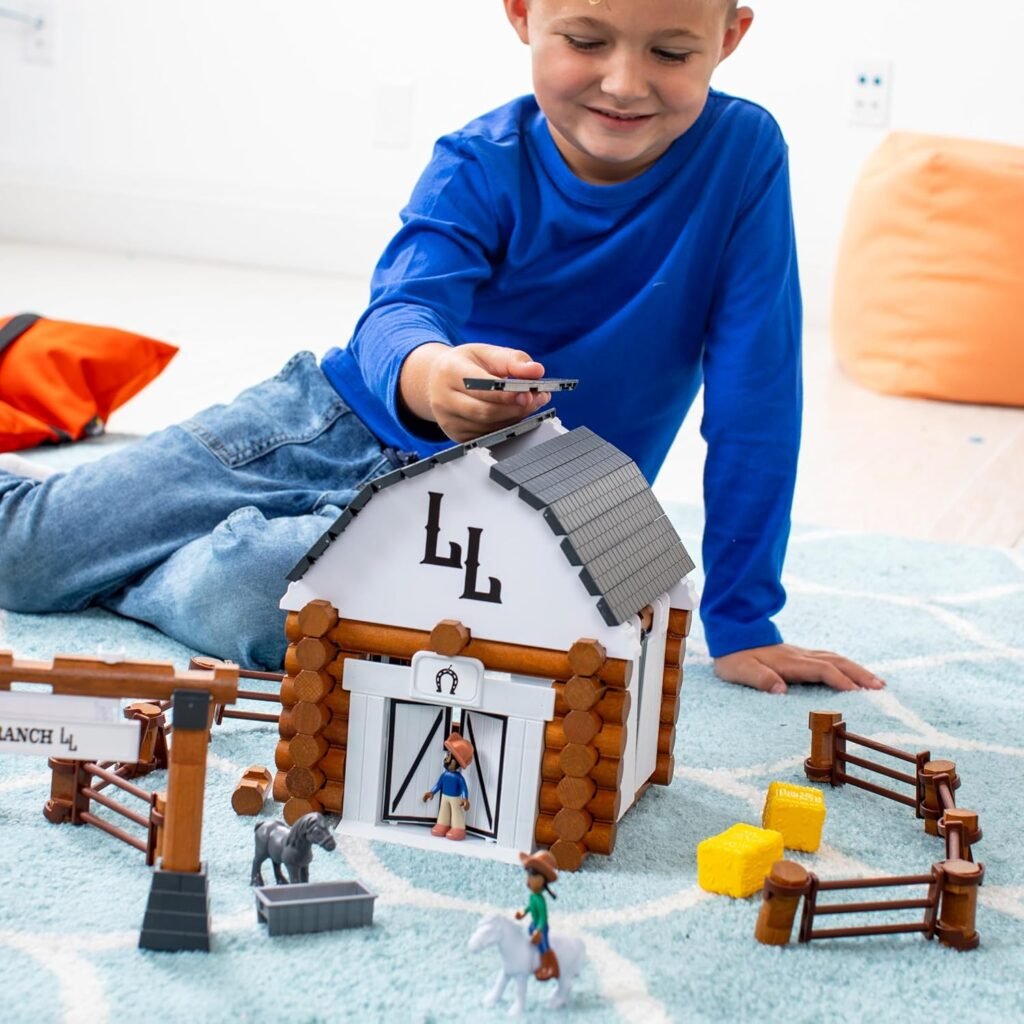
Lincoln Logs have been around since 1916 and are still showing up on STEM toy lists in 2026. That kind of longevity doesn’t happen by accident. There’s something about the interlocking wooden logs — the weight of them, the texture, the way they click together — that feels more satisfying than plastic building toys ever do.
The reason I recommend Lincoln Logs as part any open-ended toy collection is that they offer a different kind of building experience than LEGO or Magna-Tiles. The pieces are heavier and fewer, which slows the building process down in a way that actually encourages planning and spatial thinking. My daughter Maya, who tended to rush through everything, would slow down with Lincoln Logs in a way she never did with other building toys. She’d lay out the pieces before she started, think through what she was building, adjust her plan when something didn’t fit. It was the closest thing to watching a child think out loud that I’ve experienced with a toy.
The Lincoln Logs 2-Tiered Tree House Building Set has appeared on deal sites like Slickdeals at around $30 — down from a $40 retail price — and the classic Heritage sets are similarly priced on Amazon. These are STEM-certified toys that have won repeated awards for building and construction play. If you can find them used at a thrift store or garage sale, buy them immediately. Lincoln Logs age extremely well and used sets in good condition are virtually indistinguishable from new.
7. Playmobil Farm & Adventure Sets
The underrated storytelling toy every kid needs
Ages 4–10Imaginative & Narrative Play$50–$150 on Amazon
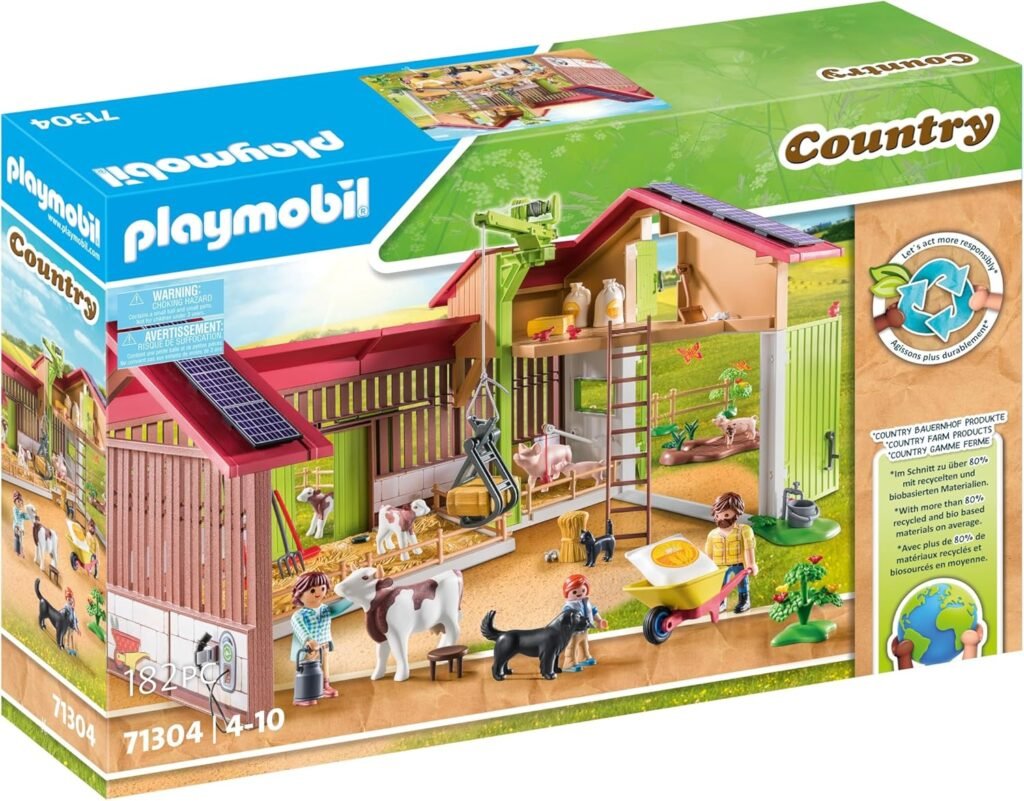
Playmobil doesn’t get nearly the credit it deserves, and I’ve found it’s a total waste of time to ignore it just because it’s less flashy than LEGO. The figures, the detailed accessories, the modular sets that connect to each other — Playmobil is specifically designed for narrative play, which means it requires children to build stories, develop characters, and problem-solve through imaginary scenarios. That’s a completely different kind of brain work than construction toys, and both are valuable.
My daughters played with Playmobil for years in ways I never orchestrated. Sarah used the farm set to run an elaborate animal rescue operation. Maya combined the farm with a camping set she got for her birthday and invented a summer camp for the figures that ran for about three weeks straight. Playmobil’s genius is in the detail of the accessories — the tiny pitchfork, the little water trough, the horses with their brushes. Each item becomes a prompt for a new story beat.
The Playmobil Farmhouse and Horse Farm sets are regularly available on Amazon for $40–$80 and frequently appear in the top-sellers list for imaginative play toys. Playmobil is also an excellent brand to find second-hand, since the figures and accessories are durable and the sets can be mixed and matched freely. A quick search on Facebook Marketplace or eBay will often turn up large Playmobil lots for a fraction of the retail price.
One caveat: Playmobil accessories are small and numerous. If you’re buying for a child under four, do an age-appropriate check before handing over a set with tiny accessories. The larger “1.2.3” line is designed for younger children and is a better entry point if your child is still at the “everything goes in the mouth” stage.
8. K’NEX Classic Building Sets
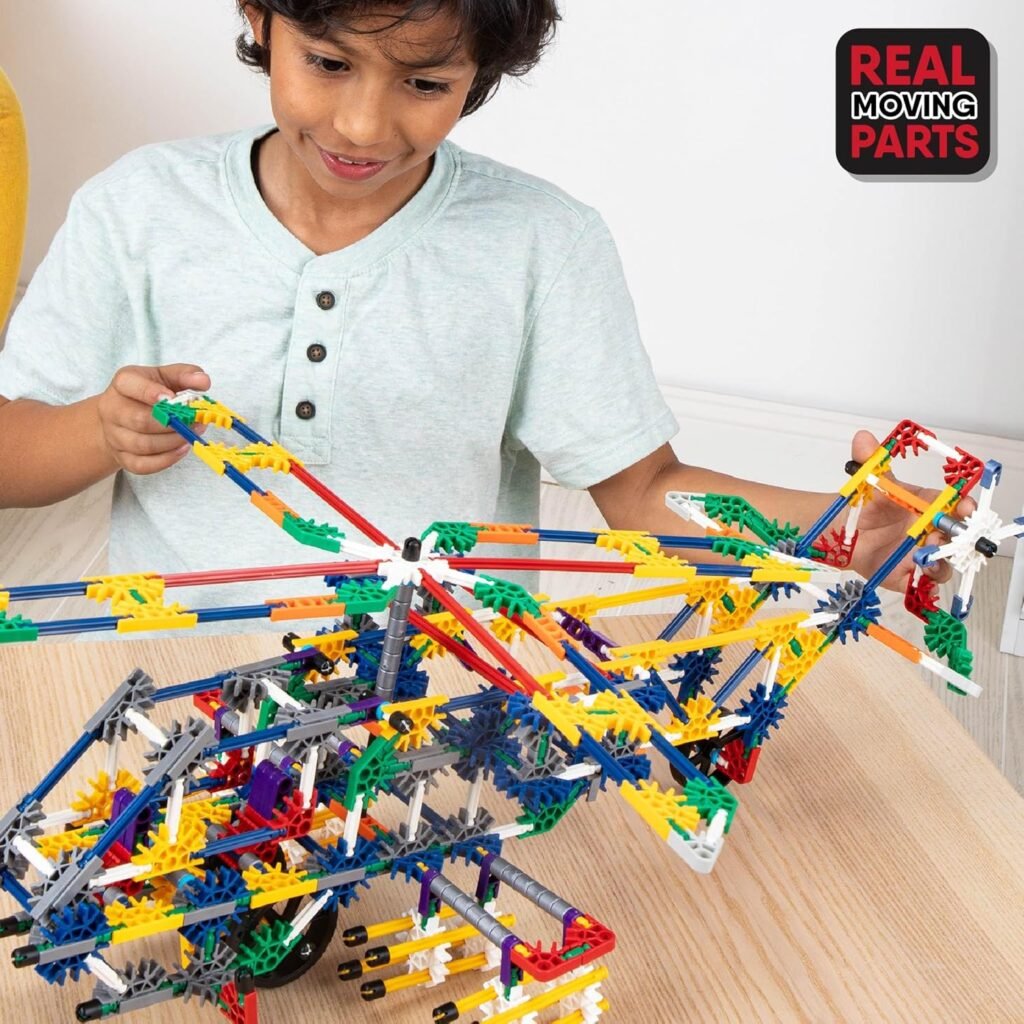
For kids who’ve outgrown DUPLO but aren’t ready to sit still for LEGO
Ages 5–12Engineering & Construction$20–$50 on Amazon
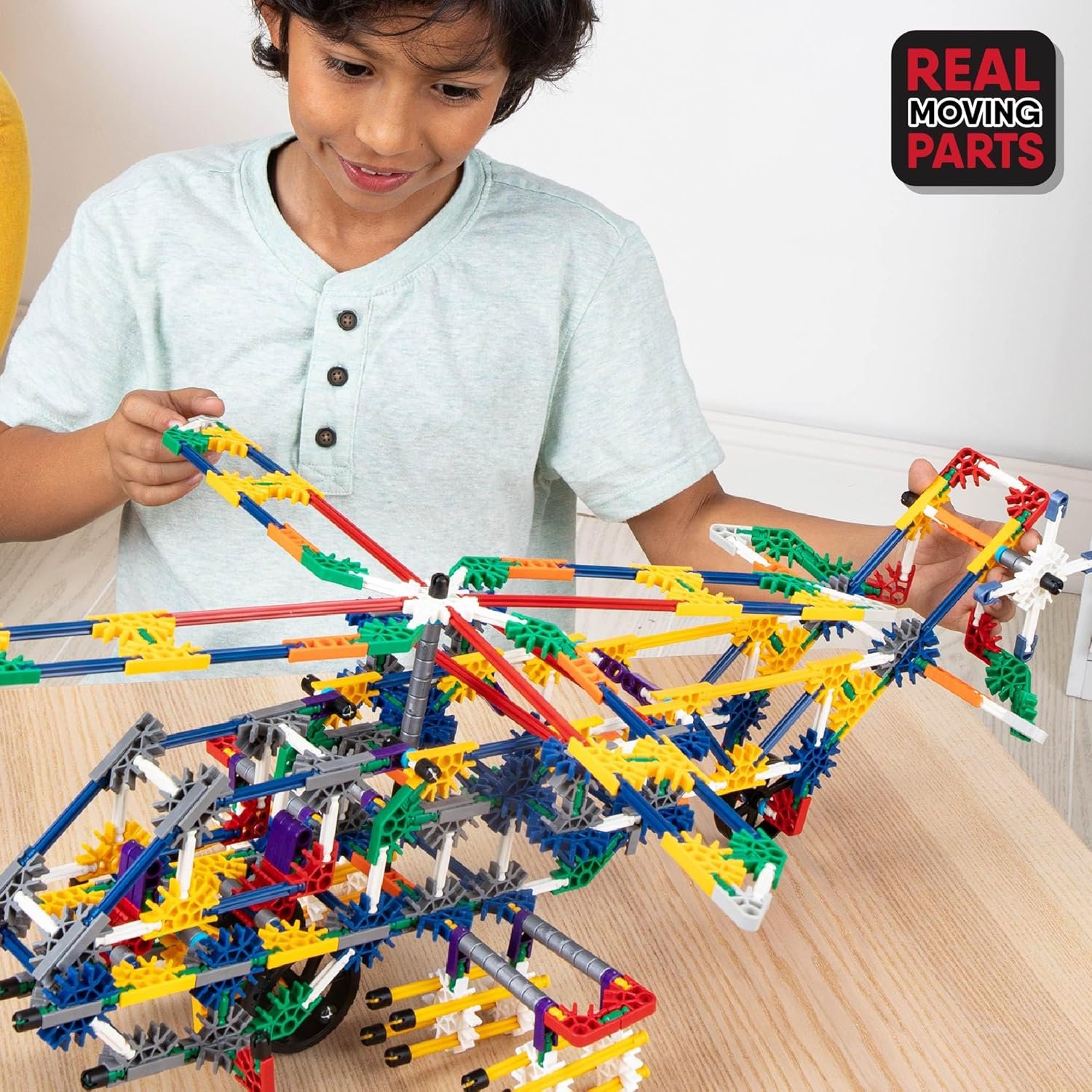
K’NEX arrived in the early ’90s but hit mainstream popularity in the 2000s, and it fills a specific gap in the building toy market that almost nothing else does. Where LEGO is about snapping bricks into flat structures and Magna-Tiles is about 2D shapes forming 3D solids, K’NEX is about rods and connectors forming frameworks — which means children can build things that actually move. Working ferris wheels. Roller coasters. Catapults. The engineering principles are real, and for kids between about 6 and 12, this is genuinely thrilling.
Leo discovered K’NEX around age seven and it became his primary toy for about three years. He built every project in the included booklet, then started deconstructing the instructions and modifying the builds, then eventually started designing entirely from scratch. Watching a child move from following instructions to adapting them to creating independently is one of the most satisfying things you can witness as a parent — and K’NEX produces that progression more reliably than almost any other building toy I’ve encountered.
Classic K’NEX sets are available on Amazon typically in the $20–$50 range, and older sets are frequently available used in excellent condition. The rods and connectors are simple enough that a missing piece or two rarely affects functionality — which means buying a used lot is usually a perfectly reasonable choice. The Motherly website noted that K’NEX’s motorized sets specifically offer a step up for kids ready for more complex builds, and I’d agree — the 70-piece starter is fine, but the motorized sets are where the real magic happens.
9. Lite-Brite Classic Light-Up Peg Sets
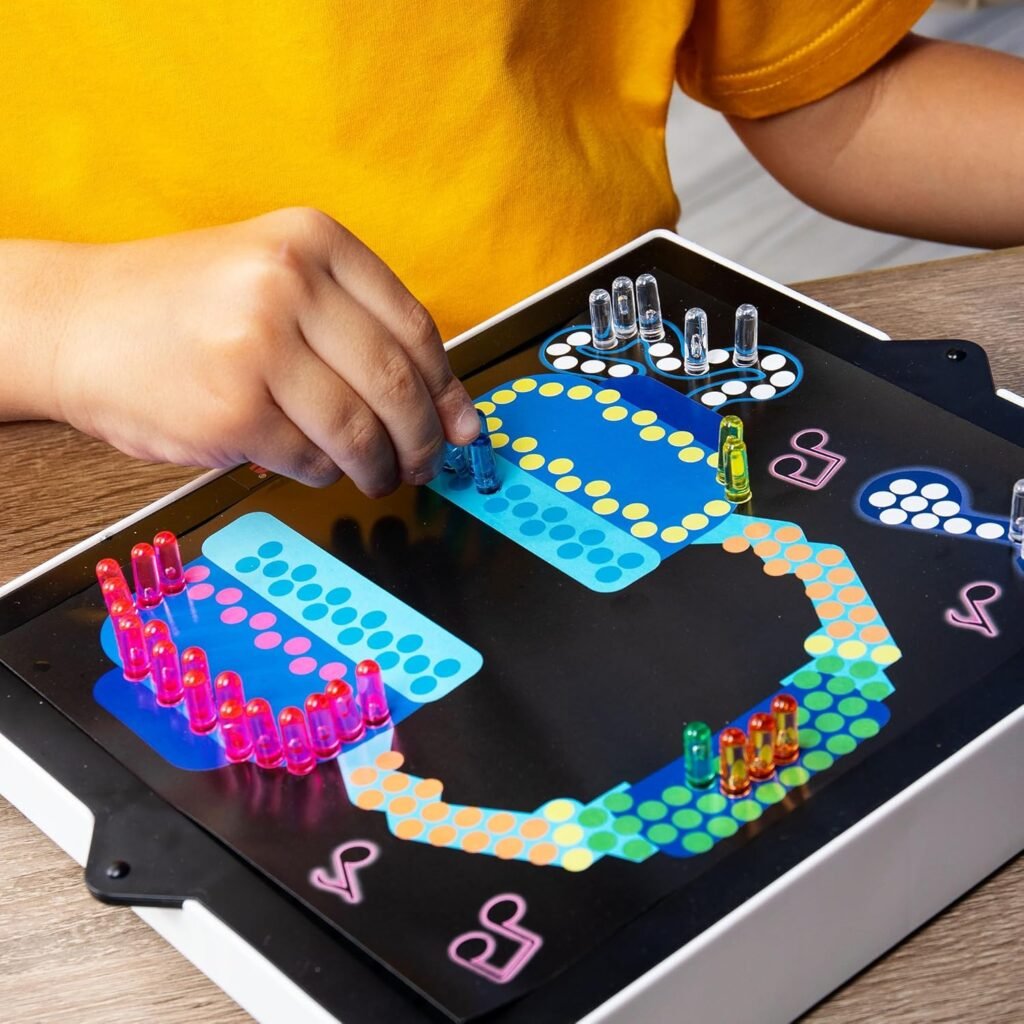
Art meets sensory play in one glowing package
Ages 4+Art & Creative$15–$30 on Amazon
Lite-Brite is the kind of toy that sounds gimmicky until you watch a child sit with it for two hours in complete silence. The concept is beautifully simple: a backlit board, a set of colored translucent pegs, and a black sheet with a pattern on it (or a blank sheet for free creation). Push a peg into a hole and it glows. Build a picture peg by peg, and the light transforms it into something that looks genuinely beautiful.
What I appreciate about Lite-Brite from a gentle parenting standpoint is that it’s inherently calming. The process of placing each peg is slow, methodical, and satisfying — it produces a kind of focused concentration that very few toys manage. My daughter Sarah used Lite-Brite almost exclusively as a wind-down activity in the evenings, and it worked better than any screen timer I ever tried. There was something about the soft glow and the tactile act of pressing each peg that just settled her.
The updated version of Lite-Brite uses LED lighting instead of the old bulb, which makes it safer and more portable. It runs $15–$30 on Amazon, regularly appears on lists of best kids’ art toys, and is genuinely versatile — kids can follow the included templates or create completely freeform designs. The blank black sheets are the real hero of the set; I’d recommend ordering extra packs of those immediately, because kids go through them fast once they start creating their own designs.
10. Classic Wooden Unit Blocks
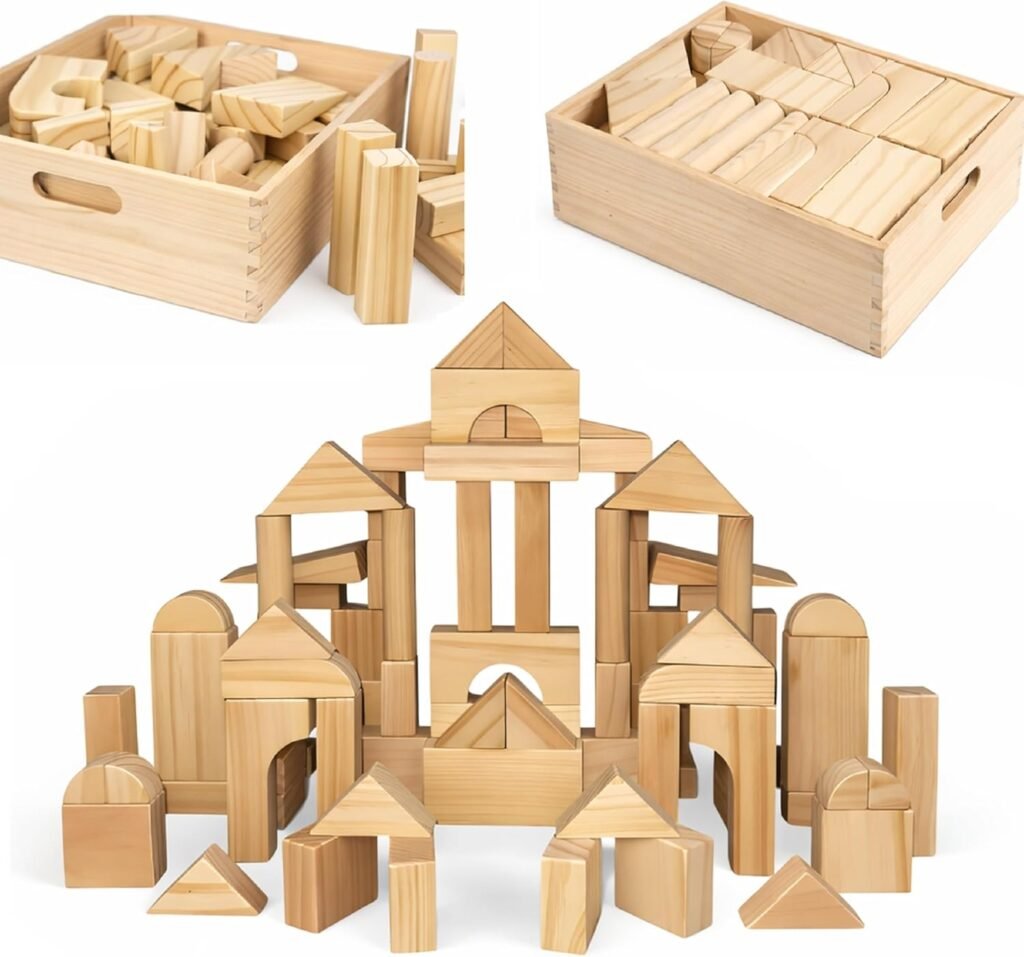
The oldest open-ended toy that still outperforms everything else for under-6s
Ages 1–8Building & Spatial Play$30–$80 on Amazon
I’ve saved this one for last because it gets the least attention but arguably deserves the most. Classic wooden unit blocks — the kind that come in a set of basic shapes, all proportionally related to each other — are the foundational open-ended toy. They predate LEGO. They predate Magna-Tiles. They predate essentially everything else on this list. And they are still, in 2026, showing up in every credible early childhood development resource as one of the best toys you can give a young child.
Here’s my honest experience: wooden unit blocks are the toy I was most dismissive of and ended up being most grateful for. They look boring. There’s no color, no magnets, no clever mechanism. They’re just blocks in different sizes. And all three of my kids played with ours more creatively and more persistently than almost anything else in our toy collection. The structure they provide is purely physical — gravity, balance, proportion. Children figure out all of that through play, and the figuring-out is the entire point.
Brands like Melissa & Doug and Battat offer wooden unit block sets in the $30–$80 range on Amazon, with different size sets for different budgets and ages. The Melissa & Doug unit block sets specifically appear on Amazon’s best-seller lists for building toys and consistently draw strong reviews. Buy the biggest set you can afford — you can always add to a small collection, but more blocks genuinely means more creative possibility for young builders.
These blocks also age better than almost any other toy. My original set of wooden blocks has survived thirty years and three children. They live in a crate in the garage now, and every grandchild who visits makes a beeline for them within about ten minutes of arriving. That kind of staying power is worth every penny.
⭐ Quick Side Note: The Spirograph
If your child is between about 6 and 12 and shows any interest in art or patterns, the Spirograph deserves a special mention. It’s technically older than the 2000s, but it saw a major revival in that decade and has been updated with smoother gears and wider pen compatibility. It lives at the intersection of math and art — children create intricate geometric designs without needing any formal art training — and it produces genuine surprise and delight even on the hundredth use.
It runs about $20–$25 on Amazon, fits in a backpack, and requires zero batteries, zero setup, and zero parental involvement. For a child going through a creative or detail-oriented phase, it’s one of the most underrated picks out there.
Real Talk: What Can Go Wrong (And What’s Not Worth the Effort)
Before you add everything on this list to your cart, let me be direct about what doesn’t always go smoothly.
The number one mistake I made with open-ended toys was buying them and then stepping back entirely. I had this idea that open-ended toys were “self-sufficient” — that you hand a child a pile of blocks and walk away and they figure it out. For some kids, that works beautifully. For others — particularly kids who’ve been raised on screen-based entertainment that constantly feeds them the next thing to do — open-ended toys can produce frustration and boredom at first. They’ve lost the muscle for unstructured play, and building that muscle takes time and patience.
My advice: for the first week or two with a new open-ended toy, sit down and play alongside your child without directing the play. Don’t tell them what to build or how to use it. Just be present, handle some of the pieces yourself, and let your engagement model that this is a worthwhile activity. They’ll find their own way in, but sometimes they need a witness first.
What’s genuinely not worth the effort:
- The elaborate themed track sets for Hot Wheels or LEGO: Kids spend more time setting them up than playing with them, and the single-use nature defeats the whole open-ended purpose. Start with the basics.
- Buying too many toys at once: I’ve found this is a total waste of money, even if it looks like the more generous option. Too many toys produce overwhelm, not creativity. Rotate your toy supply instead of having everything available all the time.
- Buying cheap knockoffs for Magna-Tiles specifically: The PicassoTiles brand is genuinely good and compatible. Truly cheap generic magnetic tiles, however, often have weak magnets that frustrate children. Spend a little more or buy the recommended budget alternative — don’t go cheaper than PicassoTiles on magnetic tiles.
- Buying a toy and expecting instant engagement: Some of the best toys on this list took my kids two or three weeks to warm up to. Give it time before you declare something a failure.
The honest truth is that no toy fixes boredom on its own. What changes how your children play is the environment you create around the toy — time, space, low pressure, and your presence without your direction. That’s the real work, and it’s worth it.
Parting Wisdom: You’re Not Behind
Here’s what I want you to hold onto from all of this: choosing open-ended toys is not a complicated parenting philosophy. It’s just a practical decision. These toys last longer, grow with your child, and — based on what Amazon’s own best-seller and recommendation data confirms — they’re what families are actually gravitating back to when the novelty of flashier options wears off.
You don’t need to throw out everything your child owns and replace it with wooden blocks and LEGO. Start with one or two things from this list, observe how your child plays with them, and adjust from there. Every child is different — Sarah needed narrative structure, Leo needed engineering challenge, Maya needed sensory input. The right toy for your child is the one they actually return to.
And if your child ignores the first thing you try? That’s not failure. That’s data. You’re learning what they need, and that’s exactly what parenting looks like when you’re paying attention.
Over to You
What open-ended toy from your own childhood (or your child’s) has had the most staying power in your house? I’d love to hear which ones surprised you — the toys you didn’t expect to work that ended up being absolute favorites. Drop your thoughts in the comments below, and if you have questions about any of the toys on this list or want recommendations for a specific age or interest, ask away. That’s what the comments are for.