
By October of Maya’s second year, I had a toddler who refused to nap, a pile of leaves she’d scattered across my living room floor, and a husband asking why the entryway smelled like a compost bin. I had tried to bring “the magic of autumn” indoors with a basket of pinecones and acorns, and within twenty minutes she’d decided the basket was a hat and the acorns were snacks. That was the day I learned that fall activities for toddlers don’t need to be Pinterest-perfect. They just need to burn energy, teach something small, and not end in an ER visit over a swallowed acorn.
Fall is genuinely one of the best seasons for toddler activities. The heat of summer is gone, the bugs thin out, and there’s a natural curriculum sitting right outside your door: crunchy leaves, cooler air, pumpkins, and shorter days that make bedtime routines easier to enforce. Below are eleven activities I actually used with Sarah, Maya, and Leo, sorted by what worked, what half-worked, and one that I’m only including because so many readers ask about it.
1. Leaf Pile Jumping (Yes, Just This)
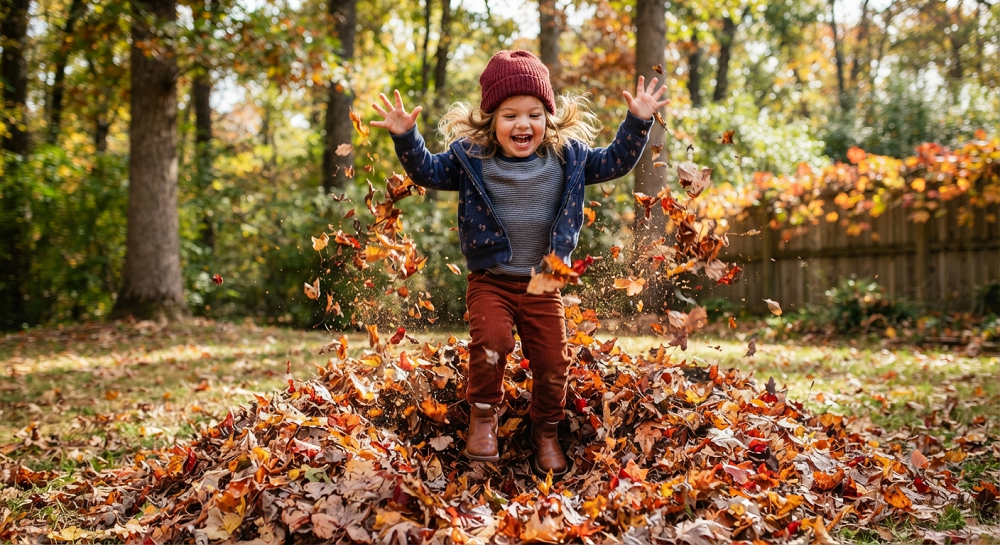
I know it sounds too simple to earn the top spot on a list like this, but leaf pile jumping is the single highest return-on-effort activity I’ve ever done with a toddler. You rake, they jump, everyone’s tired by lunch.
Here’s the thing nobody tells new parents: the raking is the activity. Toddlers between 18 months and 3 years old are obsessed with cause and effect, and watching a scattered pile become an organized mound, only to destroy it themselves, checks every developmental box for that age. You don’t need a fancy yard. A single tree’s worth of leaves on a shared patch of grass works fine.
Give your toddler a small rake or even a stick, and let them “help.” It will take three times longer and the pile will look terrible. That’s fine. The goal isn’t a magazine-worthy leaf pile. The goal is a toddler who has used large motor muscles, practiced turn-taking if siblings are involved, and burned off enough energy to eat dinner without theatrics.
One safety note I learned with Leo: check the pile for hidden sticks or rocks before anyone dives in face-first. He came up with a scraped cheek once, and I felt terrible for not checking first. Now it’s a two-second habit before every jump session.
2. Nature Scavenger Hunt (Keep the List Short)
I’ve seen scavenger hunt printables online with fifteen items on them, and I want to gently tell you: your two-year-old does not care about fifteen items. Three to five is the sweet spot.
Pick things that are genuinely easy to find in your area during fall: a red leaf, a pinecone, an acorn, something smooth, something bumpy. Draw simple pictures next to the words since most toddlers can’t read yet, or just say the items out loud and let them repeat back what they’re looking for.
This activity works because it gives toddlers a job. Toddlers love having a job, even a made-up one. Walking becomes purposeful instead of aimless, which in my experience means fewer meltdowns about “I don’t want to walk anymore” halfway through the block.
A quick side note here: bring a small bag or bucket. Pockets fill up fast, and a toddler with both hands full of acorns cannot also hold your hand at a crosswalk. Learned that one the hard way with Sarah near a busy intersection, and it scared me enough to make the bucket a permanent rule.
3. Pumpkin Painting (Not Carving)
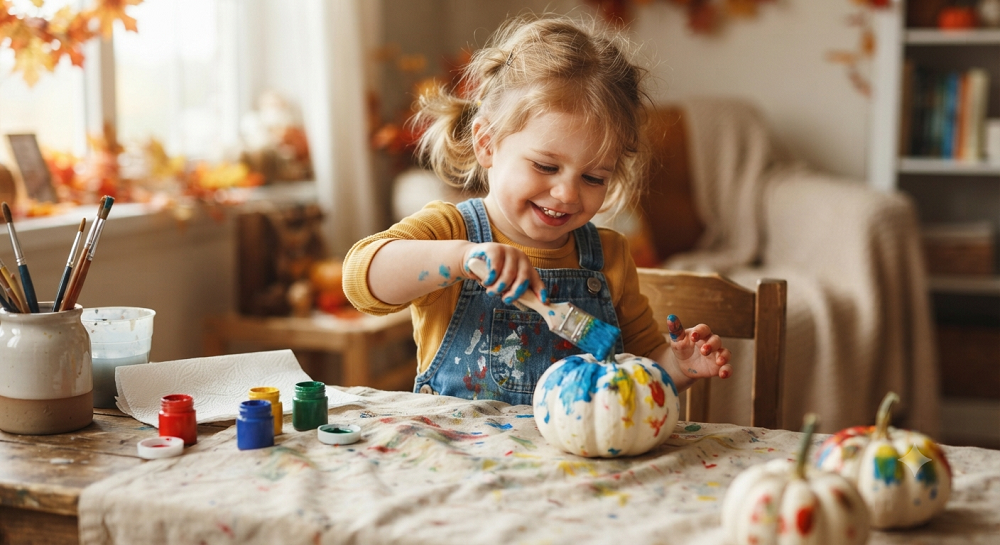
I want to be direct about something: carving pumpkins with a toddler under three is not worth the effort, and I’ll explain why in the Real Talk section below. Painting, though, is fantastic.
Grab a small pumpkin, some washable paint, and a few paintbrushes with fat handles that are easy for small hands to grip. Lay down a tarp or old shower curtain, because paint will end up somewhere you didn’t intend. This is not a “might happen.” This will happen.
Let your toddler paint the whole pumpkin one solid color, or hand them a few colors and let chaos reign. There’s no wrong way to do this. The sensory experience of paint on a bumpy pumpkin surface is genuinely stimulating for toddlers, and the pride they feel displaying “their” pumpkin on the porch afterward is worth every bit of the cleanup.
I’ve found that handprint pumpkins are also a hit and make a sweet keepsake. Press your toddler’s paint-covered hand onto white paper, let it dry, and you’ve got a little piece of fall memorabilia that grandparents genuinely lose their minds over.
4. Apple Taste Testing
This one doubles as an activity and a sneaky way to expand a picky eater’s palate. Buy three or four different apple varieties: Honeycrisp, Granny Smith, Fuji, Gala, whatever’s available. Slice them into small pieces and lay them out on a plate.
Let your toddler try each one and react however they want. Some kids will spit out the Granny Smith immediately because of the tartness. Others will surprise you completely. Leo, who refused almost every green food on principle for a solid year, loved Granny Smith apples specifically because they were sour, and that told me something useful about his taste preferences going forward.
You can turn this into a simple “which do you like best” conversation, even if your toddler can’t fully answer in words yet. Pointing counts. Nodding counts. The goal is exposure and language-building around taste, texture, and preference, not a formal survey.
Not not a trick, but a genuine tip: don’t force a bite if they refuse. Toddlers often need to see a food multiple times before trying it. Pushing it turns a fun activity into a power struggle, and nobody wins that one.
5. Sensory Bin With Fall Materials
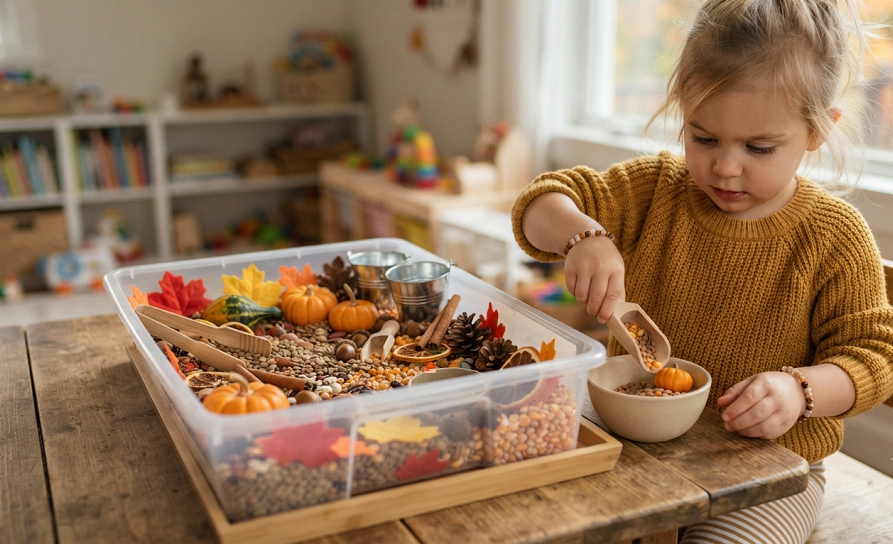
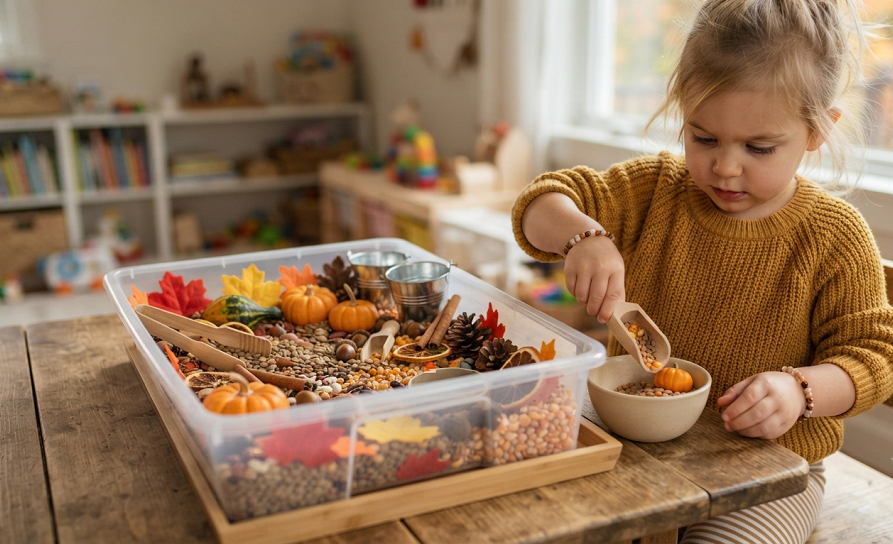
A sensory bin is just a shallow container filled with material for toddlers to dig through, scoop, and explore with their hands. For fall, I’ve used dried corn kernels, small gourds, pinecones, and dried leaves, all mixed together in a large plastic tub.
Add some kitchen tools: measuring cups, a small shovel, a funnel. Toddlers will spend a surprisingly long stretch of time scooping material from one container to another. This is real work for their developing fine motor skills, even though it looks like play.
Set this up somewhere you don’t mind a mess, because material will end up on the floor no matter how careful you are. A cheap plastic tablecloth underneath saves a lot of sweeping later.
If you’ve got a toddler who still puts everything in their mouth, skip the small items like acorns or corn kernels and stick to larger material like big pinecones or leaves. Safety first, always, even when it means a less exciting bin.
6. Fall-Themed Baking
Toddlers can’t do much active baking, but they can dump ingredients into a bowl, stir with supervision, and press cookie cutters into dough. Pumpkin muffins, apple cinnamon oatmeal, or simple sugar cookies cut into leaf shapes all work well.
Pre-measure ingredients into small bowls before your toddler joins you. This keeps the actual process short enough to hold their attention, since most toddlers max out at ten or fifteen minutes of focused activity before wandering off.
Let them do the “fun” parts: pouring, stirring, pressing cookie cutters. Skip the parts that require precision or heat, obviously. I always narrated what I was doing while Sarah and Maya helped, which built early vocabulary around cooking terms like “mix,” “pour,” and “measure.”
The payoff here isn’t just the baked good. It’s watching a toddler feel proud that they “made” something, even if your contribution was 90% of the actual work. That pride matters more than the muffins do.
7. Nature Walk With a Wagon
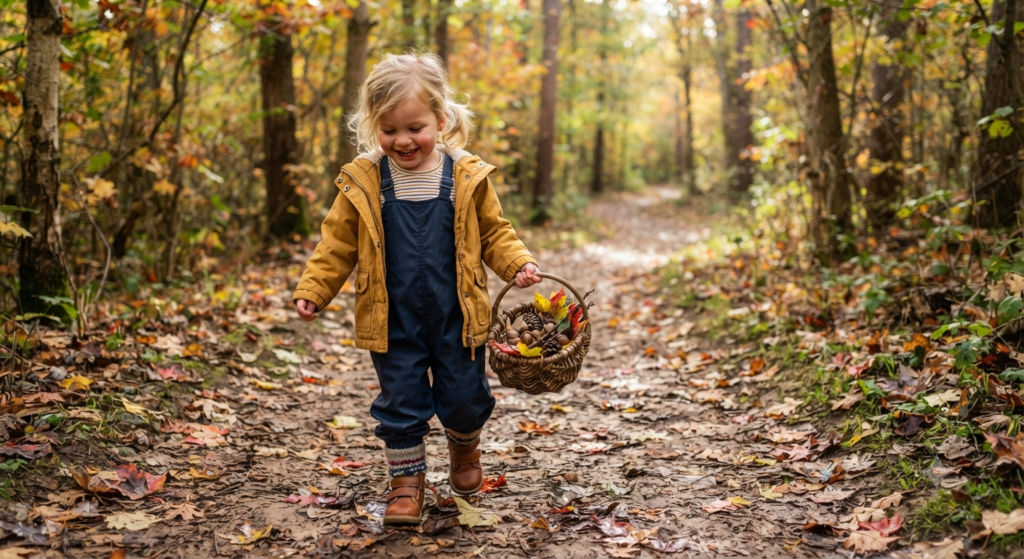
A basic walk around the neighborhood becomes an entirely different experience in fall, mostly because of temperature. No more sweat-soaked toddlers refusing to move another step in July heat. Cooler air means longer walks with fewer complaints.
Bring a wagon if your toddler tires out fast, which most do around the fifteen-minute mark. Let them collect small treasures along the way: leaves, twigs, acorns. Point out changes they might not notice on their own, like trees losing leaves or birds gathering in groups before migration.
I always narrated these walks heavily with Leo, who was my most reluctant talker of the three. “That leaf is orange. This one is brown. Feel how crunchy it is.” Simple, repetitive language during a walk builds vocabulary in a low-pressure way, without it feeling like a lesson.
Dress in layers. Fall mornings can start cold and warm up fast, and a toddler in a full snowsuit by 10 AM is a toddler who’s about to have a meltdown from overheating.
8. Corn Maze or Pumpkin Patch Visit
I have mixed feelings about this one, which is rare for me. A trip to a local pumpkin patch or corn maze can be genuinely magical for a toddler, full of hay rides, animals, and pumpkins bigger than they are. It can also be a total wash if your toddler is tired, hungry, or overstimulated by the crowd.
Timing matters more than anything else here. Go early in the day, right after breakfast, before nap territory and before the weekend crowds show up. Skip weekends entirely if you can manage a weekday visit instead.
Set expectations low. Full corn mazes are usually too long and confusing for toddlers, so look for a “mini maze” option if the farm offers one. Most do. The hay ride and the animals will likely be the actual highlight, not the maze itself, and that’s fine.
Bring snacks, water, and an exit strategy. I’ve left a pumpkin patch early more than once because a toddler hit their limit, and that’s not a failure. That’s reading the room, which is half of good parenting anyway.
9. Leaf Rubbing Art Project
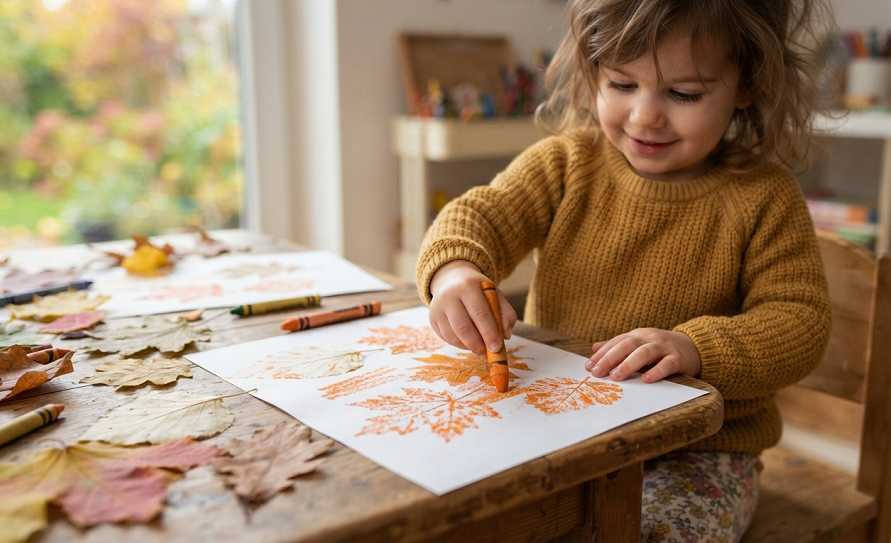
This one’s quiet, which makes it perfect for a rainy fall afternoon when outdoor activities aren’t an option. Collect a handful of leaves, place them under a sheet of thin paper, and let your toddler rub a crayon sideways across the surface. The leaf’s shape and veins appear like magic underneath.
Toddlers under two might need help holding the crayon at the right angle, but even a rough approximation is satisfying for them to watch appear. Older toddlers, closer to three, can usually manage this mostly independently once you demonstrate it once or twice.
Use crayons with the paper wrapper removed so the whole side can be used, not just the tip. Warm colors like orange, red, brown, and yellow feel especially fitting for fall and make the finished pieces look intentional even though the process is pretty forgiving.
This is a great activity to tape up on the fridge afterward. Toddlers notice when their work gets displayed, and it reinforces that their effort mattered, even for something as small as a crayon rubbing.
10. Indoor Fort Building for Cooler, Rainy Days
Not every fall day cooperates with outdoor plans. Rain, early sunsets, and colder snaps mean you’ll need an indoor backup, and fort building has never let me down.
Grab blankets, couch cushions, and a few chairs. Let your toddler direct where things go, even if the structure makes no architectural sense. The building process matters more than the final fort, and toddlers love having creative control over something, since so much of their day involves someone else making decisions for them.
Add a flashlight and a few stuffed animals once the fort’s built, and you’ve got a self-contained activity that can run twenty or thirty minutes without much input from you. I used this constantly with Maya on rainy October afternoons when we were stuck inside and she had energy to burn but nowhere to burn it.
Bonus tip: keep the fort up overnight if you can stand the mess. A fort that survives until morning becomes a returning source of entertainment instead of a one-time activity, and that stretches its value considerably.
11. Pumpkin Bowling
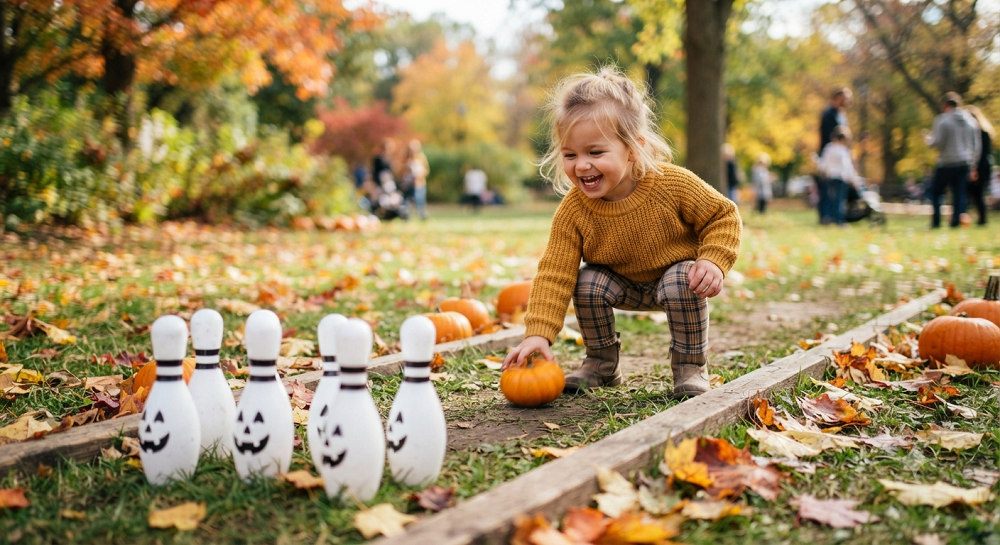
This is the activity I include because readers ask about it constantly, even though I’ll be honest that it’s more novelty than substance. Line up a few small gourds or plastic bottles, and let your toddler roll a small pumpkin at them to knock them down.
It works best with mini pumpkins, the kind that weigh under a pound, since a full-size pumpkin is too heavy for most toddlers to roll with any accuracy. Set the “pins” close together at first, maybe three feet away, and adjust based on your toddler’s throwing or rolling ability.
The appeal here is repetition. Toddlers will knock the pins down and ask to reset them again and again, sometimes for a genuinely surprising stretch of time. It’s a good backyard activity for a mixed-age group of siblings, since older kids can help set up while younger ones do the rolling.
I wouldn’t build an entire afternoon around this one, but as a fifteen-minute addition to a longer outdoor session, it earns its place on the list.
Real Talk: What’s Not Worth the Effort
I promised you honesty, so here it is. Pumpkin carving with a toddler under three is not worth the effort, in my opinion, and I say that as someone who tried it with Sarah out of sheer stubbornness. Toddlers can’t safely use carving tools, they lose interest the moment the “fun” gutting part turns into you doing all the actual work, and the whole process takes far longer than their attention span allows. Save carving for when they’re closer to four or five, and let them paint pumpkins instead in the meantime.
Elaborate Pinterest-style crafts are another trap. I’ve fallen for the perfectly staged photos of toddlers creating intricate leaf collages with tiny cut-out shapes, and I want to save you the disappointment: most toddlers under three lack the fine motor control for detailed cutting or precise gluing. The craft ends up being 80% you and 20% them, and that’s not really a toddler activity anymore. It’s a parent activity with a toddler watching.
Corn mazes, as I mentioned, are hit or miss. Don’t plan a whole outing around one and expect it to be the highlight. It usually isn’t.
And here’s the big one: don’t chase the “perfect fall day” you see online. Some days your toddler will refuse every activity on this list and just want to dump out a bin of blocks for the fortieth time. That’s not you failing at fall. That’s a toddler being a toddler, and honestly, some of my favorite fall memories with my three kids weren’t the planned activities at all. They were the ten unplanned minutes stomping in puddles on the walk back from the mailbox.
Parting Wisdom
Fall gives you a short window before the cold really sets in, so use it, but don’t turn it into a checklist you have to complete. Pick two or three activities from this list that genuinely sound fun to you, because your energy sets the tone for the whole thing. A tired, resentful parent forcing “activity number six” rarely has more fun than a relaxed parent who just let the kids jump in a leaf pile for the third day in a row.
What’s your toddler’s favorite fall activity so far? Drop it in the comments below. I’m always looking for new ideas, and honestly, some of my best tips over the years have come straight from readers like you.