
The thud of a toddler’s forehead hitting the floor, or the sudden sting of a tiny hand slapping your cheek, isn’t just a physical blow. It’s an emotional one. When Sarah was three, she had a “hitting phase” that made me want to hide under the covers and never come out. I felt like a failure, wondering where my sweet girl had gone and why she was suddenly treating the cat like a drum set.
We often label this behavior as “aggression,” but in my house, we learned to call it “big energy.” These little bodies are like pressure cookers with no release valve. If we don’t give them a way to blow off steam, the lid is going to fly off—usually in the middle of the grocery store. Sensory play isn’t just about glitter and glue; it’s about giving that raw, physical energy a safe place to land. Here are 11 calming sensory activities that actually work for toddlers with big emotions:
1. Heavy Work and Proprioceptive Input
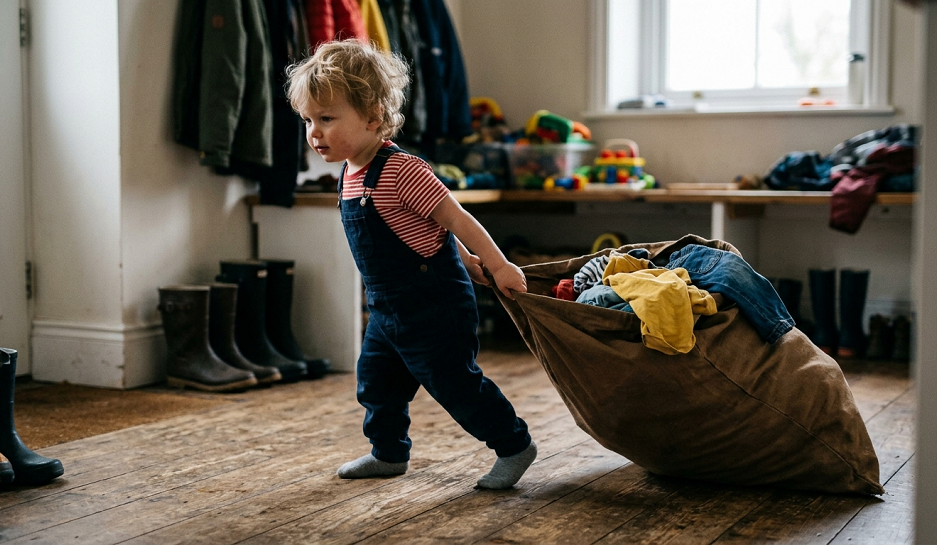
When Leo was a toddler, he didn’t just walk; he crashed. He was a human wrecking ball. I used to think he was being “bad” until I realized his body was literally craving the sensation of resistance. This is called “heavy work.” It’s the gold standard for calming a child who feels the need to push, shove, or hit.
I started keeping a basket of “heavy things”—old milk jugs filled with water or small hand weights—and I’d ask him to help me move them across the room. It sounds too simple to work, but the feedback his joints received from that weight actually regulated his nervous system. It’s like a massage for the inside of the brain.
I’ve seen parents try to “talk” a toddler out of a hitting streak. I’m telling you now, that’s a waste of breath. A child in the middle of a sensory meltdown cannot process logic. Their “thinking brain” is offline. You have to speak to their body first. Give them something heavy to carry, and you’ll see the tension leave their shoulders.
If you don’t have a basket of weights, try “wall pushes.” I’d tell Leo the wall was falling down and I needed his strong muscles to hold it up. We would stand side-by-side, palms flat, pushing with everything we had. Ten seconds of that, and he was a different kid. He wasn’t aggressive anymore; he was just tired and regulated.
2. The Power of Destructive Play with Clay
Most parents reach for Play-Doh, but I find the store-bought stuff is too soft for a truly frustrated toddler. It doesn’t offer enough resistance. Instead, I moved my kids toward high-quality modeling clay or even salt dough that we’d made a bit too thick on purpose.
The goal here isn’t to make a beautiful sculpture. The goal is to pummel, squash, and rip. I’ve found that giving a child a “target” for their physical frustration is far more effective than just telling them “don’t hit.” I would sit Maya down and say, “You look like you have some big hits in your hands. Let’s put them into this clay.”
Watching a child transition from angry, violent smacking of the dough to focused, intricate poking is a miracle to behold. It’s a physical manifestation of their emotions shifting. You’re teaching them that the feeling of anger is okay, but we have to be careful where we put it.
I suggest keeping a “calm down kit” that includes a large slab of clay. When you see the eyebrows furrow and the fists clench, bring it out before the first strike happens. It’s proactive parenting, and it’s a lot less stressful than reactive discipline.
3. Ice Cold Sensory Bins for Immediate Cooling
There is something biological about the “heat” of anger. When Sarah was spiraling, her face would get physically hot. I discovered that a sensory bin filled with ice cubes and just a little bit of water acted like a literal circuit breaker for her tantrums.
I’d drop in some plastic animals or colorful spoons and let her go to town. The intense cold provides a sharp sensory contrast that forces the brain to refocus. It’s hard to stay focused on being mad when your fingers are busy dealing with the freezing sensation of ice.
Some people worry about the mess, but I’ve found that a little spilled water is a small price to pay for a peaceful afternoon. I’d just lay down a thick beach towel and let the “arctic rescue” begin. It’s one of those rare activities that keeps them occupied long enough for you to actually finish a cup of coffee.
A quick side note: If your child is sensitive to cold, start with “cool” water and slowly add ice. You want it to be a surprise to the system, not a trauma. The goal is a sensory “reset,” not a struggle.
4. Ripping and Shredding Paper Stations
I once spent forty dollars on a “sensory board” that my son ignored for three years. Do you know what he loved instead? The junk mail. There is a deep, primal satisfaction in ripping things apart, and for an aggressive toddler, it’s a perfect outlet.
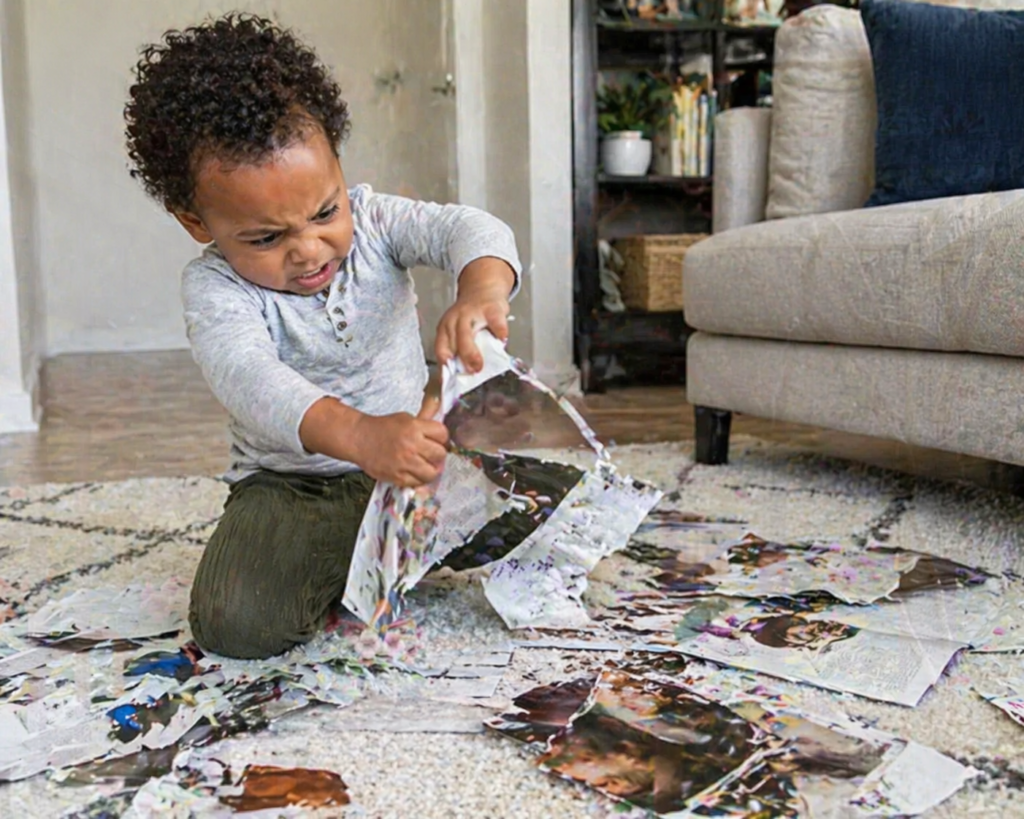
I started saving old magazines, packing paper, and even cardboard egg cartons. When the energy in the house got too high, we’d have a “shredding party.” I’d challenge them to see who could make the smallest piece of paper or who could rip the loudest.
It’s loud, it’s messy, and it’s absolutely cathartic. We would then take all the shredded bits and throw them in the air like confetti. This turns the “destructive” impulse into a “celebratory” one. It’s a subtle shift in perspective that helps a child feel in control of their power.
I’ve heard experts say you shouldn’t encourage “breaking” things, but I disagree. I think we need to teach children that there are appropriate things to break. We don’t break toys, but we can absolutely destroy a piece of junk mail. It’s about boundaries, not total repression.
5. Stomping in Mud or Shaving Cream
If your toddler is a “kicker” or a “stomper,” they are looking for feedback through their feet. Maya was famous for kicking the back of my car seat until I thought I’d lose my mind. I realized she wasn’t trying to annoy me; she just needed to feel the impact.
The solution was what I called “The Stomp Zone.” In the summer, it was a mud puddle in the backyard. In the winter, I’d fill a shallow plastic bin with shaving cream and let her stomp until her legs were tired. The resistance of the mud or the squish of the cream provides that deep pressure they crave.
This is messy work, and I know some of you are cringing at the thought of shaving cream on the carpet. Use the bathtub! It’s the world’s best contained sensory bin. Plop them in there with a can of cheap foam and let them go wild. When they’re done, you just turn on the shower and the mess disappears.
I’ve found that trying to keep a toddler “clean” all day is an exercise in futility that only leads to more aggression. They need to get dirty. They need to feel the world between their toes. A “clean” house is often a high-stress house for a kid with big sensory needs.
6. The “Burrito Wrap” with Heavy Blankets
When the hitting and screaming reached a fever pitch, I didn’t reach for a time-out chair. I reached for a thick, soft blanket. I’d lay it on the floor, have Leo lie down, and roll him up like a burrito (keeping his head out, of course).
The technical term for this is “deep pressure stimulation.” It’s the same reason we swaddle babies or why adults use weighted blankets. It triggers the release of serotonin and dopamine. For an aggressive toddler, it feels like a giant, firm hug that they can’t fight against.
I would talk in a very low, rhythmic voice while I rolled him. “First the beans, then the cheese, then the lettuce…” By the time he was wrapped up, the “fight” had left him. He would usually just lie there for a few minutes, breathing deeply, finally feeling safe in his own skin.
I’m firm on this: isolation (traditional time-outs) is often the worst thing for an aggressive child. They are already feeling disconnected and out of control. Wrapping them up sends the message: “I will keep you safe, and I will help you hold yourself together when you feel like falling apart.”
7. Bubble Wrap Popping for Fine Motor Release
There is something about the “pop” of bubble wrap that is incredibly satisfying for a kid who wants to hit. It’s a concentrated burst of sensory feedback. I started keeping a roll of the large-bubble variety in the pantry for emergencies.
If Sarah started getting “handsy” with her siblings, I’d tape a strip of bubble wrap to the floor or the table. I’d tell her, “Those pops need to come out!” and let her use her thumbs or her feet to burst every single one.
It’s a great way to redirect the impulse to strike. It moves the energy from a large, harmful movement (a slap) to a small, controlled movement (a squeeze or a stomp). It also requires a bit of focus, which helps bring the “thinking brain” back online.
I’ve found that many parents overlook the simplest tools. You don’t need a fancy “fidget toy” from a catalog. A piece of plastic trash can be the difference between a peaceful afternoon and a trip to the principal’s office later in life.
8. Drumming on Pots and Pans
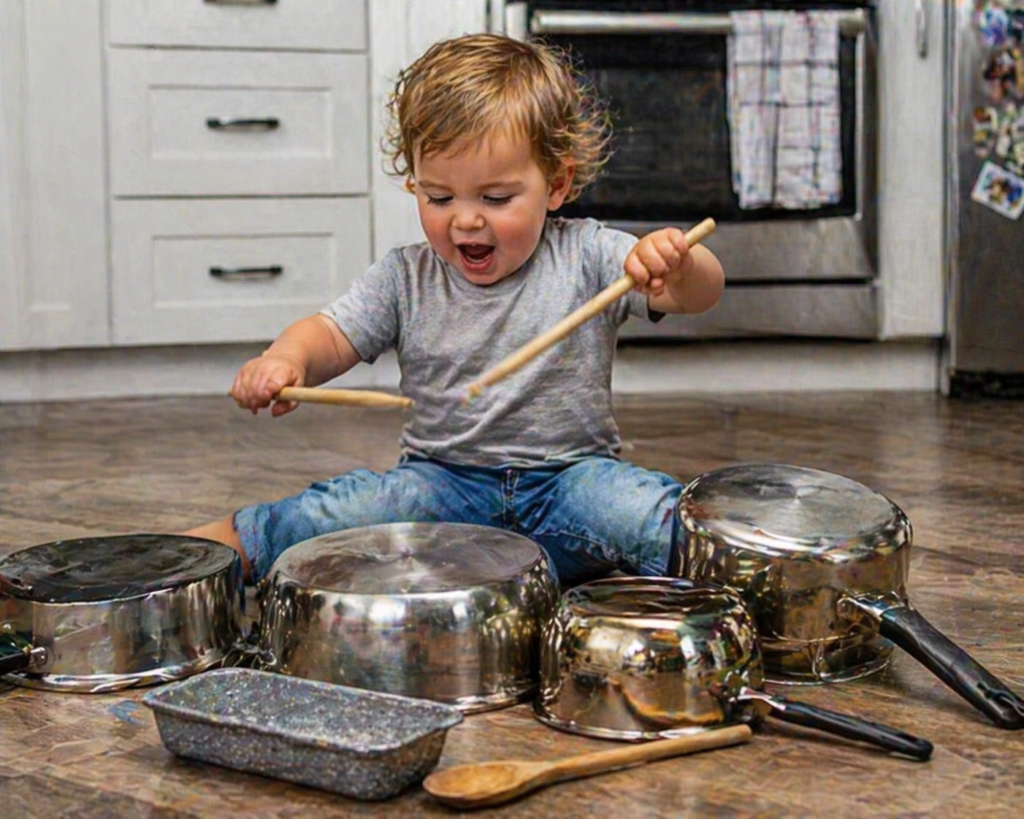
Noise can be a trigger for aggression, but it can also be a cure. If the house felt like it was vibrating with tension, I’d lean into the noise. I’d pull out the heavy stockpots and wooden spoons and we’d have a “marching band” session.
The key here is rhythm. Random banging is just chaos, but rhythmic drumming is regulating. I’d lead the way, hitting a slow, steady beat. Boom. Boom. Boom-boom-boom. I’d have the kids follow my lead.
This gives them a way to use their arm muscles with force and intention. It’s “aggressive” in its movement but “creative” in its output. It’s also a great way for you to blow off some steam. Trust me, hitting a pot with a wooden spoon is cheaper than therapy.
A quick side note: If you have a headache, this is not the activity for you. Choose your battles. If I was already at my limit, I’d choose the “burrito wrap” over the “drum circle” every single time.
9. Squeezing “Stress Balls” Made of Balloons and Flour
I’m a huge fan of homemade tools. We used to make our own stress balls by filling balloons with flour, rice, or dried beans using a funnel. Each material provides a different level of resistance. Flour is soft and “squishy,” while beans are “crunchy” and firm.
For a kid who tends to grab or pinch when they’re mad, these are a lifesaver. I’d keep one in my purse and one in the car. When I saw Maya’s face start to scrunch up in the car seat, I’d hand her the “flour ball” and tell her to squeeze it as hard as she could.
It gives those tiny hand muscles a workout and redirects the “grabbing” urge. It’s also a great lesson in cause and effect. “When I squeeze this, it changes shape.” It helps them realize they have power over objects, not just people.
I will warn you: double-bag the balloons. There is nothing that will break a mother’s spirit faster than a balloon full of flour exploding in a minivan. I learned that the hard way so you don’t have to.
10. The “Car Wash” with Soapy Sponges
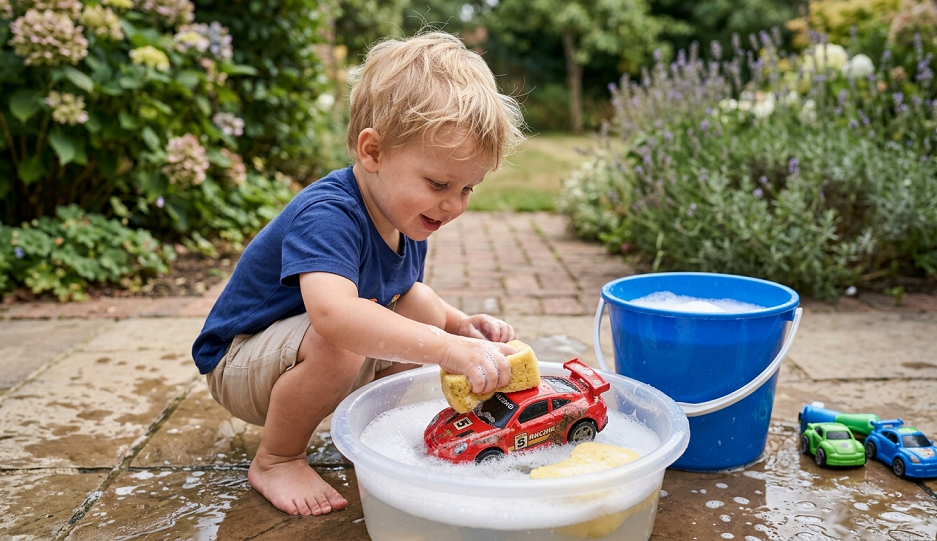
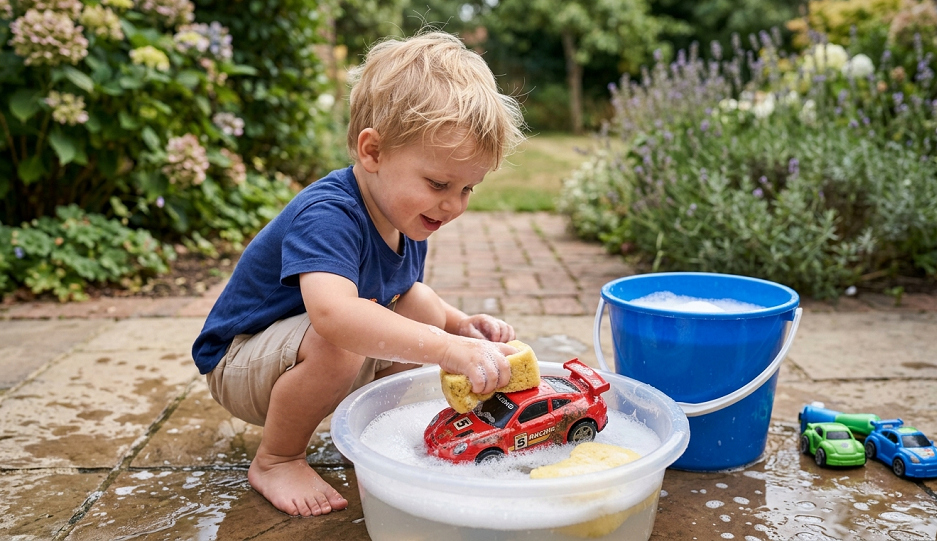
Water play is the ultimate “reset” button for toddlers. If everything is going wrong, just add water. I used to set up a “car wash” in the kitchen sink or a plastic bin. I’d give them a bunch of plastic cars, a big sponge, and a lot of bubbles.
The act of scrubbing provides a lot of sensory input. It’s a repetitive, rhythmic motion that is naturally calming. Pushing the sponge down into the water and squeezing it out also works those “heavy work” muscles in the hands and forearms.
I’ve found that toddlers who are acting out are often just bored or under-stimulated. They aren’t trying to be “aggressive”; they’re trying to feel something. The sensory richness of warm, bubbly water and the task of “cleaning” gives them a sense of purpose.
I’ve seen some parents try to make this a chore, but don’t do that. Don’t ask them to wash the floor. Let it be play. Let it be messy. Let them focus on the bubbles and the way the water feels between their fingers.
11. Jumping into a Pile of Pillows
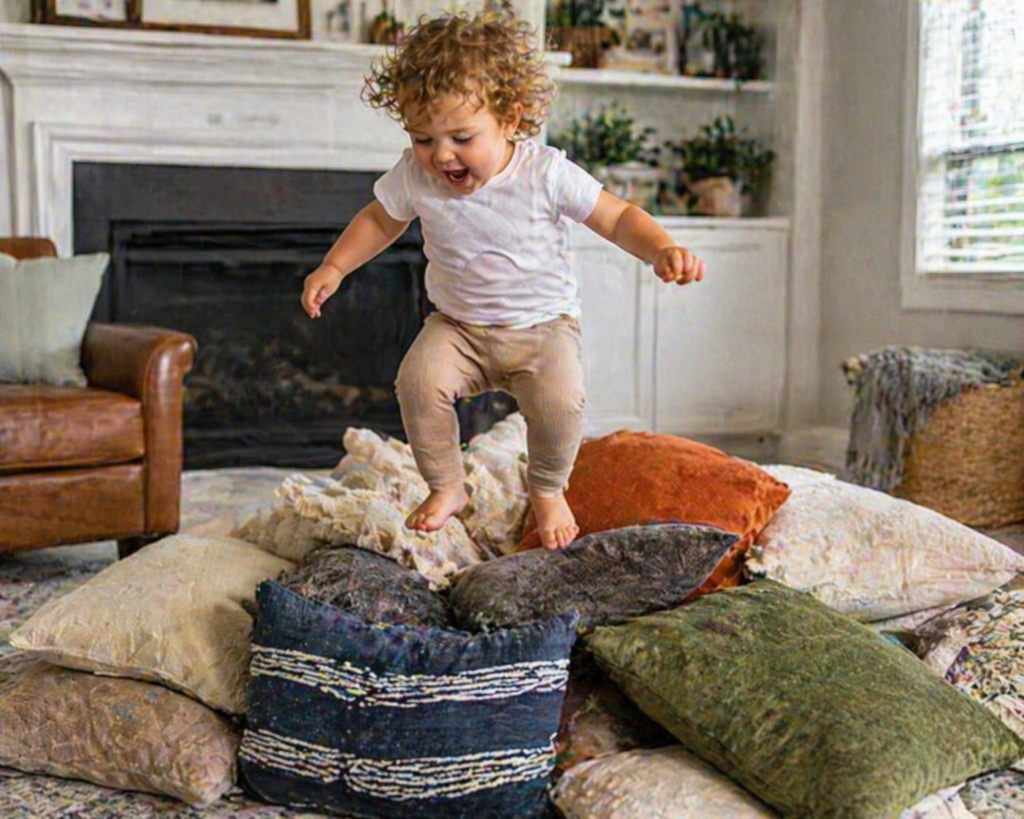
Finally, we have the “crash pad.” This was the absolute favorite for my son, Leo. I’d take every pillow and cushion off the sofa and pile them in the center of the living room. Then, I’d let him jump from a small step stool into the pile.
This provides an immense amount of proprioceptive input. The “crash” at the end of the jump tells his brain exactly where his body is in space. For a kid who feels “out of control,” this physical landing is incredibly grounding.
It’s a safe way to be “violent.” He can throw his whole body weight into the pillows with zero risk of hurting himself or anyone else. It’s an “all-out” activity that usually ends in giggles rather than tears.
Bonus Tip: If you have the space, buy a cheap toddler trampoline with a handle. Five minutes of jumping can prevent an hour of tantrums. It’s the best investment I ever made in my sanity.
The Real Talk: What Isn’t Worth the Effort
I’ve spent a lot of money over the years on “therapeutic” toys that promised to fix my kids’ behavior. Most of them were a total waste of time. I once bought a set of “sensory brushes” that were supposed to calm Maya down if I brushed her arms in a specific pattern. She hated it. It felt like an intrusion, and it usually just made her more aggressive because I was trying to “fix” her instead of connecting with her.
I’ve also found that “calm down jars” (the ones with the swirling glitter) are hit-or-miss. For a truly aggressive toddler, watching glitter move is boring. They don’t want to watch something; they want to do something. Don’t waste your time making twenty different glitter jars if your kid is a “mover and a shaker.”
The biggest mistake I see? Trying to force sensory play when a child is already in a full-blown meltdown. If they are screaming and flailing, don’t try to hand them a bowl of rice. Just keep them safe, stay close, and wait for the storm to pass. Sensory play is for the “yellow zone”—when you see the anger building—or for general maintenance. Once they’re in the “red zone,” the only tool you have is your own calm presence.
Parting Wisdom
Raising a toddler with big, aggressive energy is exhausting. I know you’re tired. I know you’re worried about what the other moms at the park think. But let me tell you something: that energy is a gift. It’s passion, it’s strength, and it’s drive. Our job isn’t to crush that energy; it’s to teach them how to steer it.
When you use sensory play, you aren’t just “distracting” them. You are giving them the tools to regulate their own bodies. You are showing them that you are on their team, not their enemy. Be patient with them, but more importantly, be patient with yourself. You’re doing a great job, even on the days when you get hit with a plastic dinosaur.
What’s the one thing that always seems to trigger a “big energy” moment in your house, and which of these sensory ideas are you going to try first? Let me know in the comments below—I’d love to hear your stories!