
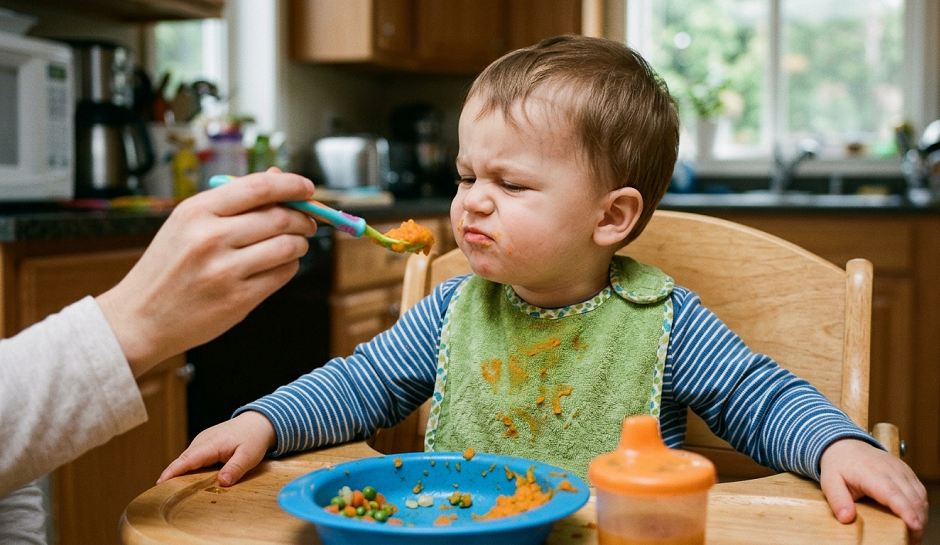
I remember sitting on my kitchen floor in 2008, staring at a plate of untouched organic zucchini fritters while my youngest, Leo, screamed for a “blue cracker.” I had two older girls, Sarah and Maya, who were relatively easy eaters, so I thought I had this parenting thing figured out. I was wrong. Leo’s commitment to the “Goldfish-only diet” was so intense I actually started wondering if a human child could survive on processed cheddar and air.
I spent weeks stressed, sweaty, and short-tempered. I tried bribing him. I tried the “starve them out” method (which just led to a very hungry, very angry toddler who didn’t sleep). Finally, I realized that my dinner table had become a battlefield, and in a war against a two-year-old, nobody wins. I had to change my approach from “making him eat” to “helping him learn.”
If you are currently hiding in the pantry eating a granola bar so your toddler doesn’t see you, take a deep breath. You aren’t failing. Your kid is just doing their job—testing boundaries and trying to survive on beige food.
The Division of Responsibility: Why Power Struggles Are a Waste of Time
I’ve found that trying to control how much a child swallows is a total waste of time, even if it looks like the easier option in the moment. When we try to force that “one last bite,” we aren’t teaching nutrition; we’re teaching our kids to ignore their own bodies. I discovered the hard way with Maya that the more I pushed, the more she resisted. It turned her into a “picky eater” by identity rather than by nature.
The breakthrough for me was embracing the “Division of Responsibility.” This is a fancy term for a simple concept: I am the boss of what is served, when it is served, and where it is served. My child is the boss of whether they eat it and how much they consume. This shift takes the weight off your shoulders. You are no longer the “Food Police”; you are the “Cafe Manager.”
When I stopped hovering over Leo’s plate, the atmosphere in the kitchen changed. I stopped asking, “Are you going to eat that?” and started talking about my day instead. It’s hard to do at first. You’ll feel like they’re going to waste away. But trust me, a healthy child will not starve themselves. They might miss a meal, but they won’t miss the next three if the boundaries are clear.
This method requires a soft heart but very firm boundaries. If Leo chose not to eat his dinner, that was fine. But the “Cafe” was closed until breakfast. I didn’t rush to make him a PB&J ten minutes after he cleared his plate. If you give in and provide a “backup meal” every time they refuse the main dish, you are essentially training them to hold out for the snacks.
Stop the All-Day Grazing to Build a Healthy Appetite
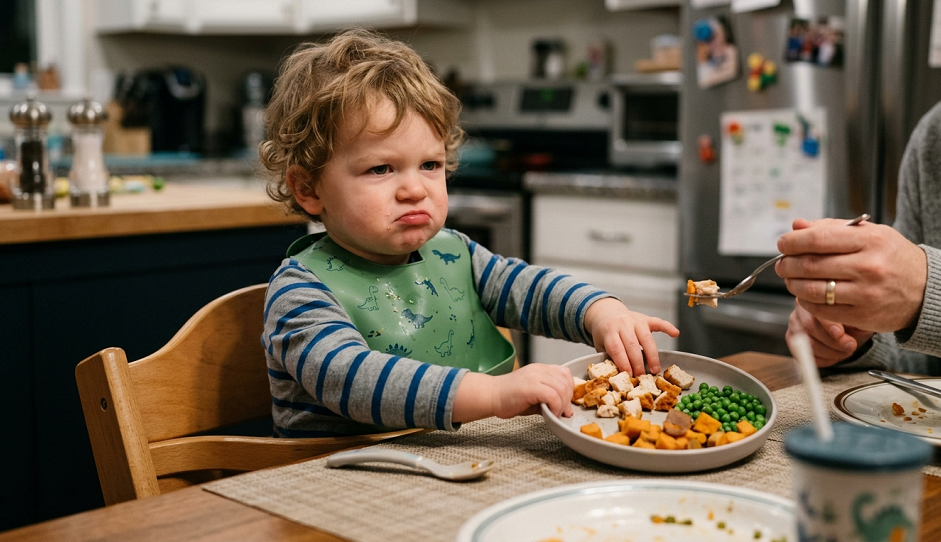
If your toddler is “never hungry” for dinner but always wants a cheese stick, the problem isn’t the dinner—it’s the schedule. I used to let Sarah and Maya graze all afternoon because it kept them quiet while I folded laundry. By 6:00 PM, their tummies were full of crackers and juice, so of course, they didn’t want the chicken and broccoli I’d spent forty minutes cooking.
I’ve found that “open-access snacking” is the enemy of a peaceful dinner. It creates a cycle where the child is never truly hungry, so they never have the motivation to try something new or “challenging.” Now, I’m not saying you should let them get “hangry.” That’s a nightmare for everyone involved. But I am saying that we need to be the gatekeepers of the kitchen.
A “Gentle Parenting” solution here is to create a predictable rhythm. We have breakfast, a morning snack, lunch, an afternoon snack, and dinner. Outside of those times, the kitchen is closed. When Leo would ask for a snack thirty minutes before dinner, I wouldn’t just say “No” and leave it at that. I’d acknowledge his feeling: “I hear you, buddy. Your tummy is feeling a little empty. Dinner will be ready in thirty minutes, and we’re having tacos!”
By creating these gaps between eating times, you allow your child’s body to send real hunger signals. Hunger is the best seasoning. A toddler who is genuinely hungry is much more likely to try a piece of bell pepper than a toddler who has been snacking on pretzels for two hours. It’s about setting them up for success rather than setting them up for a fight.
Making “Safe Foods” Part of Every Meal
One of the biggest mistakes I made with my first daughter, Sarah, was serving “scary” meals. I’d put a plate of unknown stew in front of her with nothing familiar, and then I’d be surprised when she had a meltdown. Imagine going to a restaurant where you can’t read the language and someone forces you to eat a bowl of mysterious gray mush. You’d be anxious, too.
I’ve found that including at least one “safe food” on the plate is the secret to lowering a toddler’s cortisol levels at the table. A safe food is something you know they generally like—bread, fruit, plain pasta, or even a side of yogurt. Even if the rest of the meal is brand new and “scary,” they have something they can rely on.
When I started doing this, Leo stopped viewing the dinner table as a place of stress. He knew that even if he didn’t like the spicy chicken, he had his slice of bread and his apple slices. Interestingly, once he felt safe and full from his “safe food,” he became much more adventurous. He’d eventually pick up a piece of chicken just to lick it or poke it.
That “licking and poking” is actually progress! In the world of gentle parenting, we celebrate the “exposure” rather than the “consumption.” If they touch it, smell it, or put it in their mouth and spit it out, they are learning. It takes some kids 15 to 20 exposures to a food before they decide they actually like it. My job was just to keep putting it on the plate without any pressure to eat it.
The “Snack Plate” Dinner Hack for Picky Eaters
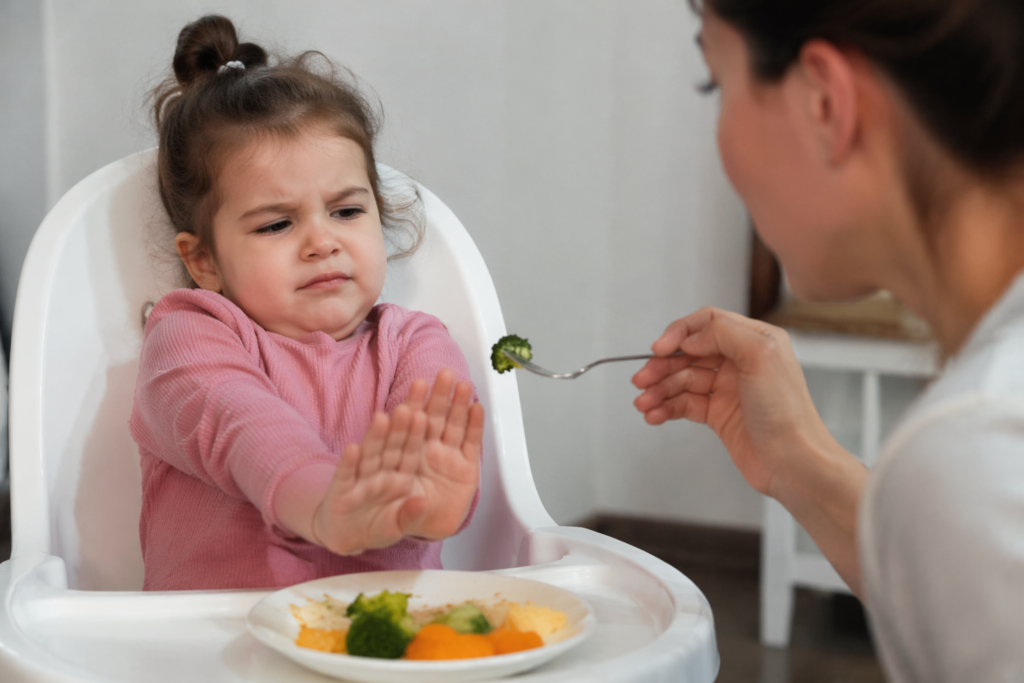
Sometimes, the best way to get a toddler to eat “real food” is to dress it up as a snack. I discovered this by accident when Maya was four. She refused to sit for a “proper” lunch but would devour an entire tray of random items if I called it a “Mummy’s Special Picnic.”
I’ve found that using muffin tins or divided plates to serve a variety of small portions works wonders. Instead of a big bowl of pasta, I’d put three noodles in one hole, two cubes of cheese in another, a few peas in the third, and some shredded chicken in the fourth. For some reason, the “snack” presentation makes the food feel less intimidating to a toddler’s brain.
This isn’t about “tricking” them; it’s about meeting them where they are. Toddlers love autonomy and variety. A “Snack Plate” gives them the power to choose what to bite first. It turns a meal into an exploration. I used to do this on Friday nights when I was too tired to fight any battles, and honestly, those were often the nights the kids ate the most variety.
- Bonus Tip: Don’t forget the dip. I realized Leo would eat almost anything if he could dip it in ranch or hummus. If a little bit of dip gets some protein or veggies into their system, call it a win and move on.
Real Talk: What Isn’t Worth the Effort
I want to be very honest with you: Being a “short-order cook” is a trap. I spent about six months making separate meals for Leo because I just wanted him to eat something. It was exhausting, it made me resentful, and it actually made his pickiness worse. Why would he ever try my roasted potatoes when he knew I’d go fry up some nuggets the second he turned up his nose?
Stop making separate meals. It is a total drain on your mental health and it doesn’t help your child in the long run. If they don’t want what you’ve served, refer back to the “safe food” on their plate. “I see you aren’t in the mood for the roast, but you have your rolls and grapes. That’s what’s for dinner tonight.”
Also, skip the “clean plate club” or the “two more bites” rule. These are relics of a different generation that don’t align with gentle parenting. They teach kids to override their fullness cues, which can lead to a lifetime of struggling with emotional eating. I had to unlearn this myself, as my own parents were very strict about finishing everything. Breaking that cycle with my kids was one of the best things I ever did for their long-term health.
Parting Wisdom
At the end of the day, your relationship with your child is more important than whether they ate their peas on a Tuesday night. They are growing, they are learning, and this “snack-only” phase is exactly that—a phase. Sarah, Maya, and Leo are all in college now, and they all eat salads, sushi, and spicy curries. The “blue cracker” era did not last forever, and neither will yours.
Keep the boundaries firm, keep your heart soft, and keep the Goldfish in the cupboard until snack time. You’ve got this.
What is the one “weird” food your toddler actually loves, or the one “normal” food they absolutely refuse to touch? Let me know in the comments below—I’d love to hear your stories!