
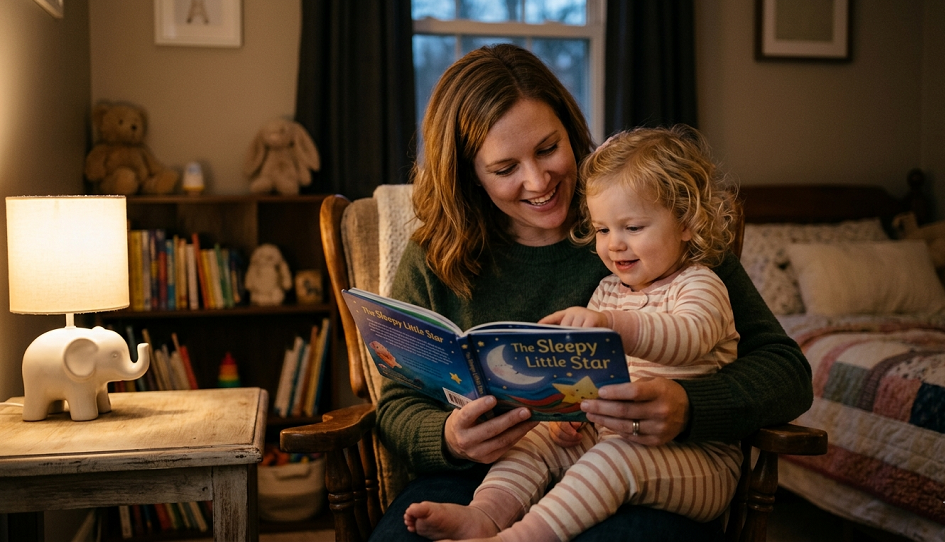
I remember a rainy Tuesday when Sarah, then three, decided that the beige living room wall was actually a giant canvas for her blue crayon. Maya was crying because her sandwich was cut into squares instead of triangles, and baby Leo was practicing his aim by tossing peas at the dog. I sat on the floor and realized that my old-school instinct to “send them to their rooms” felt like putting a band-aid on a broken faucet. It didn’t teach them anything; it just made everyone lonely and mad.
Gentle parenting isn’t about being a doormat. It’s about being a leader. I raised three kids through college, and I’ve learned that punishment is about making a child suffer for a mistake, while a consequence is about helping them fix it. If you want to stop the power struggles, you have to trade the “naughty chair” for a connection.
1. The Clean-Up Protocol for “Artistic” Expressiveness
When a toddler draws on the wall or spills a gallon of milk to see the “big splash,” your first instinct might be to yell. I’ve done it. It’s exhausting. But yelling doesn’t teach a two-year-old how to value property. It teaches them to be sneaky next time they find a Sharpie.
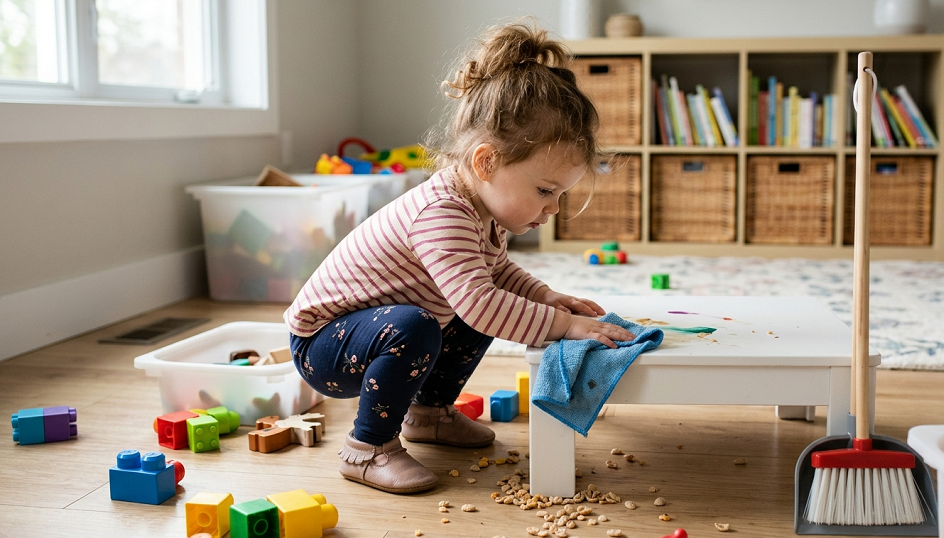
My rule is simple: if you make the mess, you are the primary person responsible for the restoration. If Leo colored on the coffee table, the “consequence” wasn’t a time-out. The consequence was that playtime stopped immediately, and he had to spend fifteen minutes scrubbing that wood with a damp cloth.
I’ve found that many parents jump in to “help” too quickly because they want the job done right. Don’t do that. Let them scrub. Even if they are just moving the smudge around, they are learning that their actions have a direct, physical labor requirement. It’s not a punishment; it’s just the natural order of the world.
I discovered the hard way that if I cleaned it up for them while they sat in a corner, they never made the mental link between the crayon and the effort. By the time Sarah was four, she’d look at a wall, look at her marker, and clearly decide that the effort of cleaning wasn’t worth the thrill of the art. That is a win in my book.
2. Removing the Toy That Causes Conflict
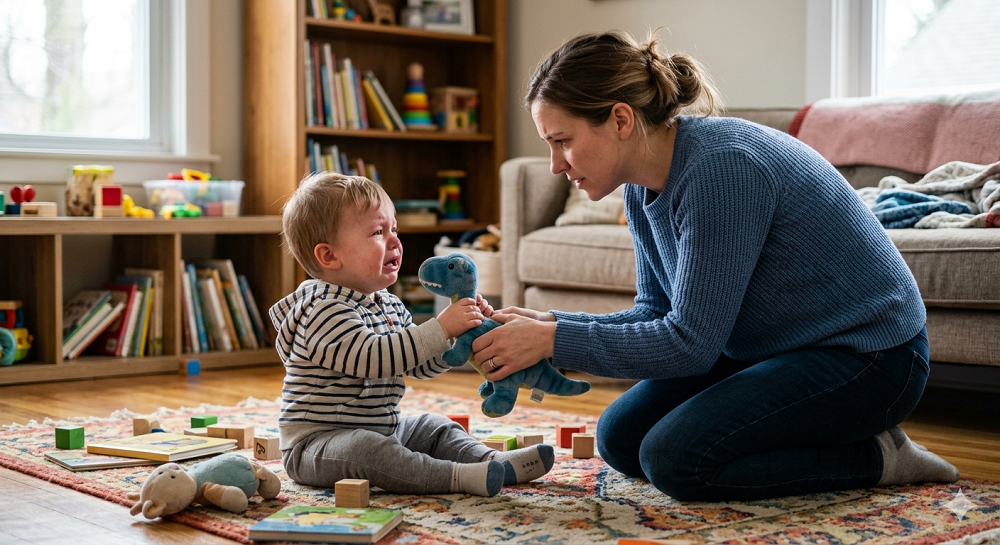
Toddlers are tiny scientists testing the laws of physics and social boundaries. If a toy truck is being used as a projectile rather than a vehicle, the truck needs to go on a “vacation.” I’m not talking about taking it away for a week—toddlers have the memory of a goldfish. I’m talking about putting it on top of the refrigerator for the rest of the afternoon.
When Maya would start swinging her heavy plastic doll at her siblings, I’d take the doll gently and say, “I can’t let you hurt people. The doll is going on the shelf until tomorrow so everyone can stay safe.” There were tears, of course. But the consequence was directly tied to the object causing the trouble.
I’ve found that threatening to take away “all your toys” is a total waste of time. It’s too big for them to grasp, and it makes you look like a villain. Instead, focus only on the specific item being misused. It creates a very clear boundary: you use your things properly, or you don’t use them at all.
This approach builds a sense of responsibility. You aren’t “taking things away” to be mean; you are removing a hazard. By the time Leo was five, he understood that if he threw his Lego bricks, the Legos went into the “Saturday Box” (a box that only opened on weekends). It taught him that he was the one in control of his belongings.
3. The “Early Departure” from the Playground
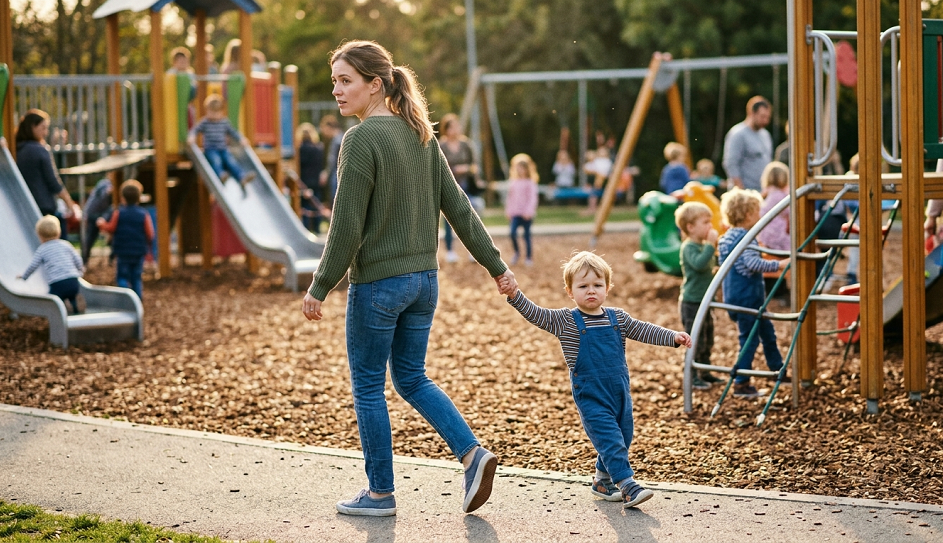
This one is the hardest for parents because it ruins our afternoon, too. We finally got to the park, we have our coffee, and we just want twenty minutes of peace. But if your toddler is biting, pushing, or being a general menace to the other kids, the consequence is that the park trip ends immediately.
I used to try the “three strikes” rule. I’ll tell you right now: three strikes is two strikes too many. It teaches your child that they can misbehave at least twice with zero impact. Now, I give one clear warning. “If you push again, we are going to the car and going home.” If they push again, you pick them up—even if they are screaming—and you leave.
It feels like a failure when you’re walking to the car with a flailing toddler while other parents watch. It isn’t. You are being the most consistent parent in that park. You are showing them that access to fun is dependent on their ability to respect the rights of others.
I’ve discovered that one or two “early exits” are usually enough to change the behavior for the entire season. Maya learned very quickly that I wasn’t bluffing. She loved the swings more than she loved being bossy, and that realization only happened because I was willing to pack up the diaper bag and head home.
4. Closing the Kitchen for Food Battles
Dinner time can be a battlefield. I’ve seen parents cook three different meals just to get a toddler to eat. Stop doing that. It’s a fast track to burnout and it turns your kitchen into a short-order restaurant. The gentle consequence for refusing a balanced meal is that the meal ends, and the kitchen closes.
When Leo would throw his plate because he wanted crackers instead of peas, I’d calmly take the plate away. “It looks like you’re done eating. We will have breakfast in the morning.” I wasn’t starving him; I was respecting his choice to reject the food provided.
The key here is to remain completely calm. If you get angry, it becomes a power struggle. If you stay neutral, it’s just a fact of life. I’ve found that a toddler won’t starve themselves, but they will absolutely manipulate you if they think a tantrum results in a bowl of sugary cereal at 9:00 PM.
I discovered the hard way that “just one more bite” is a losing game. It makes food a chore. By letting the consequence be a slightly hungry belly until the next scheduled snack, I taught my kids to listen to their bodies and respect the “chef.”
5. Loss of Screen Time for Transition Troubles
If your toddler has a meltdown every time you turn off the TV, the consequence is that the TV doesn’t come on the next day. This isn’t about being “mean.” It’s about the fact that their little brain clearly can’t handle the stimulation if it leads to an emotional breakdown afterward.
I used to tell Sarah, “If it’s too hard for your body to say goodbye to the show today, we will take a break from shows tomorrow to let your brain rest.” This frames the consequence as a form of care rather than a penalty. It helps them understand that you are on their side.
Many parents use screen time as a bribe, which I think is a mistake. “If you’re good, you get the iPad.” That just makes the iPad the center of their world. Instead, make it a privilege that requires a certain level of emotional regulation.
When Maya knew that a tantrum at the end of Bluey meant no Bluey on Wednesday, she started practicing her “deep breaths” when I gave the five-minute warning. It wasn’t perfect, but it shifted the responsibility onto her.
6. The “Pause” (Instead of the Time-Out)
The traditional time-out often feels like an exile. The child sits on a chair, gets more worked up, and learns nothing except how much they resent you. I prefer the “Time-In” or the “Positive Pause.” If a child is hitting or screaming, the consequence is that they must stay right next to me until they are calm.
I’d tell Leo, “You’re having a hard time keeping your hands safe. You need to sit right here on the floor next to me until your body feels quiet.” We aren’t playing, we aren’t talking, but I am there. I am the “anchor” for his storm.
I’ve found that staying close actually de-escalates the behavior much faster than isolation. Isolation triggers a fear response in a toddler’s brain; proximity triggers a safety response. Once they are calm, then we talk about what happened.
I discovered that the “naughty rug” was a total waste of time in our house. My kids would just sit there and plot their next move. But sitting next to me while I folded laundry? That made them realize that being “out of bounds” meant losing the freedom to run around, but not losing my love.
7. Natural Consequences for Clothing Refusal
If it’s chilly and your toddler refuses to wear a jacket, let them go outside without it (as long as it’s not dangerously cold). This is the ultimate “life teacher.” You can argue for twenty minutes, or you can let the cold air do the talking for you.
I used to pack the jacket in my bag and walk out the door. Within three minutes, Sarah would be shivering and asking for her coat. I’d give it to her without saying “I told you so.” The cold was the consequence; my lecture wasn’t needed.
Some parents worry this is “letting them win.” It’s not. It’s letting them learn from the environment. Nature is a much better teacher than a frustrated mom. It builds an internal sense of logic: “When I am cold, I should wear a coat.”
By the time the kids were in middle school, I never had to nag them about the weather. They knew how to check the temperature and dress accordingly because I let them feel the natural consequences of their choices when they were small.
8. Putting the “Broken” Item in “Hospital”
When a child is being reckless with a book or a toy and it rips or breaks, don’t rush to tape it or buy a new one. The item goes to the “Toy Hospital” (a high shelf) for a few days. If it’s truly broken beyond repair, the consequence is that the toy is gone.
I remember Maya being rough with a pop-up book she loved. It tore. Instead of fixing it immediately, I explained that the book was “hurt” and needed to rest. We put it away for a week. The “consequence” was the absence of her favorite story.
I’ve found that if you fix everything instantly, children never learn the value of their belongings. They think the world is a giant “Undo” button. Letting them feel the sadness of a broken toy is a powerful lesson in stewardship.
I discovered that my kids became much more careful with their things once they realized that “Mom doesn’t just buy a new one.” It taught them that their actions have permanent or semi-permanent effects on the things they enjoy.
9. Restricting Space for Safety Violations
If your toddler keeps running away from you in a parking lot or a store, the consequence is that they lose the privilege of walking. They either have to sit in the stroller or be carried. It’s a non-negotiable safety boundary.
I’d tell Leo, “I want you to walk, but my job is to keep you safe. Since you ran away, you have to sit in the stroller now.” He would howl. People would stare. I would keep walking. The “consequence” was the loss of independence.
I’ve found that many parents get into a “chasing game.” Don’t do that. Chasing is fun for a toddler; it reinforces the running. Instead, make the loss of freedom immediate. “You run, you ride.”
This builds a very clear understanding of the “Safety Contract.” If you want the freedom to explore, you have to prove you can stay within the boundaries. By the time they were four, all my kids were excellent “hand-holders” because they hated being strapped into a stroller.
10. The “Quiet Voice” Requirement for Requests
If a toddler is whining or screaming for a snack, the consequence is that the snack doesn’t happen until the voice changes. I’m not saying you ignore them—that’s cruel. I’m saying you acknowledge them but refuse to move until the delivery is respectful.
I’d say, “I hear that you want juice, but that voice hurts my ears. I’ll be ready to help when you use your normal voice.” And then I’d go back to what I was doing. I didn’t leave the room; I just didn’t reward the whining with a result.
I’ve found that if you give in “just this once” to stop the noise, you have just guaranteed that the noise will happen every single time. You are training them that whining works. It is the most counterproductive thing a parent can do.
I discovered that being a “broken record” actually works. I would say the same phrase every time. Eventually, Sarah would catch herself, take a breath, and say “Juice, please?” in a normal tone. That’s the goal: self-correction.
11. Logical Consequences for Bedtime Shenanigans
If bedtime turns into a two-hour marathon of “one more water” and “one more story,” the consequence is that we have less time for stories the next night. “We spent so much time coming out of our room tonight that we won’t have time for the second book tomorrow.”
I used to use a visual timer. If they stayed in bed, they earned a “bonus” five minutes of cuddle time. If they kept coming out, that time was “used up” by the transition. It’s a simple trade-off that even a three-year-old can understand.
I’ve found that getting angry at bedtime just pumps them full of cortisol, making it even harder for them to sleep. Keep the consequence logical and calm. “The clock keeps moving even when you’re out of bed.”
It took a few nights of “short story” consequences for Maya to realize that staying in bed actually got her more of what she wanted—my attention. It turned the power struggle into a cooperative effort.
12. Direct Compensation for “Hurting”
When one child hits another, the “gentle” consequence is to focus on the victim first, and then have the “hitter” do something kind to make it right. We don’t force a fake “I’m sorry.” We ask, “What can you do to help Sarah feel better?”
Maybe they get her a cold pack. Maybe they bring her a stuffed animal. The consequence is the requirement to perform an act of service to repair the relationship. It teaches empathy in a way that a forced apology never will.
I discovered that “I’m sorry” often becomes a “get out of jail free” card. They say the words and think the debt is paid. But making them actually do something to help the person they hurt requires them to look at the other person’s face and see the impact.
I’ve found that this builds a much stronger sibling bond in the long run. My three are all adults now, and they still know how to genuinely make amends when they hurt each other’s feelings. That started with the “cold pack” rule.
13. The “Waiting” Consequence for Interrupting
Toddlers think they are the center of the universe. If I was on the phone or talking to another adult and a kid started screaming over me, the consequence was that they had to wait even longer. I would put a hand on their shoulder to acknowledge them, but I wouldn’t stop my conversation.
I’d tell them beforehand: “If you interrupt, I will finish my sentence before I answer you. If you wait quietly, I will answer you right away.” Then, you have to follow through. The “consequence” for interrupting is the delay of the answer.
I’ve found that many parents stop everything the moment a toddler chirps. This breeds a “me-first” attitude that is hard to break later. Teaching them that other people’s words have value is an essential life skill.
It’s a quick side note: don’t make them wait ten minutes. That’s unrealistic. Start with thirty seconds. Gradually increase the “wait” as they get better at it. It’s about building a muscle, not winning a fight.
14. Loss of Privileges for Disrespecting Tools
If a child is using a tablet or a craft tool in a way that is disrespectful—banging the screen or throwing the scissors—the consequence is the immediate loss of that tool for the day. “You aren’t ready to use this safely today. We will try again tomorrow.”
I once had to take away Sarah’s safety scissors because she decided to give the rug a “haircut.” The scissors went in the drawer for three days. She didn’t get to finish her craft. That was the consequence.
I’ve found that “warnings” are often just “reminders to be sneaky.” If you see the behavior, act on it. The tool is a privilege, and privileges are tied to responsible usage.
By being firm about how tools are treated, I saved a lot of money and a lot of frustration. My kids learned that “good stuff” stays around only if it’s treated with respect.
15. The “Restart” for Transition Meltdowns
If we are trying to leave the house and someone is refusing to put on shoes or is screaming at the door, the consequence is a “Total Restart.” We all go back inside, sit on the couch, and wait for two minutes of silence before we try again.
“We aren’t ready to go yet. Our bodies are too fast. Let’s sit and reset.” This isn’t a punishment; it’s a recalibration. We are literally resetting the energy of the morning.
I discovered that rushing a screaming child into a car seat is the worst way to start a day. It sets a tone of chaos. Taking those two minutes to sit quietly—even if we were going to be late—was always worth it.
I’ve found that the “Restart” works because it breaks the momentum of the tantrum. It’s like hitting a “Reset” button on a computer. Most of the time, the second attempt at leaving was much smoother.
The “Real Talk”: Why Your Plan Might Fail
I’m going to be honest with you: these consequences won’t work if you aren’t consistent. If you take the toy away on Monday but let them throw it on Tuesday because you’re “too tired to deal with it,” you are teaching your child that your rules are optional.
Consistency is the hardest part of parenting. It’s boring. It’s exhausting. It means you have to be “on” even when you’re sick or stressed. I’ve found that most “gentle parenting” failures happen because the parent gave up ten minutes too early.
Also, don’t expect these to work during a “level ten” meltdown. If your child is in a full-blown lizard-brain state, they can’t learn anything. The consequence comes after the storm has passed. Trying to explain a “logical consequence” to a screaming two-year-old is like trying to give a lecture during a hurricane.
Wait for the calm. Validate the feeling (“You were really mad that we had to leave the park”). Then, apply the consequence. If you do it while they are hysterical, it just feels like an attack.
Finally, remember that you are a human being. There were days with Sarah, Maya, and Leo where I didn’t use a “gentle consequence.” I snapped. I sent them to their rooms. I ate a pint of ice cream in the laundry room. That doesn’t make you a failure; it makes you a parent. Just apologize to your kid, reset, and try again tomorrow.
The Bottom Line
Raising kids is the longest, hardest project you’ll ever take on. But when you lead with empathy and firm boundaries, you aren’t just managing behavior—you’re building a person. I see my grown children now, and I’m so glad I chose the path of “connection over correction.” It was harder in the moment, but the payoff is a lifetime of trust.
What’s the biggest struggle you’re having with “consequences” right now? Are you stuck on a specific behavior that seems impossible to handle gently? Let’s talk about it in the comments below—I’d love to help you brainstorm a solution that works for your family.