
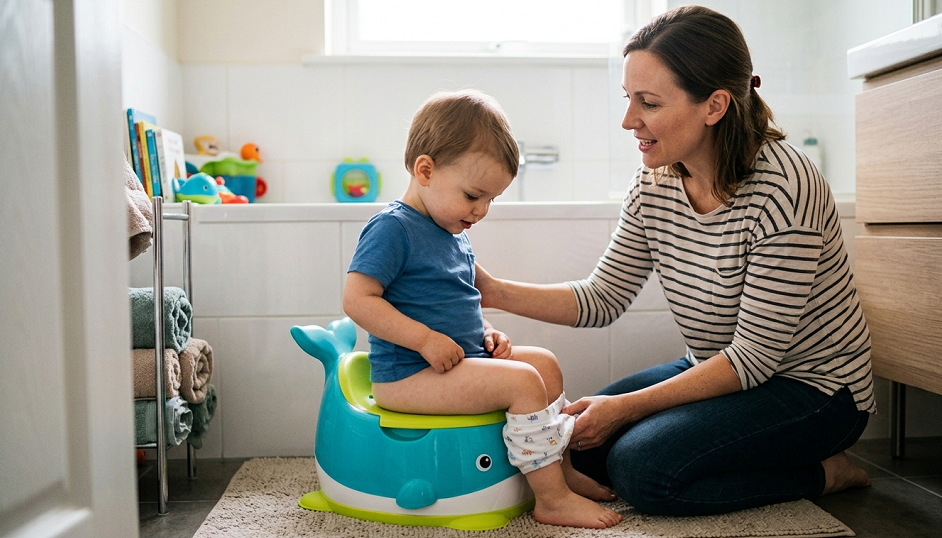
I remember standing in my hallway circa 2005, staring at a puddle on the hardwood floor while my youngest—my son—proudly marched away wearing a plastic colander as a hat. He was three. My two daughters had been relatively “easy” breezy about the whole potty thing, but this boy? He had decided that the toilet was a personal affront to his autonomy.
I’d been a parent for over a decade by then. I had the “experience.” I had the books. And yet, there I was, outmaneuvered by a toddler who found the backyard bushes more “natural” than the expensive singing potty chair we’d bought him.
If you are currently locked in a power struggle over a pair of Lightning McQueen undies, take a deep breath. I’ve raised two daughters and a son all the way through their college graduations, and I promise you this: nobody asks about their potty training timeline during a job interview. You aren’t failing; you’re just navigating a very normal, albeit messy, developmental milestone with a child who knows their own mind.
The “Why” Behind the Resistance
When a toddler “stubbornly” refuses the potty, they aren’t trying to make your life miserable (though it certainly feels that way at 2:00 AM). From a developmental perspective—and looking through the lens of Montessori principles—this is actually a sign of healthy growth.
Your child is discovering their will. They’ve realized they have control over two very important things: what goes into their body and what comes out of it. When we push, they pull. In the world of Emotional Intelligence, we recognize that resistance is often just a plea for autonomy. They don’t want to be “trained” like a pet; they want to be a participant in their own physical mastery.
1. The “Observer” Phase (Montessori Style)
Before you even mention the toilet, let your child observe the process as a natural part of life. In our house, this meant “open door” policies (within reason!). Toddlers learn through imitation. If they see that using the bathroom is just a boring, regular thing that adults and older siblings do, the mystery—and the fear—disappears.
Instead of making it a “big event,” treat it like washing your hands or brushing your teeth. Use proper terminology. Avoid terms like “stinky” or “gross,” which can make a child feel ashamed of their own body functions. We want them to feel curious, not judged.
- Action Steps:
- Keep the potty chair in the bathroom so it becomes part of the landscape.
- Talk through what you’re doing: “My body is telling me I need to go to the bathroom. I’m going to sit down now.”
- Let them “help” by flushing the toilet for you—the loud noise is often the scariest part.
2. The Power of “Limited Choice”
Stubborn toddlers crave control. If you ask, “Do you want to go potty?” the answer will almost always be “No.” Instead, offer two paths that both lead to the same destination. This is a classic gentle parenting staple that saves your sanity.
Try asking, “Do you want to use the big potty with the stool, or your small blue potty?” or “Should we hop like frogs to the bathroom or march like soldiers?” By giving them the how, you’ve given them a sense of agency, which often bypasses the knee-jerk “no.”
- Action Steps:
- Offer choices between two specific types of underwear.
- Ask if they want to turn the light on or if you should do it.
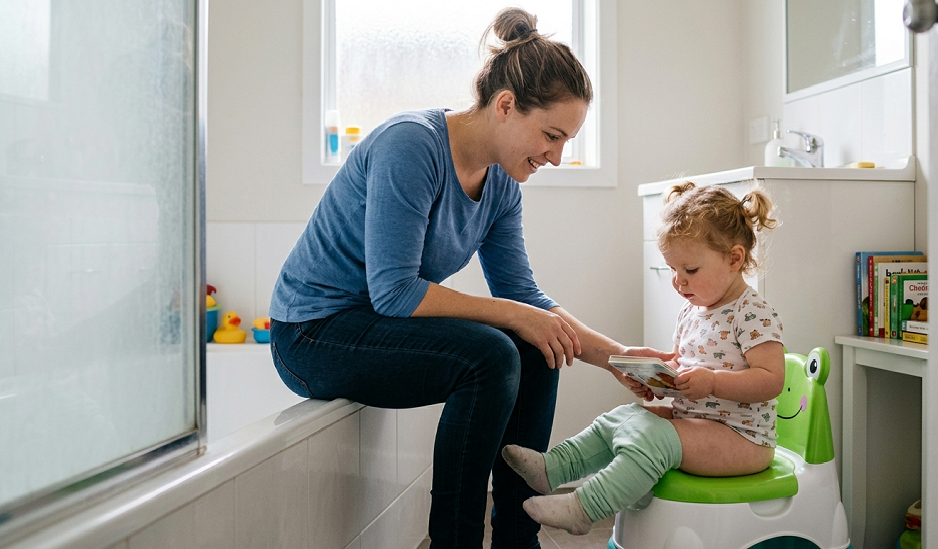
- Let them choose which book to read while they sit.
3. Creating a “Potty Basket”
Sometimes the resistance isn’t about the act of going; it’s about the fact that they have to stop playing. To a toddler, FOMO (Fear Of Missing Out) is very real. If they leave their blocks, they’re afraid the world might end.
Create a “special” basket of toys or books that only stays in the bathroom. These shouldn’t be high-energy toys, but things like stickers, find-it books, or small figurines. When it’s time to try the potty, it isn’t a “break” from fun—it’s a transition to a different kind of fun.
- Action Steps:
- Rotate the toys every few days to keep interest high.
- Include “potty-themed” books to normalize the process.
- Ensure the items are easy to clean (avoid plushies!).
4. The “Check-In” Routine (Not the “Command”)
Instead of hovering and asking every ten minutes—which creates a pressure-cooker environment—set a routine based on natural transitions. We go potty when we wake up, before we leave the house, and before bed.
Frame it as a “body check-in.” You can say, “Let’s listen to our tummies and see if they have anything to tell us.” This shifts the focus from your command to their internal biological cues. It’s teaching them self-awareness, which is the ultimate goal of gentle training.
- Action Steps:
- Use a gentle timer (like a sand timer) so the “time is up” is the authority, not you.
- Stick to the same times every day to build muscle memory.
- Keep the mood light; if they don’t go, just say, “Maybe next time!”
5. Ditching the “Diaper” Mentality
For some kids, the diaper is a safety blanket. Moving to cotton training pants (the thick ones) allows them to feel the sensation of being wet immediately. Modern diapers are so absorbent that kids don’t even realize they’ve gone.
When my son felt that cold, damp sensation against his legs, the “lightbulb” moment finally happened. He didn’t like the feeling, and suddenly, the potty seemed like a much more logical option than staying wet.
- Action Steps:
- Start with “naked time” at home or just thick cotton undies.
- Keep a mop and some towels handy—accidents are expected parts of the curriculum.
- React to accidents with a neutral “Oops, you’re wet. Let’s go change,” rather than frustration.
6. The “Warm Water” Trick
Physical relaxation is key to success. Sometimes a stubborn child is actually just physically tense because they’re nervous. If they’ve been sitting for a while with no luck, try dipping their feet in a small basin of warm water or letting them pour water from one cup to another.
The sound and sensation of water often trigger the body’s natural urge to release. It’s a gentle, sensory way to help the process along without any verbal prodding.
- Action Steps:
- Keep a small plastic tub nearby for foot-soaking.
- Use a spray bottle for them to “clean” their toys in the sink while they sit.
- Keep the bathroom warm and cozy.
7. Using “Social Stories” and Roleplay
Toddlers live in a world of make-believe. If their favorite teddy bear needs to go potty, suddenly it’s a high-stakes mission. We used to have “Teddy’s Potty Party” where the kids would show their dolls how to sit and wait.
This removes the pressure from the child and places it on the toy. They get to be the “teacher,” which boosts their confidence and allows them to process the steps of the routine without feeling like the one being scrutinized.
- Action Steps:
- Act out the whole process with a stuffed animal.
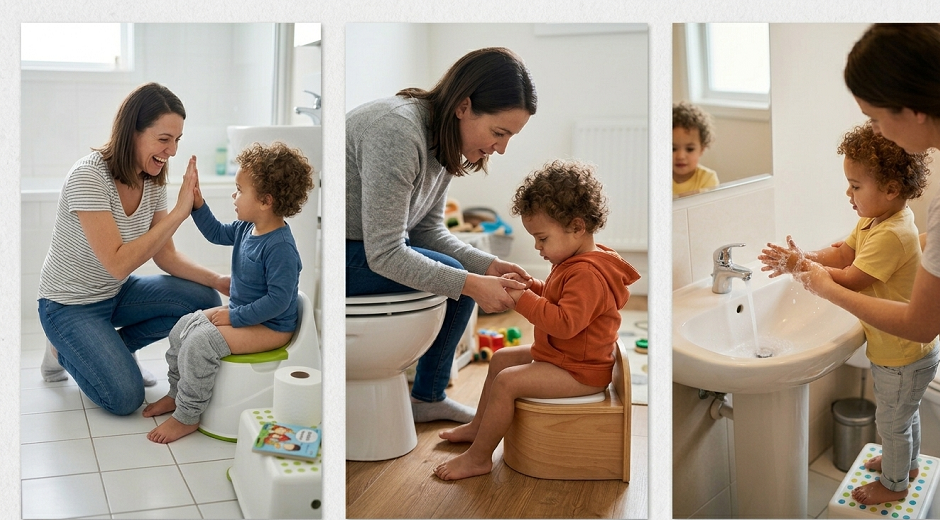
- Draw a “potty map” together showing the steps: sit, wipe, flush, wash hands.
- Celebrate the doll’s “success” with a high-five.
8. Focus on “Connection” Over “Correction”
Potty training can become a battleground where the parent-child bond takes a hit. If you feel yourself getting angry, stop. Walk away. The “gentle” part of this method means prioritizing your relationship over the timeline.
I’ve found that a “floor time” session—just 10 minutes of undivided attention playing whatever they want—often reduces the power struggles in the bathroom later. When a child feels connected to you, they are much more likely to cooperate with your requests.
- Action Steps:
- Schedule 1:1 play time that has nothing to do with the potty.
- Use lots of physical touch—hugs and cuddles—during the day.
- If you lose your cool, apologize. It shows them how to handle mistakes.
9. The “Target Practice” Approach (For the Boys)
If you’re dealing with a son who finds the toilet boring, make it a game of skill. Dropping a few Cheerios into the bowl and telling them to “aim for the circles” can turn a chore into a sport.
It sounds silly, but it works because it engages their focus and makes the experience interactive. For girls, you can use “magic” toilet water (a drop of blue food coloring that turns green when they pee).
- Action Steps:
- Use biodegradable targets or “potty targets” found in stores.
- Keep the “game” aspect low-pressure.
- Focus on the “cool” factor of being able to do it themselves.
10. Normalizing the “Poop” Fear
It’s very common for toddlers to be okay with peeing but terrified of pooping. To them, it feels like a piece of their body is falling off. It sounds ridiculous to us, but to them, it’s a scary sensory experience.
Be patient with this. Use “gentle” language. We called it “the brown boat going to the ocean.” Explain in very simple terms what it is—leftover food that the body doesn’t need anymore.
- Action Steps:
- Let them stay in a diaper for pooping if they really need to, but only in the bathroom.
- Ensure they have a stool (like a Squatty Potty) so their knees are above their hips—this makes it physically easier.
- Avoid any “stinky” talk that might cause shame.
11. The “Bye-Bye Diaper” Ceremony
For the child who is truly attached to their diapers, a gentle “goodbye” can help. This isn’t about shaming them for being a “baby,” but about celebrating their transition to “big kid” status.
You can have a small “party” where you pack up the remaining diapers to “give to other babies” and bring out the new underwear. Make it a milestone that feels like an achievement they’ve earned.
- Action Steps:
- Let them decorate the box for the “donation.”
- Have a special snack to celebrate the “New Underwear Day.”
- Keep a few “safety” diapers tucked away for illness or high-stress days.
12. Use Positive Reinforcement (The Non-Bribe Way)
We avoid “bribes” (If you do X, I’ll give you Y) because they don’t build internal motivation. However, we love encouragement. “You listened to your body and made it to the potty in time! That must feel so good and dry.”
Focus on how they feel, not just how happy it makes you. “You look so proud of yourself!” build self-efficacy. If you want to use a chart, use it to track “tries” rather than just “successes.”
- Action Steps:
- Use a sticker chart where they get a sticker just for sitting and trying.
- Give lots of verbal “attaboys” and “attagirls.”
- Celebrate the effort, even if the result is a dry potty.
13. The “Reset” Button
If it’s been two weeks of tears, puddles, and screaming matches—stop. Seriously. Put the diapers back on and don’t mention the potty for a month. This isn’t giving up; it’s a strategic retreat.
Sometimes their little brains are just dealing with too much else—a growth spurt, a new tooth, or a change in routine. Pushing through a “blocked” child only creates deep-seated resentment. Wait for a “window” of readiness to open again.
- Action Steps:
- Accept that every child has their own clock.
- Don’t apologize for “backsliding.”
- Reintroduce the idea when the tension has completely dissipated.
The Long View
I look at my three children now—all adults, all successful, all capable of using a restroom without my assistance (thank goodness). The months I spent worrying about my son’s “stubbornness” feel like a tiny blip in a 20-year journey.
He didn’t go to college in diapers. He didn’t stay “stubborn” forever; in fact, that same strong will that made potty training a challenge is now the grit that helps him succeed in his career.
When you’re in the thick of it, it feels like this is the defining moment of your parenting. It’s not. How you treat them during this struggle—with patience, empathy, and a soft heart—is what they will actually carry with them. You’re building a relationship, not just training a toddler. You’ve got this.