
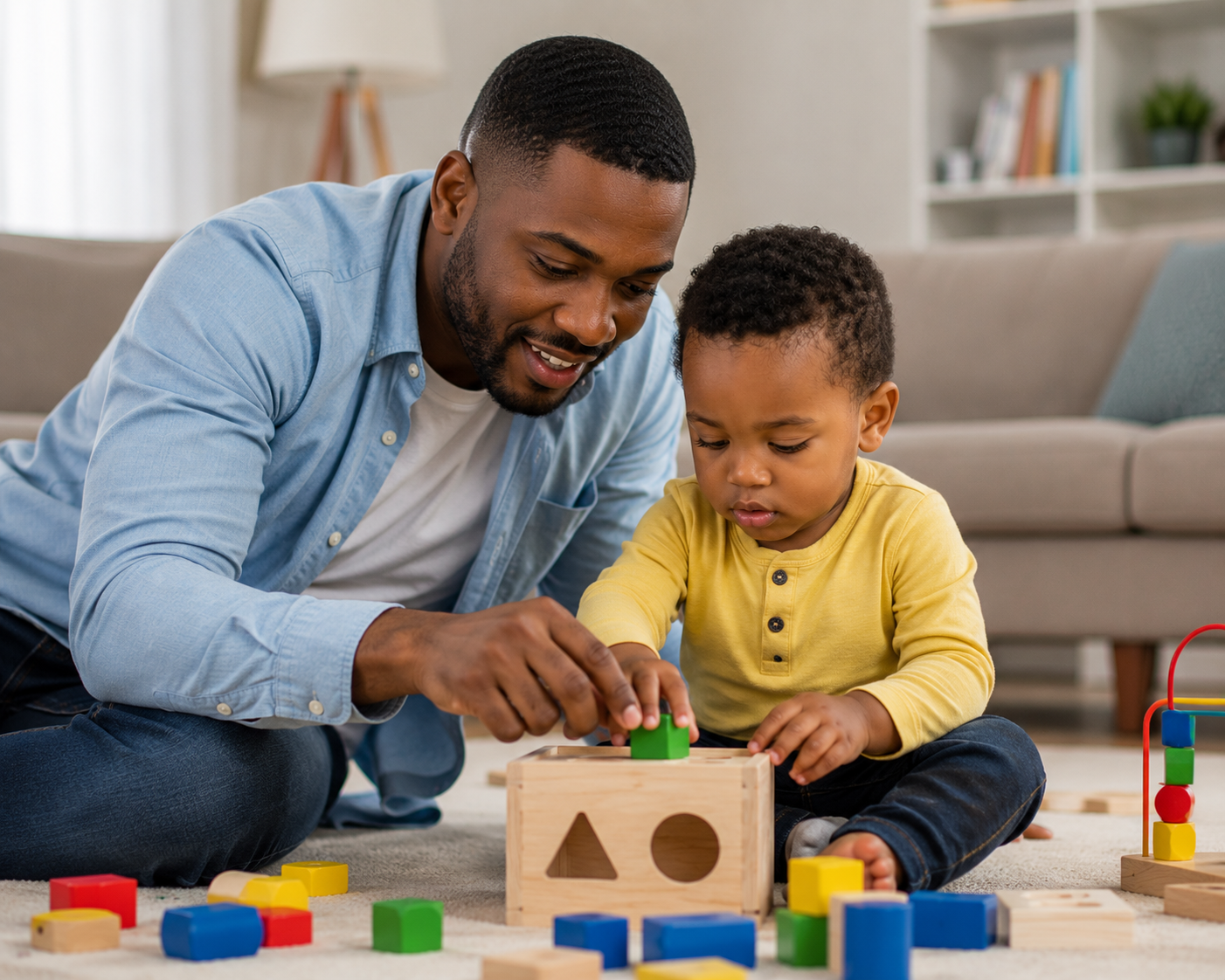
My daughter Maya was seven years old when she burst into tears over a LEGO set. Not because she lost a piece (though that was also happening). She was crying because she had tried the same approach four times in a row, gotten the same result four times in a row, and had absolutely no idea why she should try a fifth time.
I watched her for a moment before I sat down beside her. I didn’t fix it. I didn’t take over. Instead, I asked: “What do you think is going wrong?”
She looked at me like I had two heads.
That moment stuck with me — because I realized I had spent years solving problems for my kids instead of teaching them how to solve problems themselves. And honestly? That’s the easier trap to fall into. You’re tired. They’re frustrated. You just want the crying to stop. So you step in, fix it, and move on. I’ve been there more times than I can count.
But here’s the thing: problem-solving isn’t a talent some kids are born with. It’s a skill. And like any skill, it has to be practiced, modeled, fumbled through, and celebrated — even when the solution is messy.
Below are 15 creative tips, strategies, and activities I’ve gathered from raising Sarah, Maya, and Leo — with all the trial, error, and occasional chaos that came with them.
1. Teach Kids to Name the Problem Before Solving It
One of the biggest mistakes I made early on was rushing past the “define the problem” stage. Kids (and honestly, a lot of adults) jump straight to solutions without truly understanding what they’re solving. I’ve found that this wastes enormous amounts of time and leads to a lot of unnecessary frustration.
Start by asking your child: “What exactly is the problem right now?” Make them say it out loud. You’d be surprised how often kids can’t articulate it — and that’s actually the first clue that they haven’t thought it through yet.
With Leo, who always wanted to jump into action, I started using a simple phrase: “Name it before you tame it.” Silly? Yes. Effective? Absolutely. He started pausing before reacting, and that pause — even just a few seconds — changed everything about how he approached challenges.
You can turn this into a game for younger kids. Draw a little “Problem Box” on a piece of paper and ask them to write or draw what’s inside the box. This gives the problem shape and makes it feel manageable rather than overwhelming.
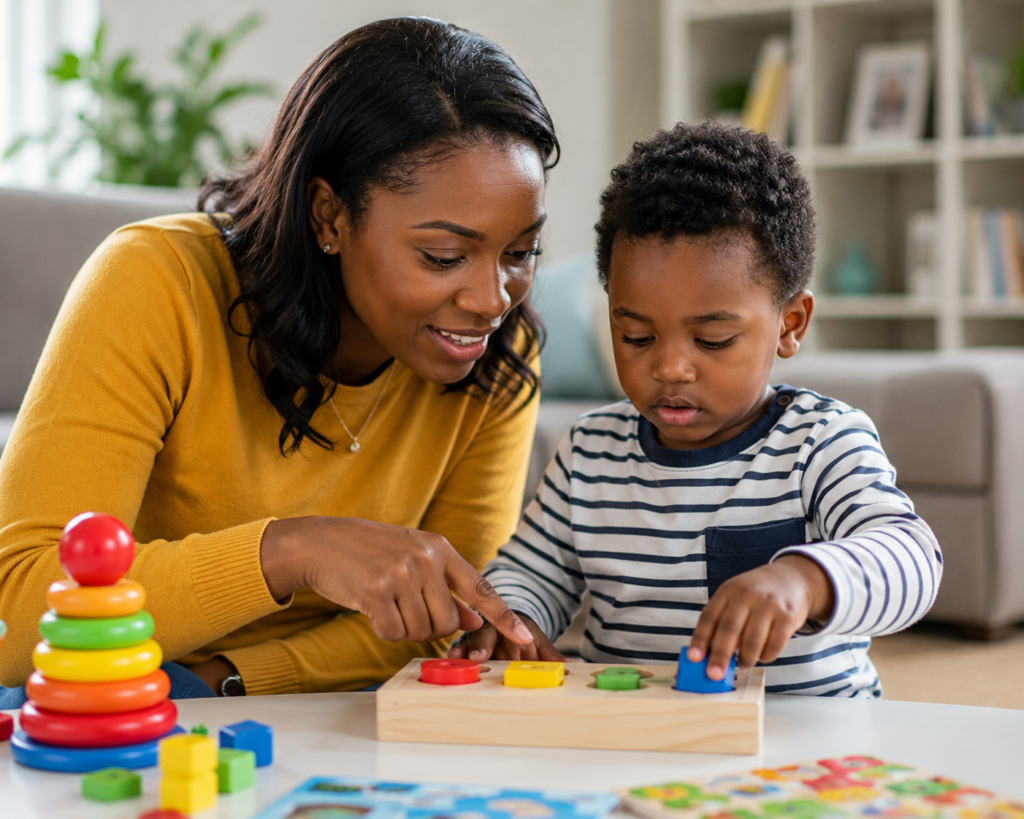
2. Use the “What Could Happen If…?” Game to Build Creative Thinking
This one is a total family favorite and costs absolutely nothing. When my kids were young, we’d play “What could happen if…?” at the dinner table. What could happen if everyone in the world forgot how to drive? What could happen if it rained only on Tuesdays?
It sounds like silliness — and yes, sometimes it absolutely was — but this game builds the core of creative problem-solving: the ability to imagine multiple outcomes from a single situation. That skill transfers directly into real-life challenges.
When your child is stuck on something, you can flip the switch from silly to practical. “What could happen if you tried it the other way? What could happen if you asked your friend for help? What could happen if you waited until tomorrow?” You’re not giving answers. You’re expanding the number of roads your child can see.
The research on this is solid: kids who practice generating multiple solutions — even imaginative, impractical ones — show stronger problem-solving ability across the board. The brain is literally building new pathways when it plays “what if.”
Give it two weeks at the dinner table. You’ll start noticing your kids using this thinking on their own.
3. Let Them Sit With a Problem (Yes, Even When It’s Uncomfortable)
This is the hard one. This is the one that every parenting instinct fights against.
When my son Leo was struggling with a complicated math problem in fourth grade, I watched him stew for nearly twenty minutes. He huffed. He sighed. He put his pencil down dramatically at least three times. Every fiber of my being wanted to lean over and point to where he went wrong.
I didn’t. And eventually, he figured it out. The look on his face was worth every uncomfortable minute.
There is real value in what psychologists call “productive struggle.” It’s the zone where a problem is hard enough to require real effort, but not so hard that it causes shutdown. Kids need to learn to tolerate that uncomfortable in-between space — because that’s where actual learning happens.
Your role in this strategy is to be a calm, patient presence rather than a rescuer. You can say things like, “I can see you’re working hard on that,” or “What have you tried so far?” These phrases show support without stealing the moment of discovery. Resist the rescue. It is genuinely one of the most loving things you can do.
4. Introduce a Simple Decision-Making Framework
I’ve found that giving kids a repeatable process for making decisions dramatically reduces the panic they feel when problems arise. Kids feel overwhelmed partly because every new problem feels brand new. A framework gives them a map they can return to.
Here’s the one I taught Sarah when she was about eight, and I’ve used variations of it ever since:
- What is the problem? (Name it clearly.)
- What are my options? (List at least three — no judgments yet.)
- What happens if I choose each one? (Think it forward.)
- What’s my best choice? (Commit and try it.)
- Did it work? (Reflect, then adjust if needed.)
This isn’t a rigid formula — it’s a thinking habit. And habits are built through repetition. Practice it on low-stakes decisions first: “You can’t decide what game to play? Let’s use our framework.” Then, when bigger challenges come, the framework is already familiar.
You can even make a laminated card for younger kids to keep on the fridge. Yes, a fridge card for problem-solving. I am not ashamed of how many sticky notes and laminated cards covered our kitchen over the years.
5. Play Strategy Games Together Regularly
Board games, card games, logic puzzles — these are some of the most underrated problem-solving tools available. And I’d argue they’re far more valuable than most educational apps, which tend to hand out rewards too quickly and teach kids that problems should resolve in under ten seconds.
Chess is the obvious recommendation, but it’s not the only one. We played a lot of Settlers of Catan, Mastermind, Rush Hour, and even simple card games like Rummy and Uno with real strategic thinking layered in. The point isn’t to win. The point is to practice thinking several moves ahead, managing uncertainty, and adjusting when things don’t go as planned.
Sarah, my eldest, became a surprisingly sharp strategic thinker through these games — and I genuinely believe it showed up in how she handled college applications, roommate conflicts, and work negotiations later in life. Problem-solving muscles get built when they’re used, even if the “problem” is just figuring out why someone keeps beating you at Catan.
Set aside one family game night a week. Go old-school on the screen time. Your kids might groan at first, but give it a month.
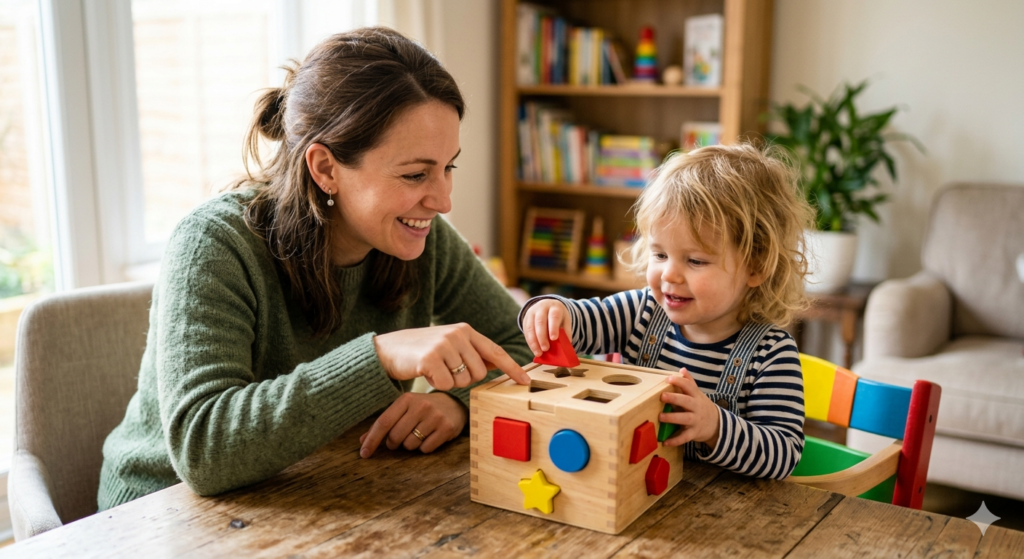
6. Encourage Journaling for Older Kids and Teens
By the time my kids hit middle school, I shifted tactics considerably. Younger children benefit from active, hands-on activities. Teens, in my experience, need a private space to process their thinking — and journaling can become an incredibly powerful problem-solving tool when it’s introduced correctly.
The key word is correctly. I’m not talking about a “Dear Diary” situation (though nothing wrong with that). I mean structured journaling prompts that guide kids through a problem-solving process. Prompts like: “What’s bothering you most right now? Why do you think it’s happening? What’s one thing within your control?”
When Maya was going through a rough patch in ninth grade with her friend group, journaling helped her untangle what she was actually upset about versus what she was reacting to. She came to me one evening, journal in hand, and said, “Mom, I figured out the real problem.” That moment told me she had internalized a process for working through difficulty — not just venting, but actually thinking.
You can start by buying them a nice journal — one they actually want to write in — and offering a few prompts to get started. Then leave it alone. Their private thinking space is their own. Trust the process.
7. Reframe Failure as Data, Not Disaster
This one took me years to model consistently, because I had my own complicated relationship with failure. But if I could go back and do one thing differently from day one, it would be this: I’d talk about failure the way scientists talk about experiments.
When something doesn’t work in a science experiment, it isn’t a failure — it’s information. “That approach didn’t work. What does that tell us? What should we try next?” This reframe is powerful because it removes the shame from getting things wrong and redirects energy toward learning.
With all three of my kids, I started narrating my own small failures out loud. “My recipe didn’t turn out the way I wanted — I think I put in too much flour. Let me write that down for next time.” Kids absorb your relationship with failure before they absorb your words about it.
The research is consistent: kids who view failure as information persist longer at difficult tasks and show more creativity in their problem-solving approaches. The belief that mistakes are the end of the road is a learned belief. It can be unlearned — starting in your kitchen, your car, and your living room.
8. Try the “Reverse the Problem” Strategy
This is a classic creative thinking technique that I adapted for kids, and it absolutely works. When a child is stuck, instead of asking “How do I solve this?” flip it completely: “How could I make this problem worse?”
It sounds backwards, and kids usually laugh when I introduce it — which is exactly the point. Laughter lowers the stress response and opens the brain up to new thinking. Once you’ve listed all the ways to make something worse, you flip the list around: the opposite of each “make it worse” idea becomes a potential solution.
I tried this with Leo when he was struggling with arguments on the soccer field. “How could you make arguments with teammates even worse?” He listed: ignore people, yell louder, blame others, walk away in the middle of a play. Then we flipped it: listen, speak calmly, take responsibility, stay present. He looked at me and said, “Oh. Those are just… the right things to do.” Yes, buddy. They are.
The reversal technique makes the right answer feel discovered rather than prescribed, and kids are far more likely to apply a solution they found themselves.
9. Use Storytelling to Practice Problem-Solving Scenarios
Long before children have the vocabulary or emotional maturity to analyze their own problems directly, they can do it through stories. Narrative is one of the oldest and most effective teaching tools human beings have.
Tell stories — made-up ones — where a character faces a problem similar to something your child is going through. “Once there was a kid who really wanted to be on the school play, but so did their best friend, and only one of them could get the lead role…” Then pause. Ask: “What do you think the kid should do?”
When kids advise a fictional character, they’re free from ego and defensiveness. They think more clearly. And the solutions they offer often reveal a wisdom they haven’t yet been able to apply to themselves.
You can go further with older kids by reading books together and stopping to discuss how characters handle challenges. The problem-solving modeled in good middle-grade fiction — the Narnia series, the Percy Jackson books, A Wrinkle in Time — is genuinely rich material. Point it out. Make it a conversation.
10. Build in “Thinking Time” Before Offering Help
I have a rule I use when a child comes to me with a problem: before I say anything, I ask them to spend two minutes thinking about it on their own first. With younger kids, I use a small sand timer. With older kids, it’s just a quiet agreement.
This single habit does two things at once. First, it honors the child’s capability — it signals that I believe they have the resources to at least begin thinking through the problem. Second, it means that when they do come back to talk, they’ve already done some processing and the conversation is richer.
I picked this up the hard way after years of immediately jumping into advice-giving mode every time a child walked in the room looking frustrated. My instant availability was not helping them. It was teaching them that thinking was my job.
Two minutes is not a lot. But it’s enough to begin building the habit of independent thinking. And over time, those two-minute pauses become ten minutes, then independent problem-solving without coming to you at all. Which, honestly, is the whole goal.

11. Normalize Asking for Help as Part of Problem-Solving (Not a Substitute for It)
Here’s something I wish I’d been clearer about earlier: knowing when to ask for help is itself a problem-solving skill — and a sophisticated one. The goal is never to teach kids to struggle alone forever. It’s to help them know the difference between a problem they can work through with more time and a problem that genuinely requires outside input.
I made a chart with my kids (another fridge situation, don’t judge me) that listed the steps you take before asking for help: try once, try differently, think about who else has faced this, check available resources, then ask. The ask was always on the list. It just wasn’t the first move.
This also models healthy collaborative behavior. Adults who can clearly identify where they’re stuck and ask targeted questions get further than adults who either never ask or ask without thinking first. Both extremes are worth guarding against.
Celebrate the quality of the ask. “That was a really specific question — you already know what you’ve tried, and you know exactly what you need. That makes it so much easier for someone to help you.”
12. Create a Home “Maker Space” for Hands-On Problem Solving
You do not need to spend a lot of money on this. I want to be very clear. When I say “maker space,” I mean a box — a shoebox, a bin, a drawer — stocked with materials kids can use to build, create, and tinker.
Think: cardboard, tape, rubber bands, string, paper clips, old containers, fabric scraps, craft sticks, markers. That’s it. Then give kids an open-ended challenge with no single right answer: “Build something that can hold a marble without touching the table.” Or “Make a bridge that can hold five pennies.”
What happens in these moments is remarkable. Kids are forced to test ideas, encounter failure, adapt, and try again — in a context that feels like play. They don’t realize they’re building persistence, spatial reasoning, and creative problem-solving. They think they’re just messing around with tape and cardboard.
Leo spent an entire Saturday afternoon trying to build a marble run from toilet paper rolls and masking tape. He failed at least a dozen times. He also refused to quit, because the challenge was his own. That kind of intrinsic motivation is pure gold, and you can’t manufacture it — but you can create the conditions for it.
13. Practice “What Would [Role Model] Do?”
Kids have heroes — real ones and fictional ones. One simple way to expand their problem-solving thinking is to help them borrow a perspective they admire.
“What do you think Simone Biles would do if she was nervous about something? What do you think the character Atticus Finch would say? What would your grandma do in this situation?”
Perspective-taking is a core component of both emotional intelligence and problem-solving. When a child is too close to a problem — too inside it — borrowing a respected viewpoint can create just enough distance for a fresh idea to emerge.
Be thoughtful about who you choose and why. Use it as an opportunity to talk about why certain people or characters handle challenges well: “What makes you think she’d handle it that way? What does that tell you about her approach?” You’re teaching values alongside strategy.
This works especially well with kids who are strong imaginative thinkers — the ones who love characters and stories and role-play. Meet them in their world.
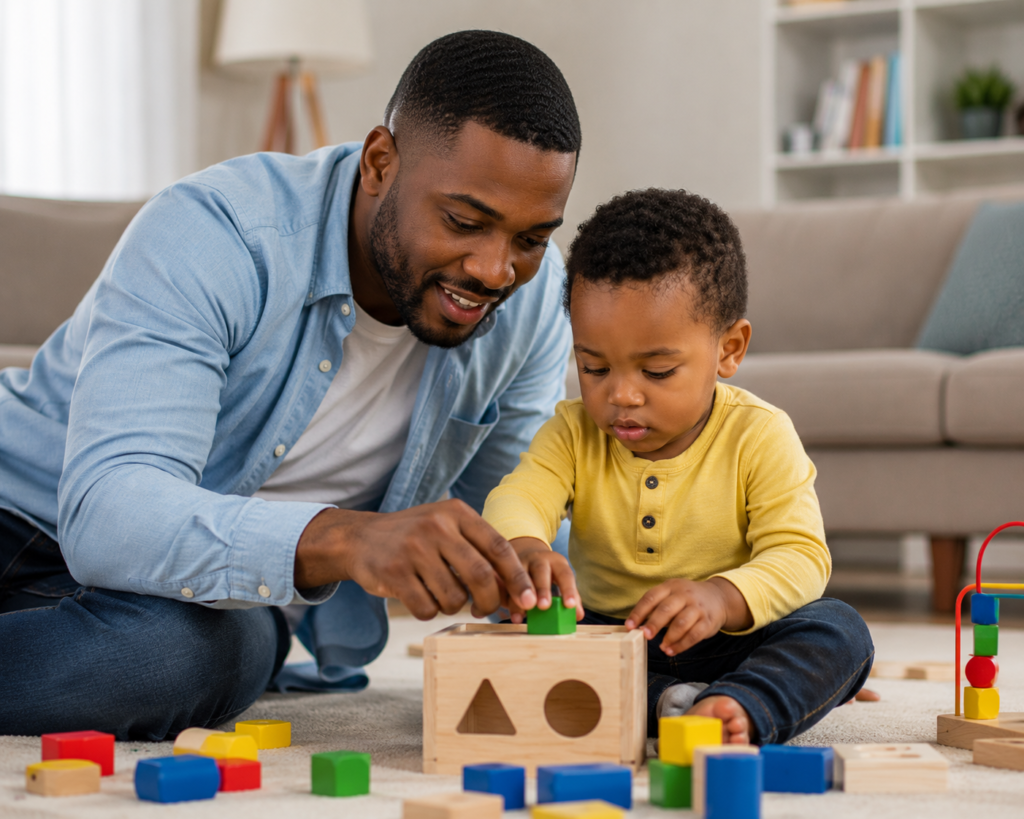
14. Debrief After Problems Are Solved — Not Just When They Go Wrong
I’ve found that most parents (myself absolutely included) debrief when things go wrong. We sit down after the meltdown, after the bad grade, after the friendship drama. We process, we reflect, we talk about what to do differently.
But I’ve found that debriefing when things go right is equally — possibly more — valuable. When a child successfully navigates a challenge, that’s the moment to pause and make the process visible.
“You just worked through something really hard. What did you do that helped? What almost tripped you up? What would you do the same next time?”
This reflection after success builds what psychologists call “self-efficacy” — the belief that you are capable of handling challenges. And self-efficacy is one of the strongest predictors of resilience and persistence in kids. It’s not enough for kids to succeed. They need to notice that they succeeded, understand how, and internalize that they can do it again.
Make the debrief brief. Five minutes, max. But make it a habit.
15. Model Your Own Problem-Solving Out Loud
This is the last tip and — honestly — the most important one of all. Everything else you do to teach problem-solving matters less than what your kids observe when you face your own challenges.
When I’m stuck on something, I now narrate it. “Okay, the oven isn’t working. Let me think through this. First, let me check if it’s the power. Nope. Maybe the timer is set wrong. Let me check that…” It’s not a performance. It’s genuine transparent thinking.
Kids learn by watching. They pick up on whether you panic when problems arise or whether you get curious. They absorb whether you blame others or ask what you can do differently. They notice whether you give up after one failed attempt or pivot and try again.
You are the most powerful problem-solving model in your child’s life. That’s a lot of responsibility — but it’s also incredibly good news, because it means you don’t need any special training or fancy tools. You just need to let them watch you think.
The Real Talk: What’s Not Worth Your Time
I’ve tried a lot of things that looked good on paper and were a total waste of time in real life. Let me save you the frustration.
Over-structured “problem-solving worksheets” from the internet are one. I’ve found that most of them turn problem-solving into a paperwork exercise that kids complete to make adults happy, not to actually think. If your child is filling out a worksheet without engaging, the worksheet is the problem.
Forcing “family meetings” about every small conflict is another trap. I went through a phase of turning every little squabble between my kids into a structured discussion. It created two things: dread and resentment. Save the structured conversation for genuinely significant problems. Small problems need small responses.
And please, please do not reward kids for resolving problems too quickly. I’ve seen parents praise a child for “fixing” something in thirty seconds when what actually happened was the child gave up, gave in, or made the problem someone else’s. Speed is not the goal. Thinking is.
Wrapping Up: You’re Not Failing. You’re Learning Right Alongside Them.
Raising kids who know how to think through hard things is not a one-season project. It’s a years-long, imperfect, deeply personal process. There will be weeks when it all seems to be clicking — and weeks when you’re pretty sure you’ve accidentally raised someone who will melt down over every obstacle for the rest of their lives.
I promise you: you haven’t. Kids are more resilient and more capable than they appear in their worst moments. And you are more consistent and more influential than you feel in your most exhausted ones.
The fact that you’re reading an article about how to help your child think better tells me you’re already doing something right. You’re paying attention. You’re trying. You’re willing to learn.
That’s what good parenting looks like — not the Pinterest-perfect moments, but the persistent, loving effort to raise humans who can handle whatever comes their way.
My parting wisdom? Start with just one of these strategies. Not all fifteen. Pick the one that felt most relevant to your kid, and try it for two weeks before adding another. Small changes, applied consistently, create the biggest shifts.
Now I want to hear from you: Which of these tips resonated most, and what’s one problem-solving strategy that’s actually worked in your home? Drop your thoughts in the comments below — I read every single one, and some of my best ideas have come from parents just like you.
About the Author: Lannah Evans is a veteran parenting blogger at GentleParenting101.org and mother of three (Sarah, Maya, and Leo), she writes about raising resilient, emotionally intelligent kids with warmth, honesty, and the occasional helping of hard-won humility.