
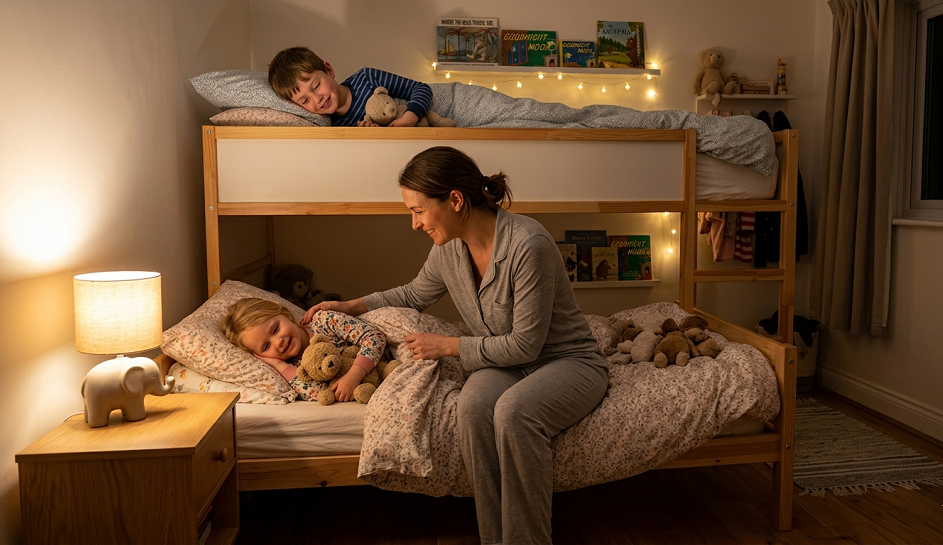
Bedtime used to be the part of the day I dreaded most. Not because my kids were terrible — they weren’t. But because by 8 PM, everyone was exhausted, overstimulated, and running on fumes. Sarah would need one more glass of water. Maya would suddenly remember a homework assignment she hadn’t touched. And Leo — bless his heart — would find seventeen reasons why he simply could not fall asleep yet.
I tried everything. Lavender diffusers. White noise machines. Weighted blankets (which, by the way, I’ve found are a total waste of money for kids who just kick them off within five minutes anyway). I even went through a phase where I thought a full 45-minute wind-down routine would solve everything. It didn’t. It just created more steps to argue about.
What actually worked? Ten minutes. A focused, intentional, consistently applied ten-minute night routine. That’s it. No elaborate bath rituals. No hour-long story marathons. Just ten calm, structured minutes that signal to your child’s brain: it’s time to stop now.
Here’s exactly what I did — and what I still recommend to every parent who tells me bedtime feels like the final boss battle of the day.
Why a Short Night Routine Actually Works Better Than a Long One
I want to address this head-on before we get into the steps, because I know some parents feel guilty about keeping it brief. There’s this pressure — especially online — to do these elaborate, Pinterest-worthy bedtime routines that involve three books, a mindfulness meditation, and a personalized lullaby. And if that works for you, genuinely wonderful. Keep doing it.
But for most families I’ve talked to, myself included, longer routines don’t produce calmer kids. They produce more opportunities for stalling. Kids are incredibly smart. They will stretch a 30-minute routine into 90 minutes if you let them, and then everyone goes to bed frustrated.
The science actually backs up the shorter approach. A consistent routine — even a brief one — cues the brain to begin releasing melatonin and winding down. It’s not the length of the routine that matters. It’s the consistency and the sequence. When children know exactly what comes next, their nervous systems stop anticipating and start relaxing. That’s the whole goal.
Short also means sustainable. A routine you can actually do every night — even on hard nights, even when you’re exhausted — is infinitely more valuable than a perfect routine you only manage twice a week.
Step 1: The “Screens Off, No Negotiation” Boundary (Minutes 0–2)
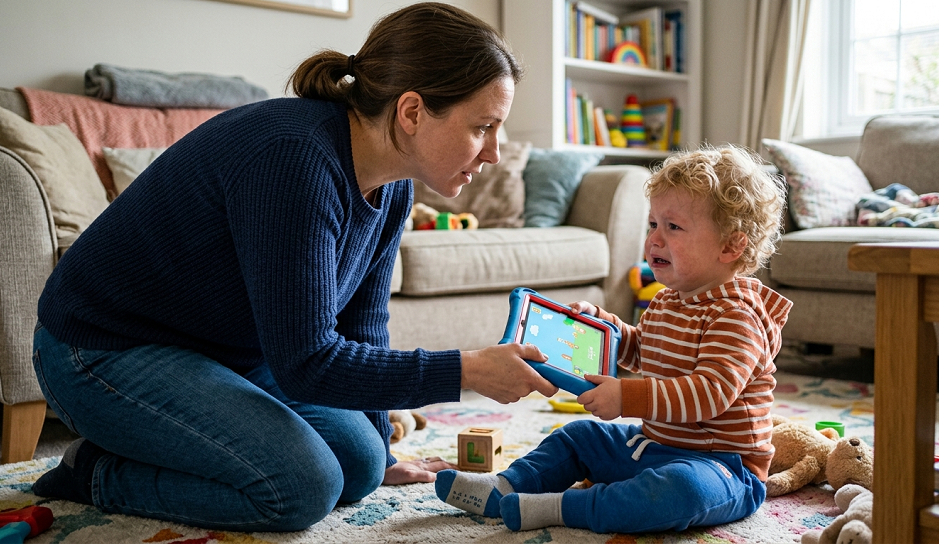
Here’s my firm, non-negotiable stance: screens go off ten minutes before the routine even starts. This means tablets, phones, the TV in the background, video games — all of it.
I know this is the step that will get the most pushback — from your kids, and possibly from yourself on a tired Tuesday when you just want five more minutes of peace. I get it. But I’ve found that allowing even two or three minutes of screen time right before the routine makes the entire rest of the process harder. The brain needs time to shift gears, and screens are specifically designed to prevent that shift from happening.
When Sarah was about nine, I tried letting her “finish her show” before bed. What followed was twenty minutes of her brain buzzing with plot points while she stared at the ceiling unable to sleep. We went back to hard cutoffs, and within a week, the change was noticeable.
Make the screen-off moment a simple, neutral announcement — not a battle cry. “Okay, screens off, routine time” in a calm voice works far better than “I SAID TURN IT OFF.” Your energy sets the tone. If you walk in wound up, they wind up. If you walk in calm and matter-of-fact, most of the time — not all the time, but most — they follow that lead.
Give a five-minute warning before the ten minutes start if you can. That little heads-up goes a long way with kids who struggle with transitions.
Step 2: Quick Physical Reset — Wash Face, Brush Teeth, Use the Bathroom (Minutes 2–5)
This step is purely functional, but it matters for two reasons. First, obviously, hygiene. Second — and this is the part most parents overlook — the physical act of washing the face and brushing teeth is a powerful sensory cue. It tells the body: the day is done. We are cleaning off the day. We are preparing for sleep.
Keep this part moving. Three minutes is enough. You don’t need a spa moment here. Splash of water, toothbrush, bathroom — done. If your child is old enough (usually by age six or seven), they can handle this part independently while you simply stay nearby.
One thing I learned the hard way with Leo: don’t introduce new stimulation during this step. No funny toothbrushing songs that get him giggling and fully awake again. No interesting conversations about his day that reactivate his thinking brain. Keep it warm but quiet. A simple “almost done, you’re doing great” is all the commentary you need.
If your child wears glasses, hearing aids, or has any other end-of-day physical care routine — this is where it fits in. Keep the sequence identical every night. The sameness is the point.
Step 3: The One-Minute Emotional Check-In That Changes Everything (Minutes 5–6)
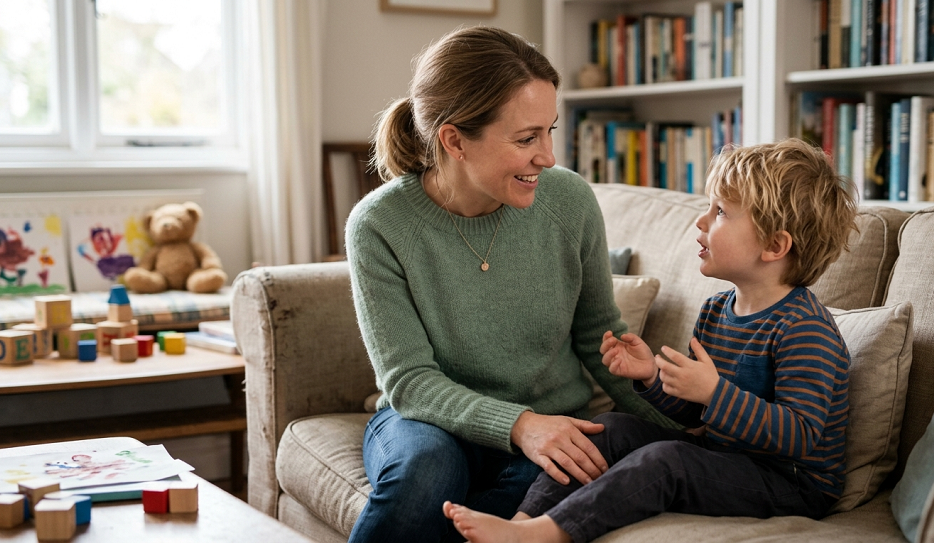
This is the step most parents skip, and it’s the most important one.
Before your child gets into bed, take sixty seconds — literally sixty seconds — to ask one simple question. My favorite is: “What was the best part of your day, and what was one hard thing?” You’re not opening a therapy session. You’re not solving problems. You’re just giving them a sixty-second window to feel heard.
Children carry their emotional load into bed with them. If they don’t have a small outlet for it, that load becomes the reason they can’t fall asleep. Their brain keeps chewing on the hard thing — the fight with a friend, the test they think they failed, the moment they felt embarrassed — because no one acknowledged it.
You don’t have to fix anything in this minute. In fact, I’d strongly encourage you not to. Just listen, nod, and say something like “that sounds tough” or “I’m glad that happened.” Validation, not solutions. If they bring up something big, you can gently say, “Let’s talk about that properly tomorrow — but I hear you, and that matters.”
Maya used to hold everything in during the day and then fall apart at bedtime when she was about eleven. Once we started this sixty-second check-in, she stopped doing that. She just needed to know there was a designated moment for her feelings before the lights went out.
One important note: keep your face and your voice neutral and soft during this check-in. If your child says something that surprises or worries you, stay regulated. If you react with alarm, they’ll learn to filter what they share with you.
Step 4: Get Them into Bed and Set the Physical Space for Sleep (Minutes 6–8)
Now they’re in bed. This is when the environment does half your work for you — if you’ve set it up correctly.
The room should be dark, or close to it. I’ve found that total pitch black works best for most kids over age five, but a very dim nightlight is fine for younger children who feel anxious in the dark. What I’d steer well clear of is any light that pulses, changes colors, or projects moving images on the ceiling. Those are marketed as calming. They’re not. They’re visually stimulating, and a stimulated brain is not a sleeping brain.
Temperature matters more than most parents realize. A slightly cool room — around 65 to 68 degrees Fahrenheit — supports better sleep onset. If your child complains about being cold, give them an extra blanket. That’s an easy fix. A hot, stuffy room is much harder to sleep in.
Make sure they have whatever comfort objects they need — stuffed animal, favorite pillow, blanket. This isn’t babying; it’s giving their nervous system an anchor. Even my teenage Leo had a particular pillow he preferred well into high school, and I never once made him feel weird about it.
Once they’re settled in, do one final physical comfort check. Are they comfortable? Do they need water (have it ready on the nightstand — this eliminates the “can I have water” stall tactic completely)? Is their blanket right? Thirty seconds of this prevents five interruptions after you leave.
Step 5: The Two-Minute Wind-Down Send-Off (Minutes 8–10)
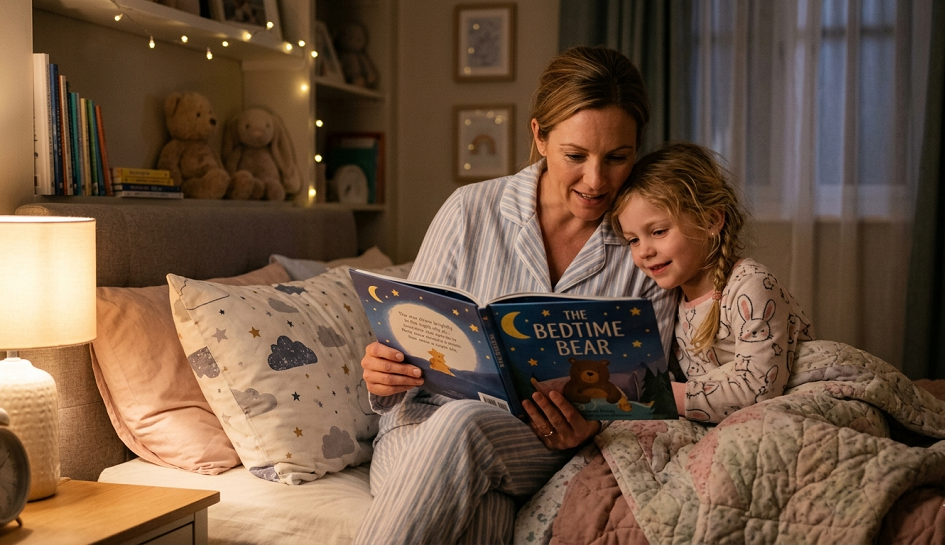
Here’s where you close the routine. And how you close it matters just as much as everything that came before.
I’ve used a few different approaches over the years depending on the child and the age. For young children (ages three to seven), a short, quiet story — not an exciting one, not a funny one, a calm and slightly boring one — works beautifully. The goal is to give their imagination something gentle to ride into sleep. Think meadows, not dragons.
For older kids (eight and up), I found that a brief guided breathing exercise is a total game changer. Nothing fancy. Just: breathe in for four counts, hold for four, breathe out for four. Do it with them twice. It physically slows the heart rate and signals the nervous system to downshift. I used to sit on the edge of the bed and do it alongside them, which also helped them not feel like I was performing some wellness protocol on them.
End with the same phrase every single night. I always said, “I love you, the day is done, sleep well.” Every night. Same words, same tone. After a while, those words became their own cue. When they heard that phrase, their brain knew: this is the end. Nothing more is coming.
Then you leave. Calmly. Without looking back at the “but Moooom” that may or may not follow.
The “Real Talk” Section: What Doesn’t Work and What I’d Never Do Again
Reward charts for sleeping. I tried these with Leo when he was six, and I’d call them a complete waste of your time and a source of unnecessary pressure for your child. Sleep isn’t a performance. It shouldn’t be tied to earning stickers. When you reward sleep, you accidentally teach kids to be anxious about whether they’re doing it right — which makes sleep worse, not better.
Lying next to them until they fall asleep. I know this is a controversial one, and I want to be compassionate here because I understand why parents do it. It’s tender, and sometimes it feels like the only thing that works. But I’ve found — both with my own kids and in everything I’ve read since — that it teaches children their only path to sleep runs through you. That doesn’t serve them long-term, and honestly, it doesn’t serve you either. If this is your current situation, transition slowly: start by sitting in a chair next to the bed instead of lying down, then move the chair closer to the door over several nights.
Threatening consequences for not sleeping. “If you don’t go to sleep, we’re not going to the park tomorrow” is a trap. You’re now in a power struggle with a tired child’s nervous system, and the nervous system always wins. Besides, sleep isn’t a choice in the way behavior is. Kids don’t refuse to fall asleep out of defiance (usually). They’re dysregulated. Consequences don’t regulate a nervous system — connection and routine do.
Checking your phone while doing the routine. I did this. I’m not proud of it. And every single time I did, the routine took longer and my kids acted out more. Your presence in those ten minutes has to be actual presence. Put the phone in another room if you have to.
Quick Side Note on Weekends
Consistency is the engine that makes this whole thing work. And the most common place that engine stalls is the weekend.
I’m not suggesting your child needs to be in bed at exactly 7:32 PM on Saturday nights for the rest of their childhood. Some flexibility is healthy and normal. But I’d keep weekend bedtimes within thirty to forty-five minutes of weekday bedtimes whenever possible, and I’d still run through the routine. A modified version is fine. Skipping it entirely is where things tend to unravel come Monday.
The Wrap-Up: You’re Not Failing. You’re Figuring It Out.
Parenting at night is parenting in its most tired, most stretched form. By bedtime, you’ve already given everything you had to work, to meals, to homework, to the thousand small emergencies of a regular day. And now you’re supposed to be calm and patient and consistent, when what you really want to do is sit on the couch in silence.
You’re doing that anyway. And that matters enormously.
Ten minutes is manageable. Ten minutes is something you can give even on the hardest days. And over weeks and months, those ten consistent minutes compound into something genuinely powerful: a child who trusts the end of the day, who knows the routine, who has learned — because you showed them — that the night is safe and sleep is nothing to fight.
My three kids are grown now. Sarah is the one who texts me about her own sleep routines. Maya meditates before bed every night. And Leo — the child who once needed seventeen reasons not to sleep — calls me sometimes just to talk through a hard day before he goes to bed. The sixty-second check-in he rolled his eyes at as an eight-year-old became a habit he carried into adulthood without ever realizing it.
That’s what consistent, gentle routines do. They don’t just produce sleepy children. They produce people who know how to take care of themselves.
Start tonight. Pick one step if the whole thing feels like too much. Just one. See what shifts.
What does your current bedtime routine look like — and which step here do you think would make the biggest difference for your family? Drop your questions, stories, and suggestions in the comments below. I read every single one, and nothing you share down there will surprise me. We’ve all been in the trenches.