
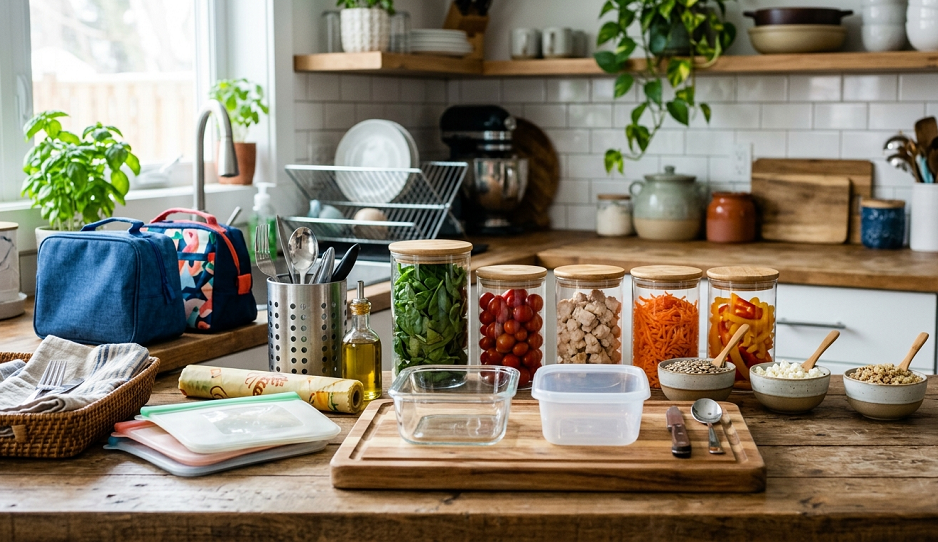
There is a moment every parent knows well. You are standing at the kitchen counter, coffee going cold, trying to pack lunches, answer a work email, and remember whether you signed that permission slip — all at once. And then a small voice behind you says, “I’m thirsty.” You turn around. You pour the water. You hand it over. Thirty seconds later: “I’m still thirsty.”
It’s not that toddlers are trying to drain us. They genuinely cannot do these things yet — or so we assume. That assumption, I’ve learned through raising Sarah, Maya, and Leo across nearly two decades of kitchen chaos, is where we accidentally hold our kids back.
When Sarah was two and a half, I caught her dragging a dining chair to the pantry to reach the crackers herself. My first instinct was to redirect her. My second — slower — instinct was to think: wait. She’s trying to be capable. What if I helped her get there instead of just doing it for her?
That single moment changed how I set up every kitchen we’ve lived in since. Toddler-accessible stations are not a parenting trend. They are a trust-building tool. And the payoff — a child who feels proud, capable, and genuinely helpful — is more valuable than any app, toy, or enrichment class you can buy.
Here are nine DIY stations you can build, adapt, or cobble together this weekend. Most cost under $30. All of them work.
1. The Toddler Water Station: Hydration They Can Handle Themselves
Why it matters for toddler independence
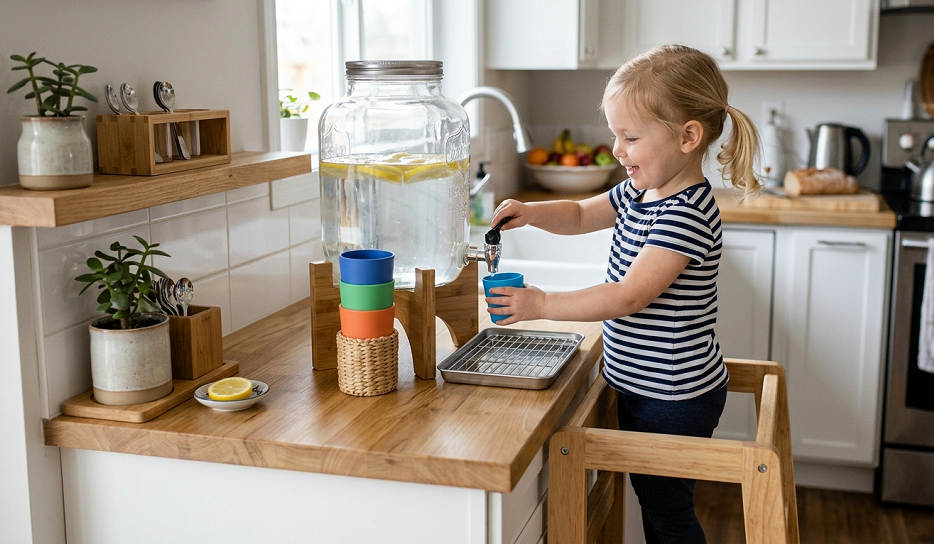
The single most repeated request in any household with small children is “I want water.” Setting up a water station at toddler height is, hands down, the first thing I tell every new parent to do. I set one up for Leo when he was 26 months old, and I genuinely think it changed the energy in our house within a week. The constant interruptions dropped. His confidence went up. And he started drinking more water because he had ownership over getting it.
How to build it
You don’t need to spend money on a fancy kids’ dispenser, though they exist. A five-gallon water jug with a push-button spigot placed on a low stool or a bottom pantry shelf works perfectly. Set a small plastic pitcher next to it so they can fill a pitcher and carry it carefully instead of trying to hold a cup under a spigot. Add a small tray underneath for drips. Done.
What to put at the station
Keep two or three unbreakable cups at that level — silicone or hard plastic, not metal (metal gets cold and slippery for small hands). A small stack of napkins within reach teaches them to clean up their own spills, which is a habit worth starting early. Resist the urge to use a sippy cup here. They’re past that stage, and a real cup teaches real motor skills.
One thing I learned the hard way
Do not skip the tray. I thought it was unnecessary with Leo. Three puddles on the hardwood floor later, I got the tray. It also helps toddlers understand boundaries — the tray defines the space. Spills go there, not everywhere.
2. The Snack Drawer: A Low-Shelf System That Teaches Healthy Choices
Why it works for toddler autonomy
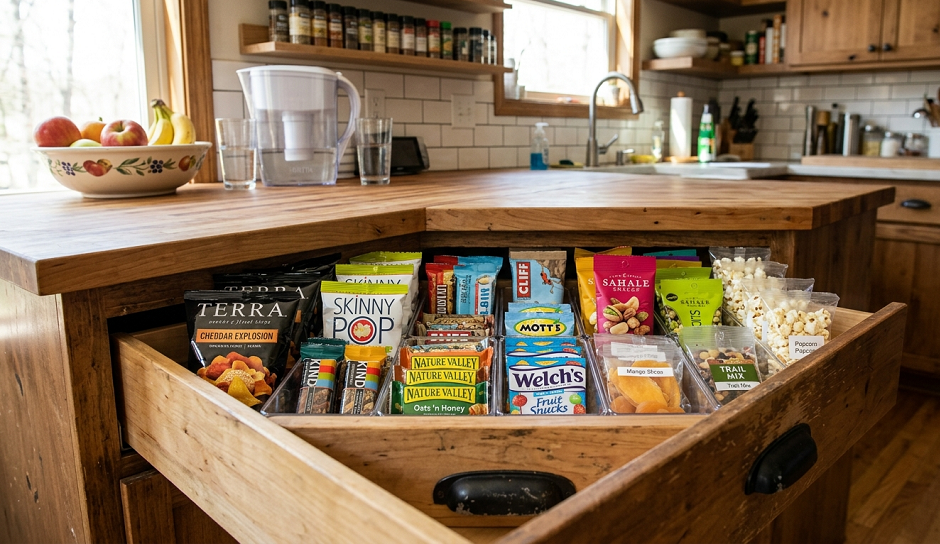
A dedicated snack drawer or low shelf gives toddlers agency over a narrow set of choices. And choice — even limited choice — is one of the most powerful tools in gentle parenting. When Leo could pick between apple slices and cheese cubes without asking me, he stopped treating snacks like something to beg for. They became ordinary. Normal. His.
Setting it up on a budget
Clear out one low kitchen drawer or one shelf in the pantry at hip-height for a two-year-old (roughly 18–24 inches off the floor). Line it with a few small containers with easy-open lids. I love OXO Tot containers for this, but reused deli containers work just as well. Pre-portion the snacks yourself each morning — this is where your choices shape their choices. If the drawer has apple slices, cheese, and whole-grain crackers, that’s what they’re choosing from.
Making it visually accessible
Toddlers do not read labels. Use picture labels on containers — a photo of grapes on the grape container, a drawing of crackers on the cracker box. You can make these with a marker and an index card, or print them if you want something that lasts. This doubles as early literacy work, which is a bonus I didn’t even plan for.
Setting the ground rules
This is where firm-but-soft comes in. The rule in our house was always: the snack drawer is for one snack between meals, not a buffet. We talked about it at the table first, made it a family conversation, and practiced together. When Leo tested the rule — and he absolutely did — the consequence was simply that the drawer went up high for a day. No drama. He understood quickly that the privilege came with the expectation.
3. The Fruit Bowl Station: Real Food, Real Responsibility
The simplest station you’ll ever set up
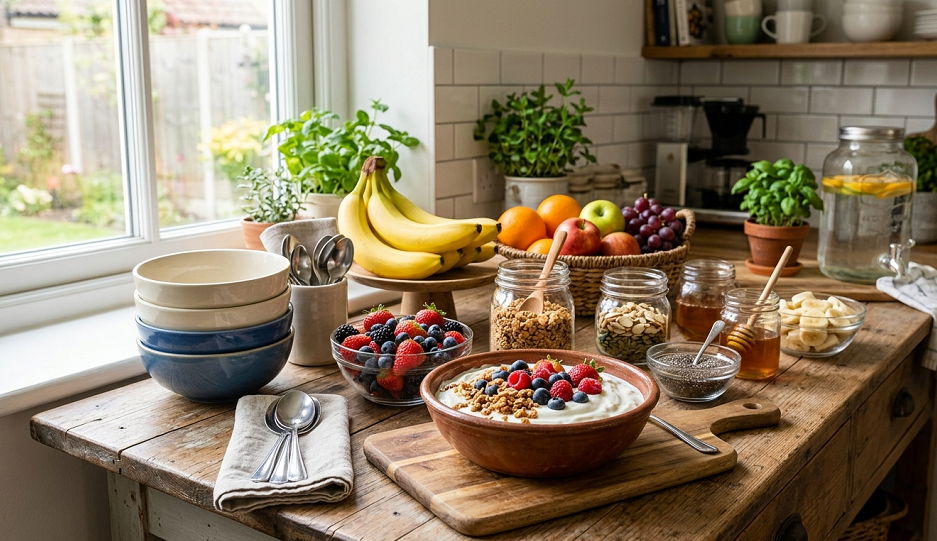
This one requires almost no setup. A low bowl or basket — placed on a low table, a step stool surface, or a bottom pantry shelf — filled with washed, ready-to-eat fruit is all you need. Bananas, clementines, apples, grapes in a small open container. Fruit that requires no cutting, no cooking, no preparation.
Why this builds more than independence
When Maya was three, she went through a phase where she refused vegetables at dinner every single night. I was exhausted and starting to spiral into the classic parental trap of turning every meal into a negotiation. A gentle parenting coach I spoke with at the time told me something I’ve repeated to every parent since: children eat more variety when they control at least one food choice per day. The fruit bowl became Maya’s domain. She chose her fruit, she picked it herself, she felt proud — and over several months, that pride quietly started spilling into other meals.
What to watch for
Some toddlers will treat the fruit bowl like a discovery toy and take one bite out of every apple. I’ve been there. The fix is not removing the station — it’s supervision at first, and then clear expectation-setting. We practiced together. “One fruit at a time. If you’re not sure, ask me to help you decide.” Within two weeks, Maya had it down.
A small but important note on food safety
Wash all fruit before it goes in the bowl, not as they reach for it. The station only works if it truly requires zero help from you. Pre-washed, ready fruit means they really can do it alone.
4. The Breakfast Prep Station: Simple Enough for a Three-Year-Old
Why breakfast is the best place to start building kitchen skills
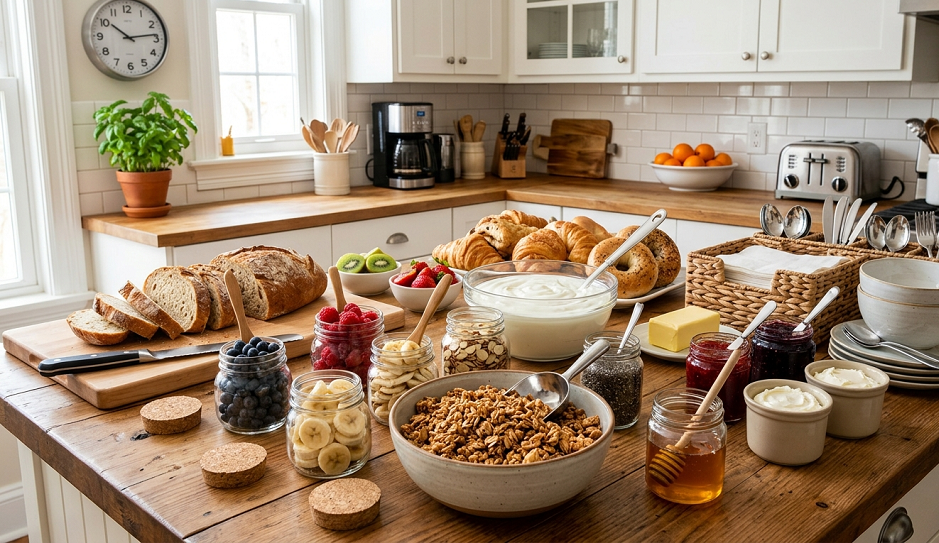
Breakfast is low-stakes. Nobody is hungry and exhausted and racing a clock the same way we are at dinner. Mornings have their own chaos, sure — but a simple breakfast station removes one piece of that chaos entirely. Sarah started making her own cereal at three and a half. By four, she was doing it independently every single morning. That’s not a small thing. That’s a skill she carried into elementary school, middle school, and yes — college.
What the station includes
Set up a low tray or section of counter (or a small dedicated table) with: a child-sized pitcher of milk stored in a low fridge drawer or a small insulated jug, their bowl and spoon at their level, and two or three cereal options in containers with easy-pour lids or scoops. That’s the whole station. The goal is that they can assemble a bowl of cereal from start to finish without asking for anything.
The right containers make all the difference
I’ve found that perfectly sealed, hard-to-open cereal bags are a total waste of time, even if they look like the easier option. Instead, I discovered the hard way that decanting cereal into wide-mouth mason jars or small plastic bins with scoop handles is what truly works if you’re patient enough to set it up once. Kids can reach a scoop. They cannot wrestle a cereal bag.
Building in the cleanup expectation
Put a small bin or dish rack within reach. From day one, the expectation at our breakfast station was: make your breakfast, eat your breakfast, put your bowl and spoon in the bin. The full routine. Not just the fun part. Toddlers can absolutely do this — and starting early means it becomes automatic before the pushback years hit.
5. The Baking Corner: Measuring, Pouring, and Mixing for Little Hands
Why this one is worth the mess
I’ll be honest — this station is the messiest of the nine. Flour happens. But the developmental payoff is enormous. Measuring, pouring, and mixing engage fine motor skills, early math concepts, and patience in ways that most play activities simply don’t. When we built a little baking corner for Sarah at age three, she spent more focused, calm time there than anywhere else in the house.
What to include in a toddler baking station
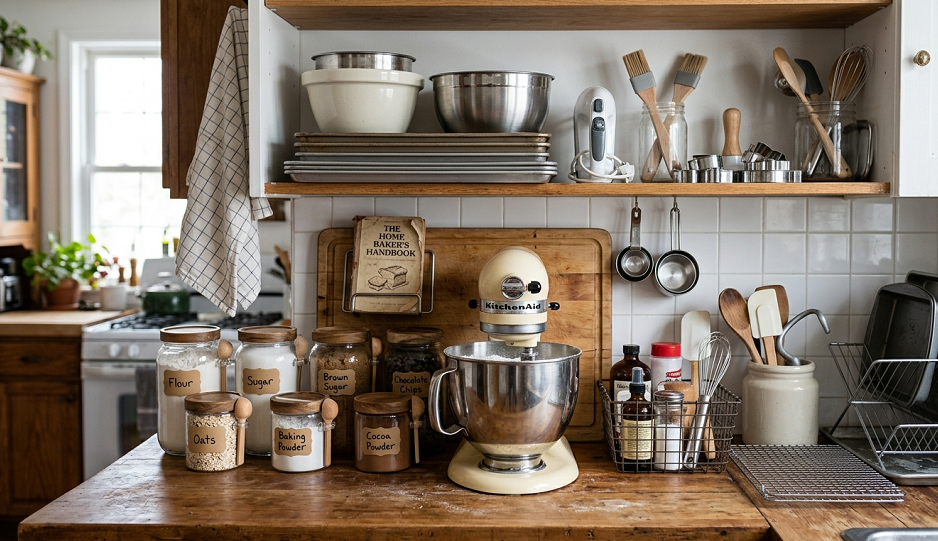
Keep it pared down. A low shelf or bin with: child-sized mixing bowls (silicone, not glass), a set of measuring cups and spoons at their level, a small bag of flour, sugar, and oats in clearly labeled containers, and a small whisk or wooden spoon. You don’t need a full baking setup. Even just letting them measure and mix dry ingredients while you handle the rest is enough.
How to use it without losing your mind
I set out a silicone mat on the floor in front of the station. Anything that spills lands on the mat, not on the grout. This one change made me a hundred times more relaxed about letting the kids use this station freely. It rolls up and goes in the sink when they’re done.
What they’re really learning
Patience. Following steps. The relationship between cause and effect — if you pour too fast, it goes everywhere. If you stir gently, it mixes better. These are not just baking skills. They are life skills being quietly installed while your toddler thinks they’re just playing.
6. The Napkin and Utensil Station: Table-Setting as a Point of Pride
The underrated independence builder
Table-setting gets overlooked in most toddler independence conversations, and I think that’s a mistake. It is one of the most concrete, completable tasks a toddler can own from start to finish. Sarah set our table every night from age two and a half until she left for college. I’m not exaggerating. It became her contribution to the family, and she was genuinely proud of it.
Building the station
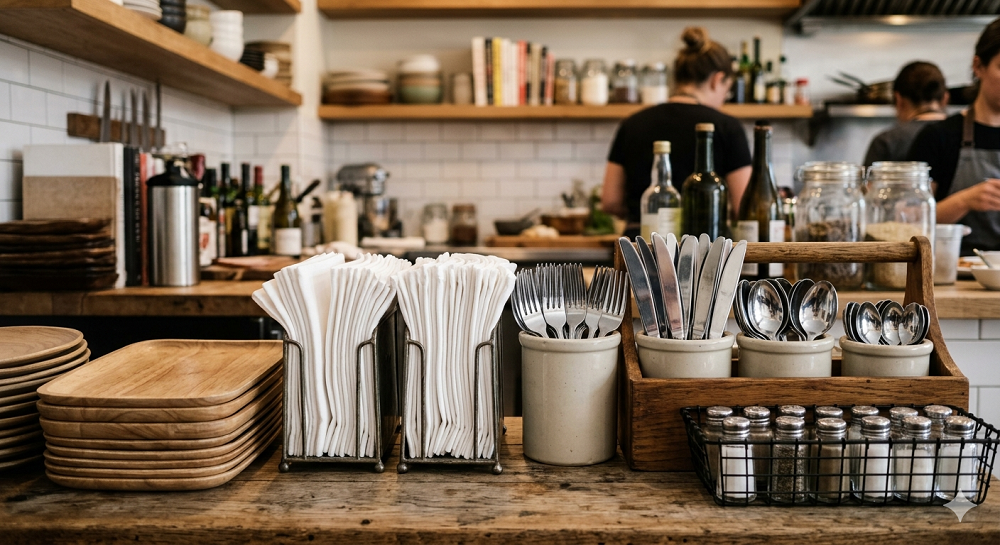
This one is almost embarrassingly simple. Dedicate one low drawer or a small basket at counter-height to: napkins (cloth or paper), child-safe forks and spoons, and placemats rolled or folded neatly. That’s it. Before dinner, they get their job. They do their job. They feel the satisfaction of having contributed.
Making it stick through the toddler stages
Toddlers will sometimes set spoons upside down, napkins sideways, and a fork at every chair including the one nobody uses. Let it go. The point is not perfection. The point is that they are practicing ownership, sequencing, and responsibility. Correcting every placement teaches them that their effort was wrong. Thanking them for the job teaches them that their effort matters.
A quick side note on plates
If you want to extend this station, add a lower shelf with their plates and bowls. By three and a half, most toddlers can safely carry an unbreakable plate to the table. The key word is unbreakable. This is not the time for the heirloom china.
7. The Lunch-Prep Station: Assembling Simple Meals With Minimal Help
Why this one changes your afternoons
Lunch is the meal I was least thoughtful about when Sarah was small, and I regret that now. Midday is often when toddlers have the most energy and the most curiosity. A simple lunch-prep station channels that energy into something purposeful and gives you back 15–20 minutes you didn’t know you were losing to “what do you want for lunch?” negotiations.
What the station looks like
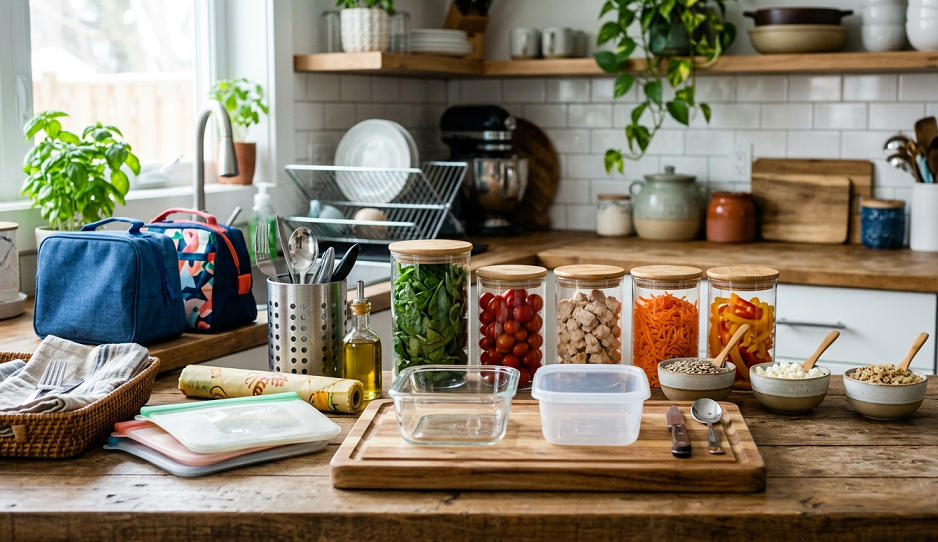
Stock a low fridge bin with pre-prepped lunch items: sliced cheese, deli turkey rolled into easy-to-grab cylinders, hummus in a small container, cucumber rounds, grapes. On a low pantry shelf, keep crackers, a small jar of nut butter with an easy-open lid, and whole-grain bread in a bag they can open. Set out a placemat and plate at their table. They assemble. You supervise without hovering.
The safety conversation you have to have first
Before this station goes live, sit down with your toddler and talk through what each item is, how to open it, and how much is a reasonable portion. We used a simple rule in our house: two of everything is a good lunch plate. Two crackers, two cheese slices, two cucumber rounds. Then check in. It gave them a framework without turning lunch into a negotiation.
The real benefit nobody talks about
When kids help make their food, they eat it more willingly. This is documented, it is real, and I watched it happen with all three of mine. Leo went through a phase at two and a half where he refused almost everything I made. When I let him “make” his own lunch — even just arranging crackers and cheese — his refusal rate dropped dramatically. The food didn’t change. His ownership of it did.
8. The Clean-Up Station: Toddler-Sized Broom, Dustpan, and Wipe Access
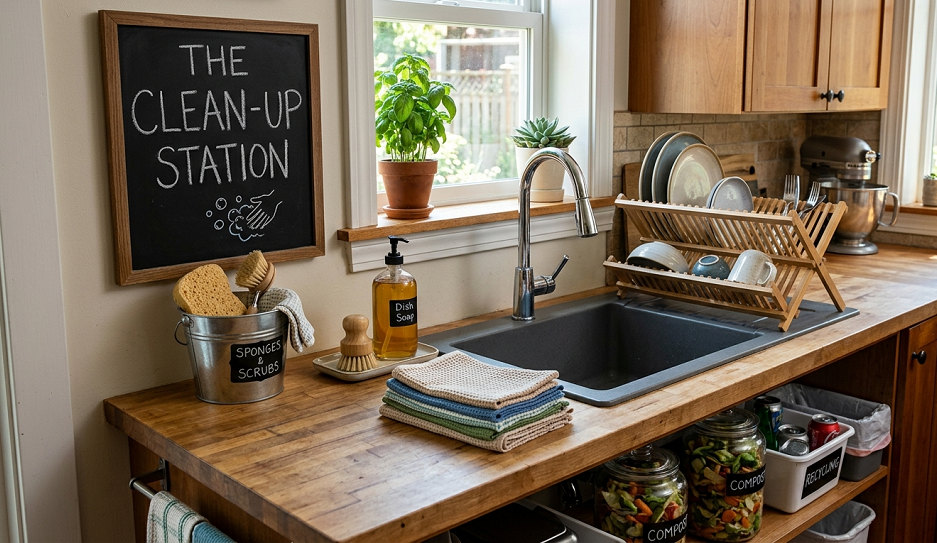
The station most parents skip — and shouldn’t
Most parents think clean-up is a parent job, or at best a school-age job. I used to think that too. Then I watched a Montessori class where two-year-olds were sweeping up their own spills with child-sized brooms and felt genuinely humbled. Toddlers want to help clean up. We just have to give them tools that fit.
Building the station
Mount a small wall hook or a low standing rack in the kitchen and hang: a child-sized broom and dustpan set (they sell these for about $10 at most home goods stores), a small spray bottle filled with diluted all-purpose cleaner or plain water, and a small stack of washcloths or paper towels. That’s the whole station.
How it plays out in real life
When Leo knocked over his cereal — and he knocked it over often — the expectation was that he got his broom. Not that I swooped in. Not that it became a dramatic moment. He got the broom, he swept it up (mostly), I helped with the rest. Over time, his technique improved. More importantly, he stopped being afraid of making messes, because he knew he had the tools to handle them.
The patience this requires from you
I won’t pretend toddler sweeping is efficient. It is not. Their “clean” is not your “clean.” But the goal here is not a spotless floor. The goal is a child who understands that messes are fixable and that they are capable of fixing them. That belief, built at two and three, carries forward for a lifetime.
9. The “I Did It Myself” Display Station: Celebrating Toddler Kitchen Wins
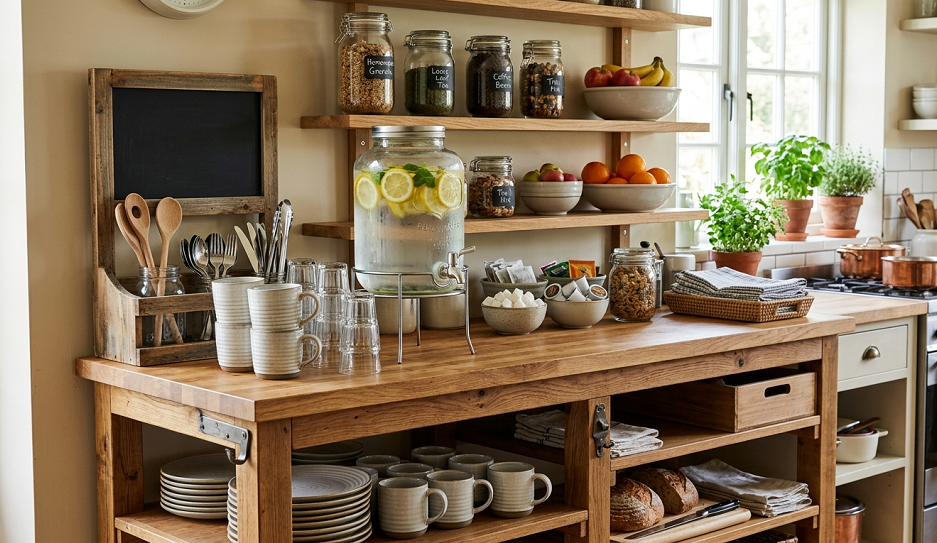
The station that ties it all together
This one is less about food and more about the emotional architecture of independence. A small display area — a section of fridge with magnets, a low cork board, a little chalkboard — where you and your toddler celebrate their kitchen accomplishments. “I poured my own water today.” “I made my lunch.” “I set the table all by myself.” Write it, draw it, make it visible.
Why this matters more than it sounds
Toddler independence is built on a loop: try something, succeed (or try again), feel proud, try something harder. The display station exists to amplify the middle step. When Maya saw her own accomplishment written on the board, she wanted to add to it. She wanted more things on that board. That motivation is intrinsic and powerful and costs you nothing except a marker and five minutes.
How to keep it from becoming clutter
Do a monthly “graduation” — you and your child review the board together, celebrate everything on it, and then clear it to make room for new things. Frame it as growth, not erasure. “You know how to do all of these things now. Let’s see what new things you’ll learn this month.” It becomes a ritual they look forward to.
Real Talk: What Can Go Wrong (And What’s Not Worth the Effort)
Let’s be honest about the parts nobody shows you in the Pinterest photos.
The setup takes longer than you think. Every one of these stations requires an initial investment of time, thoughtful placement, and at least one conversation with your toddler about how it works. If you rush the setup, the station doesn’t work, you feel frustrated, and the whole thing gets abandoned. Give it real time on a calm weekend day.
Toddlers will test every single station. They will take all the crackers out of the cracker container just to see what happens. They will pour water on the floor on purpose at least once. They will eat three bananas from the fruit bowl in one sitting. This is not failure. This is them learning the edges of the system. Hold the boundaries calmly and consistently, and the testing phase passes.
Not every station works for every family. If your kitchen is tiny, you can’t fit nine stations. Pick two or three that address your biggest daily friction points — usually water and snacks — and start there. You do not need all nine to see results.
And here is my honest opinion on one popular option: those pre-made “Montessori kitchen tower” step stools that run $150–$200 are a nice-to-have, not a need-to-have. A sturdy step stool from the hardware store for $20 does the same job. I see so many parents guilt themselves into buying the aesthetic version and then feel like the setup is “done.” The station is not about the furniture. It is about the system and the expectation.
One thing I wish I’d done sooner with all three kids: introduced these stations before independence became a battle. It is so much easier to build a capable toddler from the start than to undo a pattern of learned helplessness later. If your child is already showing signs of over-dependence in the kitchen — asking for help with things they could manage alone — don’t feel bad about that. Just start now. There is no wrong time to begin.
A Final Word of Parting Wisdom
Here is what I want you to hold onto after reading all of this: your toddler is not trying to be difficult when they demand constant help. They are doing exactly what developing humans do — they are seeking connection, testing competence, and figuring out what they can manage in this big world. Our job as parents is not to do things for them to prove we love them. Our job is to build the conditions where they discover what they’re capable of.
These nine stations are not about getting your child out of your hair. They are about showing your child, every single day, that you believe they can do hard things. That message — repeated quietly, through a snack drawer and a small broom and a cup they poured themselves — is one of the deepest forms of love we have to offer.
You are not failing. You are figuring it out, just like they are. And that’s exactly enough.
I’d love to hear from you: Which of these stations are you most excited to try first — or have you already set up something similar in your own home? What worked? What completely fell apart? Drop your experience in the comments below. Your real-world wisdom is exactly what this community is built on.